
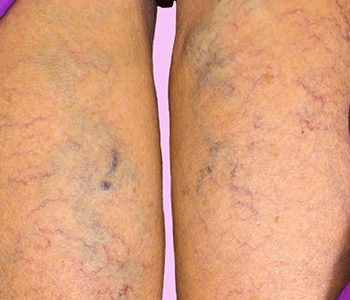
Varicose veins refer to twisted, enlarged or engorged veins. Varicose veins can develop in any part of the body. But most commonly, they are seen in the legs and the feet. Varicose veins in the legs develop as a result of the pooling of blood due to improper functioning of the valves in the veins. 
Homeopathy provides highly effective and safe treatment for varicose veins. Homeopathic medicines effectively help manage their symptoms like cramping, pain, tiredness, and a feeling of heaviness in the legs. They also strengthen the valves of the veins in the legs, reducing blood engorgement and offering symptomatic relief. One of the biggest benefits of using these medicines is that they cause no side effects. These medicines are obtained through natural substances and are highly diluted, yet potent, and they work to prevent the back-flow of blood in the veins.
Gentle and Non-Invasive Treatment
The conventional treatment for varicose veins usually involves techniques like laser surgery, sclerotherapy, endoscopic vein surgery, and endovenous ablation therapy. Despite an invasive surgery, the chances of recurrence of the problem are high. On the other hand, homeopathy treats varicose veins gently and prevents surgical interventions in most of the cases that are mild to moderate.
Homeopathy Boosts Self-Healing Mechanism
Homeopathic medicines help restore the internal healing process of the body. This helps address the medical condition naturally. Unlike conventional treatment, homeopathy offers long-term relief from varicose veins. Once homeopathic treatment has been successfully administered, the chances of the condition recurring are rare or may be none.
Individualized Treatment
Homeopathic prescription for varicose veins is done based on the law of individualization. This means the characteristic symptoms in every individual case are studied in detail to decide the prescriptions. Such individualized medicines work best to treat varicose veins. There is a huge scope to treat mild to moderate cases of varicose veins in homeopathy. However, severe cases and cases that have associated complications require conventional treatment as homeopathy has its own limitations.
Top 11 Homeopathic Medicines for Varicose Veins
The top eleven homeopathic medicines for varicose veins include natural medicines like Hamamelis Virginiana, Pulsatilla Nigricans, Calcarea Fluorata, Fluoricum Acidum, Arnica Montana, Carbo Vegetabilis, Calcarea Carbonica, Vipera Berus, Lachesis Muta, Sepia Officinalis and Ferrum Metallicum.
1. Hamamelis Virginiana – Most Useful Medicine for Varicose Veins
Hamamelis Virginiana is prepared from a plant commonly named “witch–hazel”. This plant belongs to the family Hamamelidaceae. It is a very effective medicine to reduce engorgement of blood in veins in cases of varicose veins. Its most prominent indication is aching or fatigue in the legs. Along with this, a tense feeling in the legs may be observed. The varicosities may look like hard and knotty swellings in the legs. A dragging sensation in the legs may accompany. Pain in varicose veins from the slightest motion is another key symptom. Soreness of varicose veins may also arise. Hamamelis Virginiana can help to reduce the engorgement of blood in veins and its related symptoms. Deep-rooted, circular ulcers with stinging, pricking pain and high sensitivity are other prominent features to use the homeopathic medicine Hamamelis Virginiana.
When to use Hamamelis Virginiana?
This remedy is mostly recommended to manage varicose veins if one reports aching and a feeling of fatigue in the legs along with pain from the slightest movement by reducing engorgement of blood in the veins.
How to use Hamamelis Virginiana?
One may be prescribed this medicine in 30 C potency one to three times daily, depending on the intensity of the pain.
2. Pulsatilla Nigricans – For Painful Varicose Veins
Pulsatilla Nigricans is administered for varicose veins among women when the symptoms worsen during menses and for the lower limbs, the forearms, and the hands. The veins are painful, swollen and congested. Patients who require these medicines have marked tiredness in the legs, especially due to prolonged standing. Varicose veins associated with mild edema of the feet and ankles are also wonderfully treated with Pulsatilla.
When to use Pulsatilla Nigricans?
It is a wonderful medicine for varicose veins if there is drawing pain, or cramping that aggravates from hanging down limbs while sitting.
How to use Pulsatilla Nigricans?
It is administered in 30 C potency one to two times a day for best possible results.
3. Calcarea Fluorata – For Hard, Knotty Varicose Veins
Calcarea Fluorata is a highly recommended remedy for varicose veins. It is a biochemic medicine for varicose veins that works wonderfully in reducing the engorgement of blood in veins and improving blood circulation. A few indications for using Calcarea Fluor are enlarged veins, hardened veins, and knotty veins on lower limbs. The accompanying features are cracked and dry skin on the legs.
When to use Calcarea Fluorata?
One may use it in cases of hard, knotty veins on the legs that can be accompanied by cracked and dry skin on the legs.
How to use Calcarea Fluor?
Its use is preferred in 6X potency and can be administered three to four times a day.
4. Fluoricum Acidum – For Varicose Veins Worsened By Warmth
Fluoricum Acidum is a valuable medicine for the treatment of varicose veins. The most characteristic feature of using Fluoric Acid is painful varicose veins in the legs that worsen due to warmth. Fluoric Acid is used to treat long-standing, obstinate cases of this disease. Apart from the above mentioned symptoms, Fluoric Acid is useful for varicose ulcers with red margins. Pain in ulcers is severe, and warmth worsens the pain while cold application provides relief.
When to use Fluoricum Acidum?
Fluoric Acid is a very suitable medicine to treat varicose veins on the legs when the condition aggravates from any kind of warm application externally. Besides, it is also beneficial to manage varicose ulcers that have red borders attended with pain.
How to use Fluoricum Acidum?
Among various available potencies of Fluoric Acid, the best is to begin with 30C potency that can be administered one to two times daily depending on the intensity of the problem.
5. Arnica Montana – For Varicose Veins with Soreness in Legs
Arnica Montana is prepared from the plant ‘Leopard’s Bane’ which belongs to the natural order Composite. Arnica Montana is a valuable medicine for varicose veins with extreme soreness as an accompanying factor. One has a fear of touching the legs due to soreness. Exertion makes the complaint worse. An aching, bruised sensation in the legs is also felt in some cases. A bruised feeling in the legs — feeling beaten — may also be present. The skin of the legs may also be swollen, red, and hot.
When to use Arnica Montana?
This medicine can be prescribed for managing varicose veins accompanied by marked soreness. One also feels the pain on being touched.
How to use Arnica Montana?
It is most commonly used in 30 C potency. Arnica 30C can be used two or three times a day.
6. Carbo Vegetabilis – For Spider Veins
Carbo Vegetabilis is a prominently indicated remedy for spider veins. The veins appear reddish-blue. The skin feels sweaty and cold, and the person may experience itching that aggravates during the evenings. Varicose ulcers that bleed easily also indicate the need to administer Carbo Veg.
When to use Carbo Vegetabilis?
It is a highly recommended medicine for spider veins with a reddish-blue appearance.
How to use Carbo Vegetabilis?
It has proven to be effective in 30C power that can be administered one to two times daily.
7. Calcarea Carbonica – For Painless Varicose Veins
Calcarea Carb is an excellent remedy for varicose veins. It is useful for varicose veins that are painless and appear only as prominent veins on the legs. Burning sensations in the veins may be present in a few cases. A marked coldness in the feet, excessive sweat on the feet (sour-smelling), and varicose veins on the legs and thighs are treated quite well with Calcarea Carb.
When to use Calcarea Carbonica?
This medicine can be used in cases of varicose veins without any sort of pain.
How to use Calcarea Carbonica?
This medicine can be administered in 30C potency only once a day.
8. Vipera Berus – For Varicose Veins with Bursting Sensation in Legs
Vipera Berus is a well-indicated remedy for varicose veins with a marked ‘bursting’ feeling in the legs. There is pain of an unbearable nature that worsens when one hangs down the legs. Elevating the legs brings about relief. Severe cramping pain in the legs is also present. Swollen, tender veins and blueness of overlying skin are highly indicative of using the medicine Vipera Berus.
When to use Vipera Berus?
Vipera Berus can be administered in cases of varicose veins where there is a prominent bursting sensation and the pain in the legs aggravates, particularly when one hangs the legs down and when one elevates the legs, the pain starts reducing.
How to use Vipera Berus?
It should be used in infrequent doses like one dose once or twice a week in 30C power.
9. Lachesis Muta – For Varicose Ulcers
Lachesis Muta is an important medicine for treating varicose ulcers. The patients who need Lachesis Muta have ulcers with bluish-purplish surroundings. There is a thin, offensive discharge from the ulcers. Pus discharges may also be present in a few cases. Bleeding may arise from the ulcers, and an intense burning sensation may be felt. There is extreme pain and high sensitivity when one touches the ulcer. Applying warmth to the ulcers helps provide relief. Itching that gets noticeably worse after sleeping is another key symptom.
When to use Lachesis Muta?
Lachesis is a wonderful choice of medicine indicated for managing varicose ulcers having bluish-purplish margins with a thin, offensive discharge accompanied by a burning sensation.
How to use Lachesis Muta?
It is a strong medicine; therefore, it should not be taken frequently. It should be administered in 30C potency, one dose and once a week only.
10. Sepia Officinalis – For Varicose Veins During Pregnancy
Sepia Officinalis is especially useful in varicose veins for women, particularly during pregnancy, after repeated childbirth, or at menopause. The veins are distended, painful and bluish, with a feeling of heaviness and bearing down pain in the lower limbs. Among the patients who need this medicine, the disease aggravates due to standing for long hours and it gets better by exercise or by crossing the legs. Varicose veins are often associated with uterine weakness and pelvic congestion.
When to use Sepia Officinalis?
Veins are distended, bluish, and painful, with marked heaviness and bearing-down sensation in the lower limbs. Complaints get worse from prolonged standing and they get better by walking or crossing the legs.
How to use Sepia Officinalis?
It is recommended in 30C potency once a day or on alternate days, while 200C may be given only once a week, with repetitions reduced as improvement sets in. However, always take advice from a qualified homeopath before using the medicines.
11. Ferrum Metallicum – For Varicose Veins Associated with Weakness and Anemia
Ferrum Metallicum is another useful medicine to treat varicose veins associated with weakness and anemia. The veins appear prominent and painful, with flushes of heat, yet the patient feels weak and easily fatigued. Symptoms aggravate due to walking or exertion, and limbs may be cold with congestion. Varicose veins associated with low vitality and poor blood circulation are very well treated with this medicine.
When to use Ferrum Metallicum ?
This medicine is administered in varicose veins to anemic and debilitated patients with weak circulation. The veins are prominent and painful, fatigue comes easily and extremities or limbs are cold.
How to use Ferrum Metallicum?
It may be administered in 6X potency two times daily for supportive treatment or in 30C potency once a day and 200C once a week, under the guidance of a qualified homeopath.
Symptoms of Varicose Veins
Varicose veins may not cause any symptoms in most of the cases and only appear as dark/purple-colored prominent veins in the legs. General symptoms include feeling tired, aching, or feeling of heaviness in the legs, throbbing and cramping in the legs, and worsening of pain from sitting or standing for long periods.
Color changes, swelling/inflammation, and ulcers on the legs may be indicative of intense changes like phlebitis (inflammation in a vein) and venous ulcers and should be addressed promptly.
Spider Veins are Not Varicose Veins
Spider veins are dilated clusters of tiny (less than 1mm diameter) superficial blood vessels developing close to the surface of the skin. They are also called telangiectasias. Spider veins appear as thin, red, blue, and purple lines or as web-like networks of blood vessels on the surface of the skin. These look like a spider’s web. They mostly appear on the face, legs, and feet. They don’t usually cause any problems and are mainly considered to be a superficial issue. These are generally common in older adults.
Varicose Veins – How Do They Develop?
The veins in our legs contain one-way valves. These valves of the veins allow only one-way blood flow (from the legs to the heart) when the muscles squeeze the veins in the legs. When the muscles contract, the valves open and blood from the legs pushes upwards to reach the heart. When these muscles relax, the valves close to prevent the reverse flow of blood back into the legs. In case these valves don’t function properly, it results in a reverse flow of blood and stagnation of blood in the leg. This causes the veins to become twisted, enlarged, and engorged, and they are known as varicose veins.
Factors that Contribute to Varicose Veins
1. Obesity: Obese people often develop varicose veins without any knowledge, as the veins arenot visible beneath the layersof the skin (due to accumulated fat). With time, the pressure from the leaking veins causes damage to the surface of the skin, and the problem becomes visible. This also puts many overweight people at a higher risk of developing leg ulceration.
2. Standing/Sitting for a Long Time: Sitting or standing for long durations leads topoor blood circulationin the legs. When we sit, it becomes harder for the veins to move the blood to the heart. Over time, this can cause swelling in the ankles, blood clots, and varicose veins. Sitting with the legs crossed or bent for long durations can aggravate the problem.
3. Old Age: With age, the veins lose elasticityand cause them to stretch. This causes the valves in the veins to become weak. As a result, the blood that should be moving towards the heart starts flowing downwards.
4. Pregnancy: During pregnancy, it is very common for a woman to develop varicose veins since the volume of bloodin the bodyincreases, but overall, the flow of blood from the legs to the pelvis decreases. Varicose veins often develop or worsen during the later stages of pregnancy since the uterus starts to exert increased pressure on the veins in the legs. This condition often improves post pregnancy within three to twelve months.
5. Age: The chances of developing varicose veins increase with age. Aging causes the wearandtear of the valves in the veins, allowing blood to flow back into the veins where it gets collected.
6. Gender: Females are more likely to develop varicose veins due to hormonal changesthey undergo throughout their lifetime. Pregnancy, pre-menstruation, menopause, hormone replacement therapy, and the use of birth control pills all cause hormonal changes in a woman’s body. Female hormonesare known to relax the walls of the veins.
7. Family History: A family history of varicose veins makes a person more prone to develop this condition.
Complications Related to Varicose Veins
1. Bleeding: Veins that are close to the skinmay rupture and bleed. The bleeding may take place spontaneously or result from a minor injury.
2. Venous Ulcers: A venous ulcer is apainful sorethat develops on the skin of the inner side of the leg, immediately above the ankle in case of varicose veins. Swelling of the ankle, leg, and heaviness felt in the legs, foul-smelling discharge from the ulcers, burning sensation, itching, and pain of varying severity may be felt. A high fever may also be present in cases of infection.
3. Varicose Eczema: Varicose eczema (also known as stasis / gravitational eczema) is another complication of varicose veins. It affects the lower legs, where the skin gets dry, itchy, red, scaly, and flaky.
4. Superficial Thrombophlebitis: Superficial thrombophlebitis refers to an inflammation of the vein near the surface of the skin caused by a blood clot.
5. DVT (Deep Vein Thrombosis): Deep vein thrombosis (DVT) refers to the development of a blood clot withina vein deep inside the body (usually in the leg). DVT may lead to severe complications like pulmonary embolism (when blood clots in veins break and travel via the bloodstream to lodge in the lungs), which is an emergency condition that requires immediate medical intervention. Common symptoms of pulmonary embolism include sudden shortness of breath, dizziness, chest pain, rapid pulse, and spitting of blood.
Lifestyle Management for Varicose Veins
A few lifestyle modifications that help in managing varicose veins:
1. Physical activity and non-exerting exercises – Regular short-distance walks and taking regular breaks in between help in calf muscle strengthening and improving venous circulation in the legs.
2. Leg Elevation – Elevating your legs for 15-20 minutes three to four times a day helps in reducing venous congestion and also in reducing swelling and heaviness in legs.
3. Weight Management – Being obese or overweight puts additional pressure on the veins of the legs; therefore, reducing weight helps in improving blood circulation and managing symptoms.
4. Compression Therapy – Wearing compression stockings helps in supporting veins and improving circulation. Slowly, they help in managing symptoms such as pain, swelling and heaviness.
5. Clothing and Footwear – Avoid tight clothing, especially around the waist, thighs, and legs, and avoid high-heeled shoes that will naturally help calf muscles function better.
Frequently Asked Questions
1. Are varicose veins dangerous?
In early stages, they are usually not dangerous, but if ignored, they can lead to skin discoloration, ulcers, eczema, or, in rare cases, might even lead to blood clots. Timely treatment helps prevent complications.
2. Can varicose veins resolve on their own?
Varicose veins usually do not disappear completely on their own. However, symptoms can improve with lifestyle modifications, exercises, elevation of legs, and proper treatment.
3. Is walking good for varicose veins?
Yes. Regular walks improve blood circulation in the legs and reduce swelling and heaviness. It is one of the best natural exercises for varicose vein patients.
4. Does standing or sitting for long periods aggravate varicose veins?
Yes. Staying in one position for a long time increases pressure in leg veins and worsens symptoms. Taking short breaks and moving the legs is very helpful.
5. Can varicose veins be prevented?
They can be prevented or slowed by maintaining regular exercise, a healthy weight, avoiding prolonged standing, elevating legs, and wearing comfortable footwear.
6. Is surgery the only treatment for varicose veins?
No, not always. Several patients improve with conservative management like lifestyle correction, compression stockings, and medical treatment. Surgery or procedures are needed only in advanced cases.
7. Can varicose veins recur after treatment?
In some cases, they may recur, especially if the lifestyle is not corrected. Following medical advice and regular follow-up reduces recurrence.
8. Are varicose veins common during pregnancy?
Yes. They are common due to hormonal changes and the pressure of the growing uterus. In many women, veins improve after delivery.
9. When should I consult a doctor?
You should consult a doctor if there is persistent pain, swelling, a change in skin color, itching, wounds that do not heal, or sudden worsening of veins.
10. Can homeopathy help with varicose veins?
Yes. Homeopathy can improve blood circulation, strengthen veins, reduce pain and swelling, and prevent further progression when taken regularly under proper guidance.
11. Will homeopathic medicines shrink the veins?
In early stages, veins may reduce in size and symptoms improve significantly. In chronic or advanced cases, visible veins may not disappear completely. However, discomfort and complications can be controlled.