
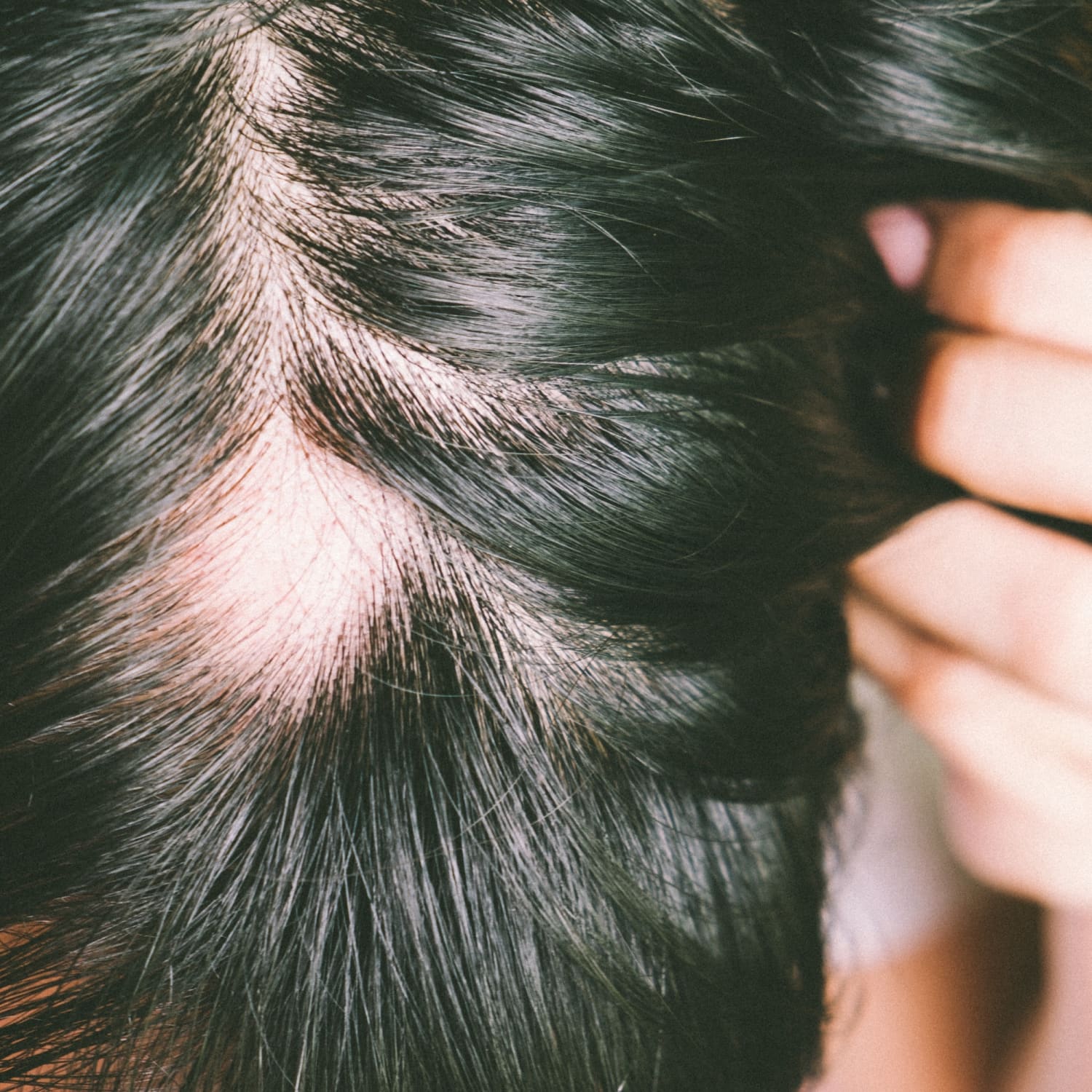
Alopecia Areata is loss of hair in patches, usually on the scalp. However, any other body part covered with hair may also be affected. When alopecia areata appears in the beard, it is known as alopecia areata barbae. Alopecia affects people of all ages, races, and sexes equally. Bald patches on one’s head, beard and eyebrows can be distressing. Although it does not affect the patient’s health in any other form, it affects a person’s psyche with its sudden onset, recurrent episodes, and its unpredictable course.
Homeopathy is a very advanced science capable of treating diseases that have an autoimmune origin, including alopecia areata. It provides a safe, effective and permanent solution to this problem by targeting the root cause. Initially, homeopathic medicines stop the size of the bald spots from growing any further and subsequently prevent the formation of new bald patches. As the treatment progresses, the homeopathic medicines help in the regrowth of hair. Moreover, once alopecia areata is treated with homeopathy, the chances of the problem recurring are reduced a great deal. In conventional mode, immunosuppressants, corticosteroids, and anti-inflammatory drugs are mainly used to treat alopecia areata that are either applied topically/injected into the scalp or taken orally. This mode of treatment suppresses the immune system, exhibits side effects and is incapable of preventing new bald patches from appearing. Therefore, homeopathy can be a very safe alternative treatment mode that prescribes medicine in the form of sweet pills, which are easy to ingest and are very effective. They set in order the internal disturbances the immune system has been hit by, rather than suppressing them, and have the added advantage of being free from side effects.
Homeopathy optimizes immune system
Homeopathic medicines for alopecia areata optimize the overactive immune system that destroys the hair follicles. This treatment proves to be fairly successful as it helps the hair grow back and prevents the formation of bald spots time and again.
Individualized prescription
For each and every case of alopecia areata, there is an individualized treatment scope and prescription in homeopathy. The medicines are prescribed based on the unique characteristic symptoms of the patient. The selected and customized remedies for each case of alopecia areata can bring about wonderful results. However, to administer homeopathic medicines, a qualified homeopath’s advice should be strictly adhered to vis-à-vis its dosage, potency and repetition, treating each case separately. Self-medication should be strictly avoided.
Homeopathy has zero side effects
Homeopathic medicines are derived from naturally obtained substances. These medicines do not contain harmful chemicals and are considered safe to use. They can be administered by people of all age groups without concerns about toxic effects or adverse reactions.

Top 8 Homeopathic Medicines For Alopecia Areata
The top eight homeopathic remedies to treat this disease are Fluoric Acid, Phosphorus, Lycopodium Clavatum, Calcarea Carbonica, Vinca Minor and Hepar Sulph, Natrum muriaticum and Thuja Occidentalis.
1. Fluoric Acid – Top-Grade Homeopathic Medicine
Fluoric Acid is one of the best homeopathic remedies for alopecia areata. It is suited best for hair fall in patches that surface on any part of the scalp. It helps in regrowth of the hair on the bald patches. Those who need it may have itchy scalp, too. The scalp may be sensitive to touch.
When to use Fluoric Acid?
This medicine can be administered in cases of alopecia areata that appear anywhere on the scalp. An accompanying symptom is that the scalp is itchy and sensitive.
How to use Fluoric Acid?
Initially, Fluoric Acid 30C can be used two to three times daily. Once hair starts regrowing, the dose can be reduced.
2. Phosphorus –With Hair Loss From Front Or Sides Of Scalp
Though Phosphorus can be used for hair loss in any portion of the scalp, it is most suitable if hair loss from the front or the sides is more noticeable. Those who need it may have a tendency to excessive sweating on the scalp. Heat may also be felt on the scalp, and dandruff may also be present.
When to use Phosphorus?
The use of Phosphorus is suggested when patches of hair loss occur, especially from the front or side of the scalp.
How to use Phosphorus?
Though it can be administered in any potency from low to high, the most frequently recommended is 30C potency. Phosphorus 30C can be administered two times a day for the best possible results.
3. Lycopodium Clavatum – When Hair Loss Is Marked On Top Of Scalp (Vertex)
Lycopodium is a natural remedy derived from the club moss plant. It is particularly effective in treating bald patches that mainly appear on top of the scalp, often accompanied by burning and itching sensations. In addition, Lycopodium is a well-known remedy for managing premature greying of hair.
When to use Lycopodium?
This medicine is administered when patches of hair loss appear on the top of the scalp.
How to use Lycopodium?
Among its various potencies, from low to high, it is best to begin with 30C potency two times a day. Its higher potencies can be thought of later, but only after consulting a qualified homeopath.
4. Calcarea Carbonica – For Hair Loss With Sweaty Scalp
This medicine is used if patchy hair loss with increased sweating on the scalp. A cold sensation on the scalp may also be felt. The scalp may be itchy as well.
When to use Calcarea Carb?
It is for those who have hair loss in spots accompanied by increased sweating on the scalp.
How to use Calcarea Carb?
It is prescribed in various potencies ranging from low to high depending on the type of symptoms presented, but the most common dosage is 30C potency. Calcarea Carb 30C can be taken once in the morning and once in the evening forthe best possible results.
5. Vinca Minor –Tendency Of Alopecia Areata When Regrown Hair Are White
This medicine is prepared from ‘ lesser periwinkle’. It helps treat cases of alopecia areata where hair falls takes place in patches and is often replaced by grey/white hair. These cases may also be accompanied by itching and an intensely felt need to scratch the scalp.
When to use Vinca Minor?
This medicine is specifically administered in cases where there is a tendency for hair loss in spots and regrowth of white hair in its place.
How to use Vinca Minor?
This medicine can be administered in 30C potency two times daily. It works in a two-pronged manner —treats the tendency to lose hair in spots and prevents the greying of hair that grows again.
6. Hepar Sulph – With Sensitivity Of Scalp To Touch
Hepar Sulph is a medicine that cures hair loss that takes place in spots, along with sensitivity to the scalp. Itching and burning on the scalp may be an accompanying factor. There can be increased sweating on the scalp and it smells sour.
When to use Hepar Sulph?
This medicine can be prescribed for those who suffer from hair loss in patches, accompanied by scalp sensitivity and tenderness on touch.
How to use Hepar Sulph?
It works well in 30C potency. Normally, this medicine is ingested once or twice daily. Higher potencies are not recommended until a physician suggests.
7. Natrum Muriaticum – for Stress-Induced Alopecia Areata
Natrum Muriaticum is well administered for alopecia areata, especially when hair loss is clearly defined, round patches appear on the surface following emotional stress, grief, disappointment, or prolonged mental strain. It is particularly suited to individuals who are reserved, sensitive, and tend to suppress emotions. Hair may become dry, thin and brittle, often accompanied by dandruff. There is increased hair fall on the sides or margins of the scalp.
When to use Natrum Muriaticum?
It works wonders if alopecia areata begins post-emotional stress, grief, or due to long-standing suppression.
How to use Natrum Muriaticum?
It can be initiated in 30C potency once or twice daily. Higher potencies such 200C, 1M should be prescribed only after consulting a qualified homoeopath.
8. Thuja Occidentalis – Smooth Bald Patches with Greasy Scalp
Thuja Occidentalis is a well-administered medicine for alopecia areata when hair loss occurs in distinct, smooth, round patches, often associated with a greasy scalp, presence of dandruff, or smelly perspiration of the scalp. It is particularly useful in cases where alopecia develops after repeated infections, long-term medication, or vaccination. Hair may be dry, brittle, or fall prematurely, and regrowth is often gradual.
When to use Thuja Occidentalis?
It works well when hair loss appears in smooth, well-defined patches with a greasy scalp. There is a presence of dandruff, or offensive perspiration on the scalp.
How to use Thuja Occidentalis?
It can be administered with 30C potency once daily.
Types of Alopecia Areata
1. Alopecia Areata Totalis
There is a total loss of hair from the entire scalp. It usually develops from progressive patchy alopecia areata and indicates a more extensive involvement.
2. Alopecia Areata Universalis:
This is the most intense form of alopecia areata, with complete loss of hair from the entire body — scalp, eyebrows, eyelashes, beard, axillary, and body hair.
3. Ophiasis Alopecia Areata:
Characterized by a band-like pattern of hair loss along the sides and back of the head regions. This type is often more resistant to treatment and may have a chronic course.
4. Diffuse Alopecia Areata:
Hair loss takes place quite suddenly and the hair appears diffused or evenly thinned out all over the scalp, without the typical well-defined bald patches.
What Are Signs & Symptoms of Alopecia Areata?
1. Appearance:Presents as bald patches on the scalp or other hair-bearing areas.
2. Pattern of Hair Loss: Hair loss takes place in well-defined circular or oval patches.
3. Size of Patches: Bald patches are commonly coin-sized (similar to a five-rupee or one-rupee coin).
4. Surface:The affected area is smooth and clean to the touch, without scarring.
5. Commonsites: Most frequently involves the scalp and beard, may affect eyebrows, eyelashes, other body parts with hair.
6. Number of Patches: A single patch or multiple patches may present at the same time.
7. Associated Sensations: Some individuals may experience mild itching or tingling ss the hair fall begins. No pain or physical discomfort is usually associated with the condition. In rare cases, complete loss of scalp or body hair may occur.
Cause and Trigger Factors
These are the Causes of Alopecia Areata:
1. Autoimmune Reaction
The immune system mistakenly attacks hair follicles that results in sudden hair fall even as the follicles are alive.
2. Genetic Predisposition
A hereditary tendency makes some more prone to it. Autoimmune diseases, especially, run in the family. It is estimated that one in five persons suffering from alopecia areata gets it from someone in the family.
3. Association with Other Autoimmune Disorders
According to research, those who have alopecia areata might also have a history of some other autoimmune disease (for example, vitiligo – white patches on the skin due to lack of melanin pigment; thyroiditis – inflammation of the thyroid gland) or the presence of an autoimmune disease in some family member.
Triggering Factor
1. Emotional or Mental Stress
Sudden anxiety, grief, trauma, exams, prolonged stress precipitate hair loss.
2. Acute Illness or Fever
Viral infections, high fever, systemic illness may trigger immune activation and hair fall.
3. Hormonal Changes
Puberty, pregnancy, postpartum, and menopause may triggers due to immune–hormonal interaction.
4. Skin Trauma or Local Injury
Injury to the scalp, surgery, or persistent pressure may initiate hair loss.
5. Vaccination or Drug Exposure
Among those prone to it, immune stimulation may act as a trigger for hair loss.
6. Nutritional Deficiencies
Low iron, vitamin D, zinc, or protein aggravates susceptibility and triggers such attacks.
Pathophysiology
Alopecia areata is an autoimmune disease (the body’s defence cells start destroying the body’s healthy tissues out of a misdirected response). In alopecia areata, the defence cells start damaging hair follicles, resulting in bald patches. The immune cells attack the hair follicle matrix of some of the hair that is in the growth phase. Following this, these strands of hair prematurely (before their complete formation and maturation) pass into a phase where hair stops growing. The hair follicle stem cells are not damaged, therefore the ability of the hair follicles to regenerate is not affected at all. Why? Immune cells that target hair follicles here are still unknown.
How common is alopecia areata & does it cause permanent hair loss?
Alopecia areata is a fairly common condition and about one per cent of the population is affected at any given time. The hair loss in alopecia areata is not permanent. Alopecia areata is a reversible hair loss as the follicles (a structure that encloses the root of the hair) are not damaged.
How to diagnose alopecia areata?
A doctor can at once diagnose cases of alopecia areata simply by looking at the pattern of hair loss/bald spots. In very rare cases, samples of hair or scalp biopsy can be sent to the lab for evaluation. Sometimes the blood tests can be recommended to examine for other autoimmune diseases.
Management
For the effective management of alopecia areata, one has to pay attention to not just the treatment but also the lifestyle and stress control. This, since, emotional stress is a common trigger and a factor that aggravates the disease. Maintaining a balanced diet rich in proteins, iron, zinc, and vitamins, adequate sleep, and following a regular routine helps support immune balance and hair regrowth. Stress-reducing practices — meditation, yoga, breathing exercises, and physical activity play a key role in preventing flare-ups. Gentle hair care, avoiding harsh chemicals, and maintaining scalp hygiene further support recovery. A calm mental state, along with individualized treatment, significantly improves long-term results in alopecia areata.
Frequently Asked Questions
1. Can alopecia areata lead to total hair loss?
Yes, in severe forms,it can cause alopecia totalis (loss of all scalp hair) or alopecia universalis (loss of all body hair), though these cases are less common.
2. Can scalp massages help in hairfall?
Gentle scalp massage can improve blood flow and hair health, but the autoimmune attacks do not stop.
3. Will dyed or chemically treated hair fall out faster?
Not directly. Alopecia areata targets follicles, not hair shafts.
4. Do seasonal changes affect hair loss patterns?
Some patients notice flare-ups in winter or during stress, but scientific evidence is limited.
5. Is alopecia areata permanent?
Not always. Hair could regrow fully, partially, or even fluctuate in cycles.
6. Can nails show signs of alopecia areata?
Yes, dents, white spots, or ridges on nails appear in 10–20 per cent of the patients. Sometimes it may precede hair loss.
7. Is alopecia areata different among men and women?
Both genders are affected equally, though men may notice facial hair loss more.
8. Can pregnancy or hormones affect alopecia?
Hormonal changes may influence hair growth, sometimes causing temporary improvement or aggravation during pregnancy or menopause.
9. Can homeopathy treat alopecia areata?
Yes. Homeopathy stimulates the body’s natural healing process and addresses the underlying immune imbalance rather than just the symptoms.
10. Can Homoeopathy prevent recurrence?
Homeopathy can reduce the frequency and intensity of flare-ups by strengthening the immune system and addressing the underlying triggers.