
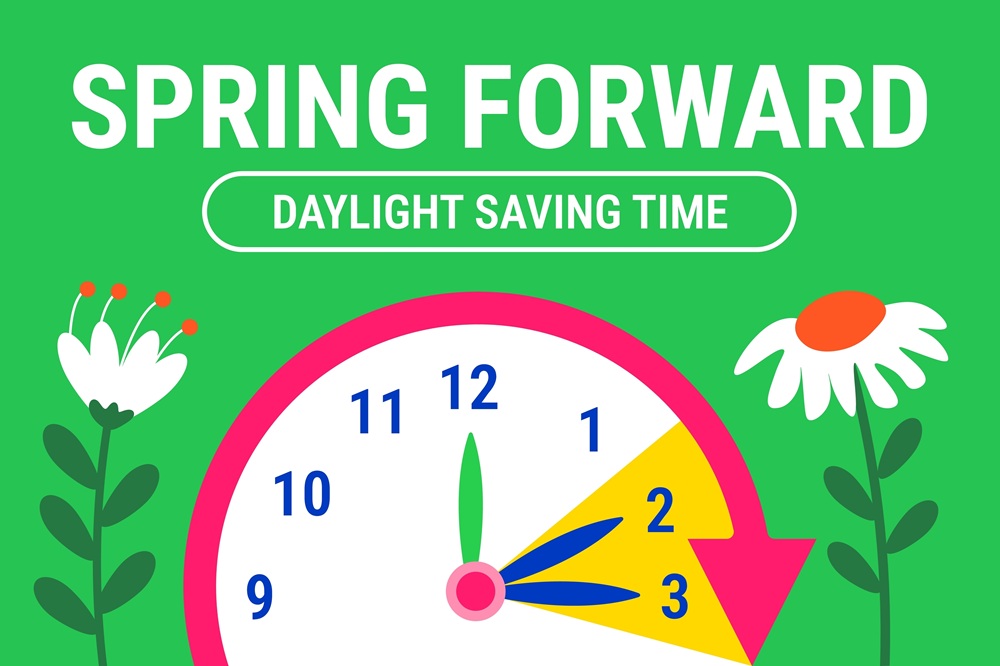
Depending on where you live, as we move into spring, we “lose” an hour of daylight saving time. At first glance it’s only 60 minutes, which may not seem important. Biologically, however, that one-hour shift acts like a small but meaningful circadian stressor. Research shows that in the days following the transition to spring, there is a measurable increase in sleep disruption, decreased alertness, workplace mistakes, car accidents, and even short-term increases in cardiovascular events and blood sugar variability.
Daylight Saving Time: A Simple Plan for Your Sleep and Metabolism
What seems like a simple clock change can create a ripple effect on the brain, heart, metabolism and mood. For some people, especially middle-aged women or those already dealing with hormonal shifts, it can take days to weeks to feel completely recalibrated and back “on their game.”
When the clocks advance, we shift sleep, light exposure, melatonin timing, cortisol rhythm, insulin sensitivity, digestion, and even microbial oscillations in the gut. In other words, we advance the entire light-food-hormone axis. This is called phase advancement, which is much more difficult than an hour’s gain (phase lag).
The good news is that with a little intention, you can make this transition smoother for your brain, metabolism, and mood. This newsletter comes at the right time to give you a few days to know what you can do to get ahead of the curve.
What actually happens
Daylight saving time in the spring is like asking your body to fall asleep earlier and wake up earlier relative to its internal clock. This is biologically more difficult than staying up later. If you do nothing, the week after the time change can lead to:
- More morning sickness
- Higher glucose levels after meals
- Stronger cravings (especially for carbohydrates)
- Fragmented sleep
- Mood dips
Midlife women may feel this more intensely. Melatonin production naturally declines with age (“melatonipause”), circadian amplitude becomes flatter and glucose tolerance is more sensitive to improper eating. Now is the time of life to consider a low-dose (0.3 mg) plant-based melatonin supplement, such as Herbatonin to help ‘close the gap’ of what we lose over the years. A one-hour shift can feel bigger than it sounds, depending on your stage of life and health status.
The 4-day gradual shift plan
Here’s a general idea of how to shift your days leading up to the time change. If your usual bedtime is 9 p.m., start 3 to 4 days before the time change.
Day 1
Bedtime 8:45 PM
Wake up 15 minutes earlier
Meals 15 minutes earlier
Day 2
Bedtime 8:30 PM
Wake up 30 minutes earlier
Meals 30 minutes earlier
Day 3
Bedtime 8:15 PM
Wake up 45 minutes earlier
Meals 45 minutes earlier
Day 4
Bedtime 8:00 PM
Wake up 60 minutes earlier
Meals 60 minutes earlier
After the clock advances, your “old time” of 8:00 PM becomes 9:00 PM on the new clock. Physiologically, your body feels almost normal.
Light/darkness first
Light is the main driver of your circadian rhythm. Don’t forget that darkness is important too.
To promote your rhythm:
- Dim the lights earlier in the evening
- Reduce blue light exposure after sunset
- Go outside within 30 minutes of waking up
- Expose your eyes to natural morning light without sunglasses if it is safe to do so
Even 10 to 20 minutes of morning light can anchor your new wake-up time and help reset melatonin for the night.
Food second
In addition to light, food is a powerful circadian signal. When you move bedtime earlier, you also move meals earlier. Glucose tolerance is better earlier in the biological day. Eating late, especially during the rise of melatonin, increases post-meal glucose levels. Eating late can impair metabolic flexibility and disrupt sleep.
Practical guidance:
- Move breakfast earlier with your new wake-up time
- Keep lunch timed accordingly
- Finish dinner at least 2 to 3 hours before your new bedtime
- Avoid late night snacks during the week of menopause
If shifting every meal feels overwhelming, focus on two anchors: breakfast and dinner. Have breakfast shortly after waking and finish dinner earlier in the evening.
Simple time transition support
- Save caffeine earlier in the day.
- During the adjustment period, opt for a lighter dinner.
- Front-load protein and fiber earlier in the day.
- Relax with dim lighting, gentle stretching exercises, breathing exercises or a warm shower.
- Protect your sleep time.
- For women going through perimenopause or postmenopause, all of these tips are especially important to follow. Circadian stability supports insulin sensitivity, thyroid signaling, mood regulation, and even cardiovascular health. Small timing shifts can travel through the endocrine system.
If you do nothing else…
If you can’t perform a full gradual shift, do the following:
- Two nights before the change, go to bed 30 to 60 minutes earlier
- Receive bright morning light immediately after waking up according to the new schedule
- Avoid eating within three hours of bedtime that week
Do your best to make the switch!
The post Time to Move Forward appeared first on Alternative Medicine Magazine.