
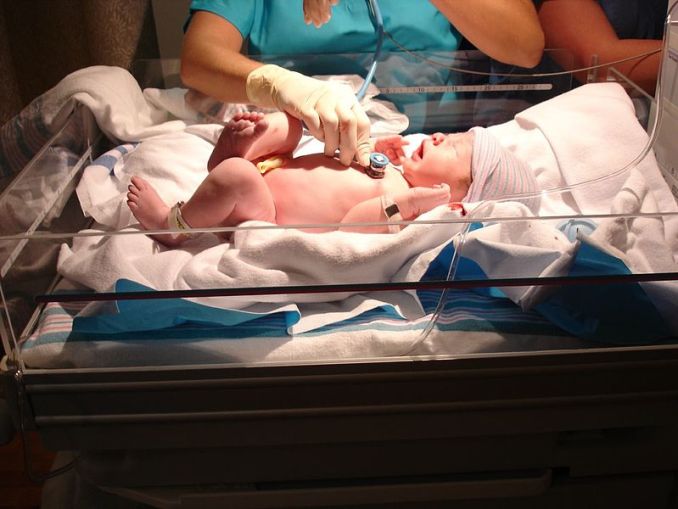
From birth, each individual is examined by a medical professional at least once a year. During that doctor’s visit, an evaluation of the spine will be performed to determine whether or not scoliosis is present. For parents with scoliosis in their family history, a common question is whether or not scoliosis will be passed on to their offspring.
Although it seems that the chance of that is higher scoliosis is passed onthere’s no really solid evidence pointing to why. A parent or sibling of a person diagnosed with scoliosis is at increased risk, but there are several environmental and genetic factors that must also be taken into account. Therefore, it is considered a condition that is sporadic in nature. Find out more about the chances of inheriting scoliosis and possible treatment options.
Scoliosis training
The body’s spine has areas of natural curves in the lumbar, thoracic and cervical regions. The reason for the curves, of course, is to allow the body to move and handle the stresses placed on it during routine activities. When a doctor or chiropractor inspects a patient for scoliosis, he or she looks in the coronal or frontal plane for a curvature that is unnatural.
For example, a measurement is made to see whether there is an unnatural curve that will lead to or already cause scoliosis. There are three different classifications of scoliosis, including:
- Idiopathic – when no other type of scoliosis can be diagnosed. About Idiopathic scoliosis is diagnosed in 80% of patients. It is most common and often found while a child is going through puberty.
- Congenital – present at birth. Occurs when there is a part of the spine that grows more slowly than the rest.
- Neuromuscular – progresses rapidly, requires surgery and is secondary to other muscular and neurological diseases such as spinal muscular atrophy, spina bifida and cerebral palsy.

Through the visual examination, a CT scan, MRI, X-ray, and/or spinal X-ray, doctors and other healthcare professionals measured the number of degrees the spine is curved to determine whether or not a patient has scoliosis. When there is a posterior-anterior X-ray showing a curve of 10 degrees or greater, the person is considered to have scoliosis. Significant scoliosis occurs at 25 to 30 degrees and severe scoliosis is diagnosed when the curve is measured at 45 to 50 degrees or more.
Can scoliosis be passed on?
Whether you have a child or are thinking about having children in the future, if you or someone in your family has been diagnosed with scoliosis in the past, the obvious question is whether scoliosis is genetically inherited. With consequences 2 to 3% of the population in the United States it has a prevalence that at least makes you think about whether or not your child will develop the disorder.

Although the reason for the development of scoliosis has been a bit of a mystery in the past, it has evidence found by scientists that there may be a gene linked to the condition. Scientists and researchers worked together from the University of Texas Southwestern Medical Center, Texas Scottish Rite Hospital for Children, Rutgers State University of New Jersey, the University of Iowa and the Washington University School of Medicine in St. Louis to find the gene called CHD7 that leads to the S- and C-shaped curves in the spine.
The research proves that genetics are involved in the genetic transmission of scoliosis. However, there are other factors that must work together with the CHD7 gene to result in the development of the disease.
Treatment options for scoliosis
If you or one of your children has been diagnosed with scoliosis, whether it is passed on genetically or results from the presence of that CHD7 gene, the most important thing is that you get treatment. With mild scoliosis curves there is often no pain or discomfort. In those cases, there is no treatment other than simply observing the patient to ensure that the problem does not get worse. Doctors often want to see their patients every four to six months to see if the problem is developing.

More severe cases result in pain and discomfort, along with problems moving and breathing. This is when it is ideal to seek treatment from a medical professional or chiropractor who treats scoliosis. The least invasive form of treatment should be sought first, and this may include:
- Physiotherapy
- To pour
- Clamp
Only if these methods prove ineffective should a parent consider spinal fusion surgery. That will reduce the degree of curvature in the spine and prevent it from getting worse. The most essential part of scoliosis treatment is early detection. That is why doctors check this at every consultation visit and scoliosis tests are often also done at school. Any of the following signs or symptoms should point you in the direction of having your child checked, or yourself if you are also experiencing them:
- Uneven shoulders
- Head not centered directly over the pelvis
- Hips that are up or high
- Different heights in rib cages
- Uneven waist
- The texture of the skin changes across the spine where the curve is located
- Clothes don’t fit properly
- Pain or discomfort in the spinal area
If you think scoliosis runs in your family, seek professional advice or visit a doctor my chiropractic clinic in Anchorage. Many of my patients and potential patients are also not aware that they can do this go to a chiropractor without insurance. You always have the option to pay for your visits in cash.
It is better to start treatment right away to prevent further damage and avoid the need for surgery.
The post Does scoliosis have a genetic cause? first appeared on Alternative Medicine Magazine.