
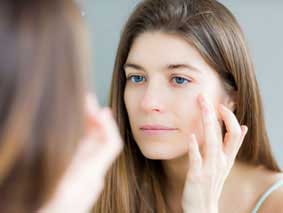

Pigmentation, medically known as melasma, refers to the darkening of facial skin compared to the rest of the skin tone due to the overproduction of pigment melanin (which gives skin its color). In melasma, patches of pigmentation appear on the face, predominantly over the nose, cheeks, forehead, and upper lip. The pigmentation varies from yellowish, brownish, bluish, to blackish. Chloasma is another term for facial pigmentation among women during pregnancy. Freckles or tiny dark spots appear on the face in certain cases from repeated exposure to the sun. Freckles are more likely to be visible in those with fair skin.
Homeopathy offers a very safe and highly effective natural treatment for cases of facial pigmentation. First, it helps prevent further spread of pigmentation as well as darkening of already present spots. Later, it gradually assists in lightening and fading the spots present on the face. Homeopathic medicines help treat the root cause behind the problem, which is the increased production of melanin. These medicines control excessive melanin production to reduce pigmentation and help in recovery. Homeopathy also corrects hormonal issues in the body that can cause hyperpigmented skin.
Holistic approach to treatment
Homeopathy follows a holistic approach to treat any kind of health issues. This means it treats the person as a whole by considering symptoms related to emotional, mental, and physical spheres before prescribing a medicine. Such treatment works from within and treats the underlying causes instead of treating the symptoms at the surface.
Safe, Gentle homeopathic medicines
The natural characteristics of homeopathic remedies are such that there is no chance of any side effects whatsoever. These medicines are used in highly diluted forms that help provide relief without any toxic effects.
Homeopathy helps in self-healing
Every human body has an innate power to heal itself from within. Homeopathy tends to boost this power and remove any obstacle that hinders natural recovery. In cases of facial pigmentation, it also does exactly that and encourages self-healing and fading of the pigmented spots.
No suppression with homeopathic medicines
Homeopathy does not try to suppress skin-related complaints by applying external creams. Rather, it uses non-suppressive medicines ingested orally. The topical creams that are part of mainstream medicine (applied on the skin surface) cause suppression of the symptoms and offer temporary relief. The symptoms always have a chance to recur. But since homeopathy is a non-suppressive mode of treatment, the results are always long-lasting and permanent.
Top 10 Homeopathic Medicines for Facial Pigmentation
The top 10 natural medicines for facial pigmentation are Sepia Officinalis, Pulsatilla Nigricans, Cadmium Sulphuratum, Berberis Aquifolium, Sulphur, Psorinum, Lachesis Muta, Thuja Occidentalis, Cantharis Vesicatoria and Kalium Bromatum
1. Sepia Officinalis – Top-grade Medicine for Facial Pigmentation
Sepia Officinalis is one of the top medicines for treating facial pigmentation. Those prescribed Sepia Officinalis mostly have pigmentation on their cheeks, forehead and nose. The pigmentation varies from brownish to blackish in color. The skin may be rough and hard. Sepia is also quite suitable for women who suffer from facial pigmentation due to pregnancy, childbirth and even menopause. Along with facial pigmentation, dark circles under the eyes are a unique symptom.
When to use Sepia Officinalis?
This medicine is well-indicated for facial pigmentation with brownish or blackish spots and rough skin in general. Sepia is one of the best medicines to treat facial pigmentation among women arising due to hormonal imbalance.
How to use Sepia Officinalis?
This medicine can be ingested once or twice a day in 30 C potency. Its higher potencies can also be used later, but only under the guidance of a qualified homeopath.
2. Pulsatilla Nigricans – For Facial Pigmentation with Menstrual Irregularities
Pulsatilla Nigricans is the most effective medicine for facial pigmentation in women with menstrual irregularities. The irregularities include delayed periods, scanty menses, and suppressed menses. They show up as pigmented spots and freckles on the face. Pulsatilla is also helpful for acne resulting from menstrual irregularities.
When to use Pulsatilla Nigricans?
It is a very suitable medicine for women who have pigmented spots on the face that are linked to some sort of menstrual irregularities.
How to use Pulsatilla Nigricans?
It can be used in 30C potency one to two times a day.
3. Cadmium Sulphuratum – For Facial Pigmentation that Worsens in the Sun
Cadmium Sulphuratum is the best medicine for cases of facial pigmentation that aggravates due to exposure to the sun. The pigmentation varies from yellowish to brownish in color. Pigmented spots present themselves over the entire face, but most prominently on the nose and cheeks. Another symptom of using this medicine is that pigmentation gets worse in the wind. The face may feel itchy.
When to use Cadmium Sulphuratum?
Cadmium Sulphuratum is the best medicine to manage pigmentation that increases due to exposure to the sun.
How to use Cadmium Sulphuratum?
This medicine should be administered in 30C potency once or twice a day.
4. Berberis Aquifolium – For Treating Facial Pigmentation from Eruptions
Berberis Aquifolium is a highly effective and reliable remedy for treating pigmentation spots and scars on the face left behind due to acne or skin eruptions (simply called pimples). The skin may feel waxy. The cheeks may feel hot.
When to use Berberis Aquifolium?
This medicine is apt for cases of pigmentation left behind from some type of eruptions, like pimples.
How to use Berberis Aquifolium?
Two to three doses of Berberis Aquifolium 30C can be taken as per the severity of the complaint.
5. Sulphur – For Facial Pigmentation with Dry Skin
Sulphur is a highly reliable medicine for facial pigmentation with dry skin. The skin looks unhealthy and dirty. The main symptoms are itching and a burning sensation on the face. Itching gets worse in the heat. Sulphur is also a good medicine to treat facial pigmentation, for which external topical applications and ointments have been applied with no permanent results.
When to use Sulphur?
It is an excellent medicine for treating pigmentation with dry skin, frequently accompanied by itching and burning sensations.
How to use Sulphur?
Though it can be used in both low and high potencies. Initially, 30C potency is good to begin with. Sulphur 30C can be taken once a day. Do not use its high potencies without consulting a qualified homeopath.
6. Psorinum – For Facial Pigmentation with Oily, Waxy Skin
For facial pigmentation accompanied by greasy, oily, waxy skin, Psorinum is the go-to medicine. The facial skin looks dull, pale and sick. The face is covered with pigmented spots that may be accompanied by itching. Acne – papular or pustular – may be present on the face.
When to use Psorinum?
This medicine can be prescribed when a person with pigmentation has very oily, greasy skin, sometimes along with acne.
How to use Psorinum?
This medicine is usually recommended in 200C potency. It is usually used in infrequent doses, like once a week or once every 15 days, depending on the case.
7. Lachesis Muta – For Facial Pigmentation in Pre-menopausal Women
In addition to Sepia Officinalis, another helpful medicine for treating facial pigmentation in women of menopausal age is Lachesis Muta. A woman who needs Lachesis will have facial pigmentation ranging from bluish–purple to bluish-black in color, along with the other menopausal symptoms.
When to use Lachesis Muta?
This medicine is very useful for women in and around menopausal age who are concerned about facial pigmentation, along with other menopausal complaints such as hot flushes.
How to use Lachesis Muta?
This medicine is mostly used in 30C potency just once a day.
8. Thuja Occidentalis – For Facial Pigmentation and Freckles
Where facial pigmentation and freckles are both present, Thuja Occidentalis is the best medicine. The skin looks dirty and dry and is covered with brown spots. The face may look pale, with dark circles under the eyes. Pigmented spots may also be present on the hands and arms. The skin is very sensitive to touch.
When to use Thuja Occidentalis?
The use of Thuja Occidentalis is especially preferred for cases having both pigmentation and freckles on the face.
How to use Thuja Occidentalis?
It is advised to use this medicine in 30C power once a day.
9. Cantharis Vesicatoria– Facial Pigmentation from sunburn
Cantharis is indicated in cases of facial pigmentation where dark patches develop after burns and sunburn. The key feature is an intense burning sensation in the affected area, often relieved by cold applications. The skin may appear red, raw, or it is highly sensitive before turning dark or discolored. It is especially useful when pigmentation follows vesicular eruptions or scald-like skin conditions on the face.
When to use Cantharis Vesicatoria?
It works well when facial pigmentation develops after burns, sunburn, with intense burning sensation.
How to use Cantharis Vesicatoria?
It can be initiated with a lower potency 30C once a day.
10. Kalium Bromatum–For Post-Acne Facial Pigmentation
Kali Bromatum is indicated in facial pigmentation cases where dark spots remain after acne, especially on the cheeks, forehead, and face. The skin may show bluish-red acne, pustular eruptions, and indurated pimples that heal slowly and leave brownish or dark scars. Freckles and post-inflammatory hyperpigmented marks are common. The face may also have troublesome itching, and scars may persist long after the active acne subsides.
When to use Kali Bromatum?
It works very well when dark spots and brown scars remain after acne, especially on the cheeks and forehead.
How to use Kali Bromatum?
It can start with 30C potency once a day. Higher potency such as 200C, can be used only under the guidance of a qualified homeopath.
Causes behind Facial Pigmentation
The root cause of facial pigmentation is excess melanin production. Facial pigmentation is very common in women, but may also arise in men. These are some common causes of facial pigmentation:
1. Excessive sun exposure increases melanin production and leads to dark patches on the face.
2. Hormonal imbalance can stimulate excess pigment formation in the skin.
3. Pregnancy may cause brown patches on the cheeks and forehead due to hormonal changes (melasma).
4. After childbirth, sudden hormonal fluctuations can trigger or worsen facial pigmentation.
5. Hormone therapy (such as estrogen or progesterone treatment) may stimulate excess melanin production and cause dark patches.
6. During menopause, hormonal changes can lead to uneven skin tone and facial pigmentation.
7. Post-inflammatory hyperpigmentation develops after acne, burns, rashes, or skin injuries.
8. Genetic factors can make a person more prone to developing pigmentation.
9. Certain medications, such as oral contraceptive pills and some antibiotics, may trigger pigmentation.
10. Overuse of steroid creams or harsh cosmetic products can damage the skin and darken it.
11. Aging can result in uneven skin tone and the appearance of age spots.
12. Medical conditions like thyroid disorders or PCOS can contribute to facial pigmentation.
Triggers for Facial Pigmentation
These are some triggers for facial pigmentation –
1. Sun exposure without sunscreen can make pigmentation darker.
2. Heat and excessive sweating may increase skin darkening.
3. Stress can aggravate hormonal imbalance and worsen pigmentation.
4. Lack of sleep may reduce skin repair and make pigmentation more visible.
5. Picking or squeezing pimples can leave dark marks on the skin.
6. Repeated friction or rubbing of the face can stimulate pigment formation.
7. Using unsuitable or expired cosmetic products can irritate the skin and cause discoloration.
Types of Facial Pigmentation
1. Melasma (Chloasma) – Brown or greyish patches on the cheeks, forehead, and upper lip caused mainly by hormonal changes and sun exposure; common during pregnancy.
2. Freckles (Ephelides) – Small light-brown spots due to genetic tendency and sunlight.
3. Post-Inflammatory Hyperpigmentation (PIH) – Dark marks left after acne, burns, rashes, or skin injury.
4. Periorbital Pigmentation – Dark circles caused by genetics, stress, or lack of sleep.
5. Hormonal Pigmentation – Triggered by pregnancy, menopause, PCOS, after childbirth, or hormone therapy.
6. Acanthosis Nigricans – Dark, thickened skin often linked to insulin resistance or hormonal disorders.
7. Sunspots – Dark patches from prolonged UV exposure.
Frequently Asked Questions
1. At what age does facial pigmentation occur?
Facial pigmentation can occur at any age, but it is most prominently seen between 20 and 40 years of age.
2. Does the weather have anything to do with facial pigmentation?
Most cases of facial pigmentation worsen during the summer months.
3. Will stopping contraceptive pills clear my facial pigmentation?
Stopping the pill may prevent new pigmentation, but existing dark spots usually need treatment for a cure.
4. Can proper sleep reduce facial pigmentation?
Proper sleep helps control stress hormones and may prevent pigmentation from worsening. It does not directly remove existing dark spots.
5. Should I take vitamins to reduce facial pigmentation?
Yes. Vitamins A, B12, C, and E may support skin health and help reduce pigmentation, but they should be taken in recommended doses after consulting a healthcare professional.
6. Is facial pigmentation permanent?
Not always. Some facial pigmentations fade with treatment and sun protection. While others may take longer to improve.
7. Can facial pigmentation spread?
It may appear to spread if the underlying cause, such as sun exposure or hormonal imbalance, continues.
8. Does stress increase facial pigmentation?
Stress may worsen pigmentation by increasing certain hormones in the body.
9. Is sunscreen necessary for pigmentation?
Yes, daily sunscreen is essential to prevent darkening and recurrence.
10. Can facial pigmentation return after treatment?
Yes, it can recur if the underlying cause, such as sun exposure or hormonal imbalance, is not controlled.