
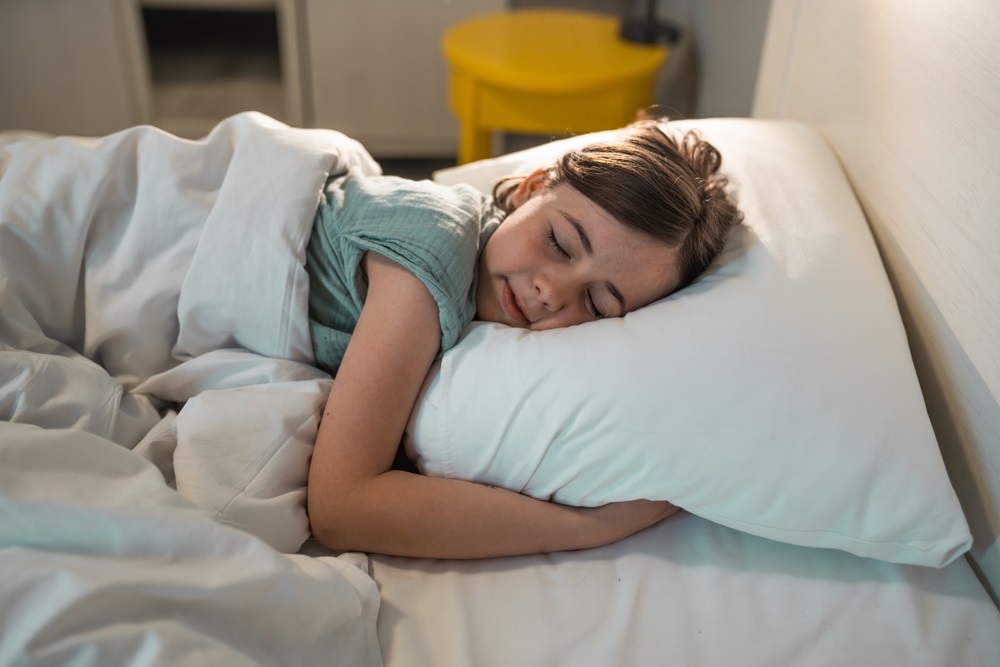
The National Sleep Foundation (NSF) today released new data showing that nearly half of all children in the US aren’t getting the sleep they need, and it’s impacting the entire family. The research is from NSF’s 2026 Sleeping in America® Opinion pollreleased during Sleep Awareness Week® (March 8-14) as part of the NSF’s ongoing commitment to helping everyone be their best-sleeping selves®.
This focus builds on NSF’s previous evidence from the US population on sleep in children, adolescents, adults, and families and expands NSF’s perspective on family sleep health. Results from American parents confirm that young children are a central part of the family’s sleep health, and that the sleep of one member of the family can influence the sleep of other family members. Understanding more about how children sleep provides important insight and context for establishing healthy sleep practices for the entire family.
New findings from the Sleep in America 2026® Survey includes:
Children don’t sleep enough
- Nearly half of American children (44%) do not consistently get the recommended amount of sleep for their age. Younger children in particular will often fall short.
Parents underestimate children’s sleep needs
- Parents underestimate how much sleep their child needs, often by more than an hour per day compared to National Sleep Foundation recommendations.
Children’s sleep affects the entire family
- Nearly everyone (95%) agrees that good sleep is essential for the overall functioning of the family.
- Nearly 9 in 10 (86%) parents report that a good night’s sleep improves behavior and mood.
- Nearly seven in ten parents say that poor sleep has a negative impact on their child’s mood and daytime functioning.
- Four in five parents say their own sleep suffers if their child sleeps poorly.
Change starts with parents
- Nearly half of parents rarely or never talk to their children about the importance of sleep.
“These findings show a gap between the sleep children need and what those closest to them say they actually get,” said Joseph Dzierzewski, PhD, SVP Research and Scientific Affairs, National Sleep Foundation. “When nearly half of America’s children aren’t getting the sleep they need, and at the same time many parents don’t support evidence-based recommendations, we face a knowledge gap that threatens public health. Poor sleep in childhood is linked to poor learning, emotional dysregulation and long-term health consequences. Closing this gap starts with education, and it starts at home.”
The NSF research underscores the importance of children’s sleep for family sleep health. When one family member sleeps poorly, the consequences ripple through the entire household. As Sleep Awareness Week 2026 approaches, NSF urges families to prioritize sleep as a non-negotiable pillar of wellness, like nutrition and physical activity, and adopt a culture of healthy sleep that works for their family unit.
“We’re seeing more signs this year that are driving us to help parents and caregivers set the tone for healthy sleep in the household, starting with their support for kids of all ages, but also for their own sleep,” said John Lopos, CEO of the National Sleep Foundation. “Every family is different and there is no magic solution, except that deciding to talk to children now and set a healthy example can help the whole family and enjoy a lifetime of journey with children.”
NSF encourages families to practice the following evidence-based healthy sleep behaviors together to build a healthy sleep culture and be a best-slept person® Family:
- Spend time in the sun or bright light in the morning. This helps get your body clock going.
- Play or practice regularly. Aim for 30 minutes a day, five days a week.
- As a household rule, reduce caffeine after midday. This includes coffee, soda, tea, energy drinks or caffeinated snacks. This means that adults also model the behavior and not just enforce it on children.
- Eat dinner at least two hours before bedtime. Larger meals taken too close to intended bedtimes can disrupt sleep.
- Create a relaxation ritual and even share it. Over time, reading, light conversation, or a short stretch repeated every evening will strengthen a child’s sleep cues.
- Maintain a consistent sleep and wake schedule, even on weekends. Irregular weekend schedules can disrupt the body’s internal clock for days. It helps to know how much sleep is recommended for each member of your family and plan a schedule that can deliver it.
- Create a device-free window at least 60 minutes before bedtime. Make the hour before bedtime a low-stimulation zone for everyone. Active screen use and content stimulate active minds and can hinder sleep.
- Keep the bedroom cool, dark and quiet. The ideal sleeping temperature for most people is between 65 and 68°F. Especially for children, blackout curtains, white noise machines, and dimmed nighttime lights are often used to set up a room for optimal sleep.
For tips to support your kids’ sleep, resources for your family’s sleep health, and more information on how to be your best-sleeping self®visit www.theNSF.org.
About the National Sleep Foundation
There is only one National Sleep Foundation (NSF). NSF is an independent 501(c)3 nonprofit organization committed to improving health and well-being through sleep education and advocacy. Founded in 1990, the NSF is committed to promoting excellence in the theory, research and practice of sleep health. In the 35 years that NSF has promoted sleep health through expert recommendations, consensus guidelines, technical standards, and easy-to-use tips and tools to improve sleep. For more information about NSF, visit www.theNSF.org │ SleepHealthJournal.org.
The post Nearly Half of American Children Don’t Get Enough Sleep appeared first on Alternative Medicine Magazine.