
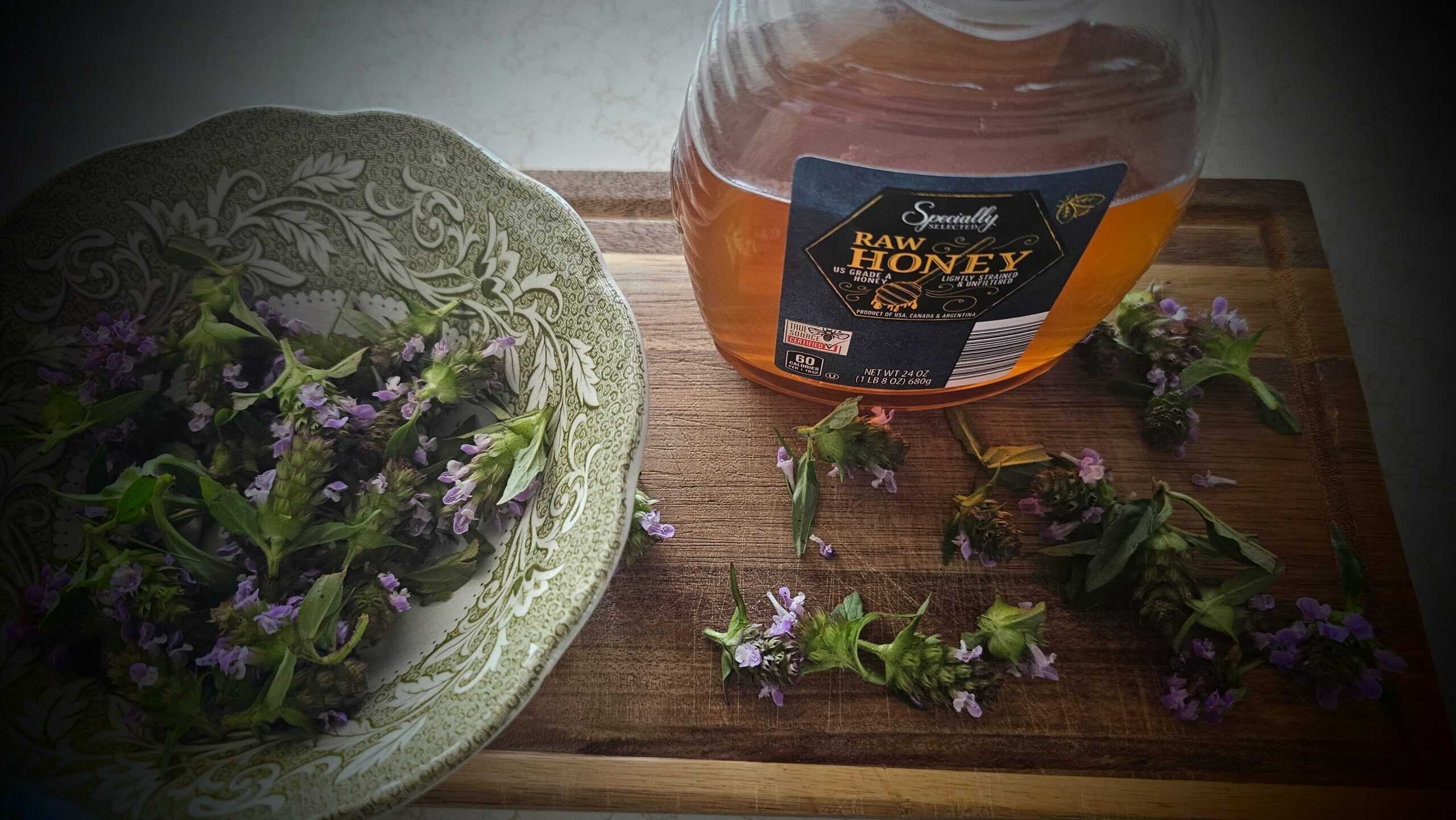
Why I say Self-healing is a witch’s herb
1. It grows where healing is needed
There is an ancient belief that self-healing (Prunella vulgaris) appears wherever people have forgotten how to take care of themselves. That alone gives it a mystical appearance. In folk tradition, plants that ‘know’ where to grow are seen as messengers – gifts from the spirit realm or the elves. Herbalists and wise women of the past often followed these signs, trusting that nature would reveal the medicine we need. That is the essence of witchcraft: to relate to the natural world and read its signs.
2. It is connected to the throat chakra
Self-healing is especially useful for… a sore throatswollen glands and everything around the neck and voice. Spiritually speaking, that connects it to the throat chakrathat governs truth-telling, communication, and personal power. Witches throughout history have used herbs to support both physical and energetic balance, and self-healing helps us speak clearly, ask for what we need, and honor our voice.
3. It is an ally for energy work and protection
In magical herbal medicine, self-healing is sometimes used in protection spells, healing rituals, and bath mixtures intended to restore the aura or ward off negativity. It is a gentle protector, perfect for empaths and energy sensitive people. It’s not flashy magic; it is quiet, deep and durable.
4. It is a lawn ‘weed’ with hidden power
There is something inherently witchy about reclaiming so-called weeds as powerful medicine. Self-healing hides in plain sight, like many of the closest allies in the witches’ cabinet. Its power lies not in drama, but in the way it supports our body’s natural ability to repair and renew. That silent power is deeply magical.
5. It has been used for centuries by folk healers and cunning women
Known by names such as woundwort, carpenter’s herb and heart-of-the-earth, self-healing has long been part of the herbal medicines passed on through oral tradition. The country’s history is intertwined with the women (and men) who practiced medicine on the margins – what many would call witchcraft.