
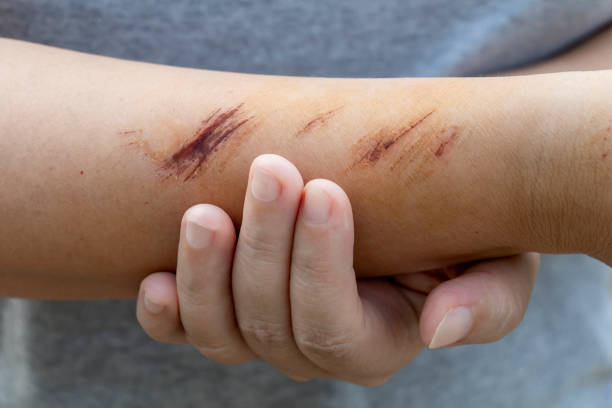
An injury, whether superficial or deep, sets panic and calls for immediate intervention. Injury refers to a physical harm or damage to the body from an accident, a fall, a blow, or a weapon. For an injury, another common term is a wound. Wounds refer to injuries that cause a break in the skin or body tissues (like scratches, cuts, etc.). All wounds are injuries, but not all injuries are wounds. Administering homeopathic medicines on a timely basis not only helps relieve the pain, but it also cuts short the healing process, thus preventing further complications.
Homeopathic Management
Homeopathic medicines are really effective in treating minor injuries. These medicines help relieve pain, reduce swelling and also shorten the healing time. Apart from this, it prevents complications. These medicines work wonders in treating minor injuries. A few doses of Arnica 30C taken soon after the injury really heal the wound well. Right from pulling someone out of a state of mental shock after injury, to providing relief from pain to healing of injured tissues, Arnica works on every aspect of healing. Homeopathic medicines for treating injuries are selected keeping in mind the nature of the injury. For managing moderate injuries, use homeopathic medicines along with allopathy. In case of serious injuries or an emergency, help from conventional medicines should be sought right away. It is to be noted that homeopathic medicines are not a substitute for allopathy where immediate first aid is required urgently.

Wound
Homeopathic Medicines For Managing Wounds And Injuries
The top 11 homeopathic medicines for managing wounds and injuries are Arnica Montana, Rhus Toxicodendron, Calendula Officinalis, Hypericum Perforatum, Symphytum Officinale, Ruta Graveolens, Cantharis Vesicatoria, Ledum Palustre, Natrum Sulphuricum, Bellis Perennis and Silicea Terra.
1. Arnica Montana– Top Medicine For Injuries With Closed Wounds
Arnica is a must-have in the first aid box to treat injuries. It is the best bet for injuries, specifically closed wounds in which the external skin shows no visible signs of harm. Any homeopath will instantly recommend this medicine for such injuries. Injuries caused by a fall, a blow or a bump against something, being hit by something, blunt instruments or equipment are best dealt with this medicine, keeping in mind that the external skin is intact and no external wound is visible. This medicine brings relief from pain, soreness and swelling in the affected part. Second, it heals the injured tissues. It is also a wonderful medicine for treating bruises (blackish, bluish or purplish discolouration on the skin after injury from damaged blood vessels below the skin). This medicine is also recommended to treat the after-effects of injuries suffered a long time back.
When to use Arnica Montana?
It is a precious gem in homeopathy for treating injury cases. It is an irreplaceable medicine when it comes to treating injuries resulting from a fall, a blow or a bump against something, being hit by something, or blunt instruments when external skin shows no perforation. Use it as first aid in such cases and it will prove its worth.
How to use Arnica Montana?
Take Arnica 30C three to four times a day after the injury occurs. Once pain lessens, soreness gets better and swelling reduces, you may decrease the dose to just twice a day.
2. Rhus Toxicodendron – For Repetitive Strains and Ligament Injuries
Rhus Toxicodendron is no less important than Arnica as a medicine. It is equally important and as effective as Arnica, but prescribed for different kinds of injuries. It is a perfect remedy in case of overuse injury (injury due to repetitive stress to a particular part), sprain and strain. Overuse injuries mostly occur in certain body parts due to one particular movements as in sporting activities. A sprain means overstretching or tearing of ligaments. Strain refers to overstretching or tearing of muscles or tendons. A person suffers from intense pain, stiffness or swelling.
When to use Rhus Toxicodendron?
It is a great medicine for cases of injury if there is pain, swelling or stiffness from overuse of a body part by excessive physical activity or from sprain or strain.
How to use Rhus Toxicodendron?
It can be used in different potencies ranging from 30C, 200C, to 1M and 10M. In 30C potency, one may take it three to four times a day. If using 200C potency, its use should be limited to once or twice a day. In higher potencies like 1M and 10M, use it in infrequent doses as per the severity of the problem. Do not use 1M or 10M potency without consulting a qualified homeopath.
3. Calendula Officinalis – For Open Wounds Where Skin Is Broken
It is a natural medicine prepared from leaves and flowers of the plant ‘pot marigold’. Calendula is the most widely used medicine for cases of open wounds where the skin is broken. Some examples include abrasions (wounds caused by rubbing of skin against a rough surface), cuts (tears in the skin caused by sharp objects like a knife) and lacerations (open wounds caused by blunt objects). It is a great healing agent with marked antiseptic properties. It aids in relief from the pain, besides promoting the healing of injured tissues. It reduces sharp, stinging pain in the wounds and redness. Additionally, it has a great potential in preventing pus formation. It heals wounds by first intention, which means quick healing, no pus formation and very minimal scarring. This medicine is also recommended before and after any surgical procedure for efficient healing, along with conventional medicines.
When to use Calendula Officinalis?
It is a specific medicine used as a first line of treatment in case of open wounds where the skin is broken. It works extremely well to reduce pain, swelling and promote healing of wounds.
How to use Calendula Officinalis?
Its use is recommended as a local application over the injured area. For this, Calendula Q (in mother tincture form) needs to be diluted in water and applied over the injured area soon after the injury. It should be administered twice or thrice a day. At the same time, pills of Calendula 30 C potency need to be ingested orally. Calendula 30 C can be administered three to four times a day for the first few days. As healing progresses, the dose should be reduced to twice a day.
4. Hypericum Perforatum – For Nerve, Spine and Whiplash Injury
When it comes to managing a nerve injury, no medicine is better than Hypericum. Being sourced from the plant St John’s Wort, it is a natural remedy. It proves highly effective in managing nerve pain that follows injury to nerves. Though it can be administered for injury to any body part, it is primarily used for nerve injury in the fingers, toes, palms, soles and other body parts that have many nerve-endings. For example, fingers might get pressed in the door, causing intense nerve pain for which Hypericum is the most suitable medicine. It is also well indicated for nerve pain that follows any dental procedure. It is the best medicine for a tailbone (coccyx) injury from a fall. Pain radiates up and down the limbs from the tailbone, along with the inability to walk. Further, its use is highly recommended for injuries to the spine. Here, it can be used along with conventional treatment for relieving pain and tenderness. Lastly, it is highly beneficial for cases of whiplash injuries — neck injury that occurs when the head moves backward and forward suddenly and forcefully, commonly suffered in rear-end car accidents.
When to use Hypericum Perforatum?
This medicine should be administered as a first aid remedy for any sort of nerve injury.
How to use Hypericum Perforatum?
Most preferably, it is used in 30C potency repeated three to four times a day, though some cases require administration of high potencies, like 200C and 1M. Higher potencies are not to be administered in very frequent doses. As a general rule, the higher the potency, the lower the frequency of dosage.
5. Symphytum Officinale– For Broken Bones (Fractures)
Prepared from the plant Comfrey, also called ‘knit bone’, Symphytum is a top-ranked medicine for managing fractures. Undoubtedly, it is the best medicine to heal fractures. It enhances the activity of fibroblast cells, which speeds up healing. Along with bone repair, it also provides relief from pain. Other than this, its use is administered for managing cases of black eye (bruise around the eye after bleeding from ruptured blood vessels in the skin area around the eye caused by a blow or punch). It appears as a blackish to bluish discolouration around the eye.
When to use Symphytum Officinale?
Anyone who is familiar with homeopathy knows that there can be no other medicine that matches Symphytum when it comes to healing of the bone. Its use should be considered in all cases of fracture. The medicine can be started after the setting of the broken bone in the cast.
How to use Symphytum Officinale?
It gives the best results in mother tincture (Q) form. In the beginning, start with Symphytum Q, 5 to 7 drops diluted in half a cup of water three times a day for about two weeks. Gradually decrease the dose to twice a day, followed by once a day.
6. Ruta Graveolens– To Treat Sprains And Strains
It is a herbal medicine prepared from a ‘garden rue’ plant. It has a marked action on ligaments, tendons and muscles. It can effectively handle cases where ligaments are overstretched or torn (sprains) and when muscles/tendons are overstretched or torn (strains). It offers relief from pain and reduces swelling in the affected areas.
When to use Ruta Graveolens?
This medicine can be used in cases of sprain and strain. It encourages healing of injured ligaments, tendons or muscles as well as for relief from pain.
How to use Ruta Graveolens?
Initially, take Ruta 30C three to four times daily, and reduce it to once or twice daily when the healing has begun. If the recovery is slow, one may switch to Ruta 200C once or twice a day.
7. Cantharis Vesicatoria– For Burns and Scalds
Cantharis is a leading medicine for the treatment of burns and scalds. This medicine provides relief from pain and reduces burning sensations in damaged areas. It reduces redness and inflammation and aids the healing of burns. If used immediately on the burns, it prevents blister (water-filled bumps) formation. Other than burns and scalds, it can treat sunburns as well.
When to use Cantharis Vesicatoria?
Each and every case of burns and scalds requires Cantharis in the first place without wasting time.
How to use Cantharis Vesicatoria?
While applying to burns, apply it externally by diluting its 1X or 2X potency in water twice a day. Simultaneously, start taking Cantharis 30C tablets twice a day.
8. Ledum Palustre – For Punctured Wounds
This medicine is obtained from the plant ‘wild rosemary’. It is a wonderful medicine to treat punctured wounds from sharp pointed objects such as needles, iron nails, pins, injections, etc. Besides, it is effective in treating wounds due to insect stings.
When to use Ledum Palustre?
It is the most commonly prescribed medicine for cases of punctured wounds and wounds from insect stings.
How to use Ledum Palustre?
One may be administered it in 30C potency twice or thrice daily.
9. Natrum Sulphuricum – For Managing Head Injury
It is one of the best medicines to treat head injuries. It can be used along with conventional medicines. It plays an effective role in managing headache, depression or epilepsy that may follow a head injury.
When to use Natrum Sulphuricum?
Natrum Sulph is a specific medicine used for treating cases of head injury. Since it could turn out to be a serious injury, it is best advised to use it along with conventional medicines. Its independent use can be thought of only if considerable time has elapsed after the head injury.
How to use Natrum Sulphuricum?
It can be used in various potencies like 30C, 200C and 1M. Use this medicine only as advised by a qualified homeopath.
10. Bellis Perennis – For Injuries after Surgery and Childbirth
Bellis Perennis is mainly indicated if there are injuries of the tissues that are deep inside. There is soreness and swelling due to the injuries. There are injuries from falls on the coccyx or pelvis (including childbirth trauma). Injuries from trauma due to cold, damp exposure when overheated and injuries after abdominal or pelvic surgeries are very well managed by using this medicine. It is also a well-indicated medicine when Arnica fails and in cases of old injuries that could not heal properly. It is highly effective for both the immediate and delayed effects of blows, falls and accidents.
When to use Bellis Perennis?
It can be used in cases of injuries after surgery or surgical procedures. It can be used when there is blunt trauma (caused by an object not sharp) affecting the deep structures. It is indicated when there is bruise-like soreness that is more internal than on the surface.
How to use Bellis Perennis?
It can be used in 30C potency for acute injury. It should be administered 2 to 3 times daily for one to three days or in 200C single dose for cases of severe trauma under the guidance of a qualified homeopath.
11. Silicea terra – For Non-Healing Suppurative Injuries
Silicea, also known as the “Surgeon’s Knife”, is one of the most useful medicines in cases of suppurative injuries. It is mainly indicated in injuries with deep, narrow wounds that become infected later and slowly develop into an abscess. It is used when there are injuries from sharp and blunt objects. It helps the body to push them out and promotes the expulsion of foreign bodies from tissues. It can be used in cases when old scars never heal properly. The skin becomes unhealthy and there is a tendency for even a little injury to suppurate.
When to Silicea Terra?
Its use can be thought of in cases of punctured wounds or injuries that lead to suppuration and also injuries with risk of infection or sepsis. It helps the body to throw out the foreign bodies that cause infection and pus formation.
How to use Silicea Terra?
It can be used in 30C, 2–3 times daily for acute injury. The higher potencies of 200C can be used once daily in deeper infections. It is advised to stop taking these medicines once the pus drains and improvement sets in.
Note: Use of the above medicines is recommended only for minor wounds and injuries. In case of serious and severe injuries, immediate help from a conventional mode of treatment is advised.
Types of injuries

Some of the common injuries include:
1. Bruises: It refers to blackish, bluish or purplish discolouration of the skin after injury due to damaged blood vessels under the skin. The affected area can be painful, tender and swollen. It may happen from reasons like hitting a body part against some object like a chair, door, bed, etc, sprains, and car accidents.
2. Sprain and strain: A sprain refers to overstretching of ligaments (band of tissue that connects bones together in a joint). The most common locations of sprains are the ankle and wrist. Strain refers to the overstretching of muscles or tendons (bands of tissue that attach a muscle to a bone). Strains are common in the back.
3. Overuse injuries (repetitive movement of one body part): It is an injury from repetitive physical activities of a certain kind over a period of time, rather than a single-time injury. It could affect the muscles, tendons, ligaments, bones, joints, and nerves from repetitive stress.
4. Abrasions:It is a type of wound that involves breaking of skin that happens on rubbing of skin against a rough surface, for example, when one falls on a hard, rough surface. It is not a deep wound. Elbows, knees and ankles are some of the areas commonly affected.
5. Cuts and Lacerations: A cutis a wound with a direct tear in the skin caused by sharp objects like a knife, a broken glass piece, etc. Lacerations refer to torn or jagged open wounds with irregular margins caused by blunt trauma.
6. Puncture wounds: These are deep wounds when a sharp, pointed object penetrates the skin like a needle, pin, or iron nail.
7. Incised wounds: A straight, clean cut wound resulting from a sharp object like a knife, blade, etc. Incision wounds during surgery are referred to as surgical wounds.
8. Fractures (broken bones): A crack or break in the bone
9. Burns and scalds: It is a result of skin or tissue damage from heat. Burns take place due to dry heat (fire, hot iron) or chemicals, electricity, radiation, or sunlight. Scalds, on the other hand, are caused by moist heat like hot water, hot oil, steam, etc.
10. Animal Bites and Insect Stings
11 .Concussion(traumatic brain injury): It is a brain injury from trauma like a fall, blow on head that affects the functioning of the brain. It can cause headache, loss of concentration, nausea, vomiting, drowsiness, dizziness, confusion and memory loss.
Signs and Symptoms Of Injuries
The signs and symptoms differ according to the type of injury and its intensity. Among all types, head injury and spine injury are the most serious ones.
Some of the signs and symptoms include swelling, pain, reduced mobility of affected parts, bleeding, cuts, scraped skin, and skin turning reddish, bluish or blackish.
Some serious signs and symptoms include uncontrolled heavy bleeding, breathing problems, bluish lips or fingernails, chest pain, changes in consciousness levels, abnormal pupil size, pupils getting non-reactive to light, paralysis, vomiting of blood, etc.
First Aid Management in Cases of Wounds and Injuries
Soon after an injury or a wound, if proper first aid is provided, one can reduce the chances of infection, bleeding and complications. Below are the steps that should be considered immediately after an injury.
1. Clean the wound: Rinse the wound under running water for at least 5-7 minutes, remove any visible dirt using a clean gauze or cloth and gently apply a mild antiseptic. Avoid using turmeric or soap.
2. Control Bleeding-Apply direct pressure for 5-10 minutes and elevate the injured part. If the bleeding is in spurts, seek immediate help.
3. Bandaging– Cover the wound using clean gauze and seal it using a bandage or medical tape. This will prevent the wound from getting infected.
4. Resting– Avoid movement of the affected part and provide proper rest by raising the part above heart level. This will help in reducing swelling and pain.
5. Seek Immediate Help in cases of– Deep wounds, animal bites, heavy bleeding and suspected fracture.
Frequently Asked Questions
1. When should I consult a doctor for a wound?
If the wound is deep and it is caused by any animal bite or it shows any signs and symptoms of an infection, like redness, fever, swelling, and pus. Also, if it bleeds profusely or has poor immunity and diabetes.
2. What are the signs of infection in a wound?
The signs of infection include increasing pain, redness, warmth, swelling or fever.
3. Can antiseptics or spirits be used to wash a wound?
Strong antiseptics cause delayed healing and damage healthy tissue. Therefore, a gentle septic solution is advised to clean. Clean water and saline are the safest to begin with.
4. Should wounds be kept open or covered?
Keeping the wound open increases the risk of infections. They heal better when they are kept clean, moist and covered with a sterile dressing.
5. How often should dressing be changed?
A dressing should be changed once it becomes wet or dirty, or else it is advised to change it once daily. For specific wounds, a doctor’s advice is required.
6. Why do wounds take a long time to heal?
Delayed healing could be due to infection, diabetes, poor nutrition, repeated injury, poor blood supply or improper care of the wound. Take the doctor’s advice if the wound is taking a long time to heal.
7. Can turmeric, toothpaste or oil be applied to the wound?
Household substances should be avoided unless advised by a doctor, it may cause infection or delayed healing of the wounds.
9. Do all wounds require antibiotics?
Antibiotics are required only if infection sets in or the risk of infection is high. Unnecessary use of antibiotics can cause resistance.
10. How to prevent scars after wound healing?
The scars can be prevented by proper care of the wound, by avoiding infection, keeping the wound moist and protected from the sunlight.
11. Can homeopathy help with injuries to the bones?
Yes homeopathic medicine can support natural healing, reduce pain, control bleeding and prevent the risk of infection and it helps in proper tissue repair of the bone.
12. When should homeopathic medicines be prescribed after an injury?
Start it as early as possible after the injury. Early administration of homeopathic medicines reduces shock, swelling, bruises and pain.
13. Can homeopathic medicines be used along with conventional treatment?
Yes. Homeopathic medicine can be used as a supportive therapy alongside conventional wound care, dressing or surgery.