
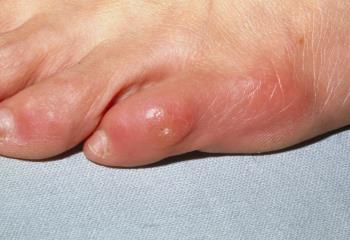
Corns, also known as helomas or clavus, are thick, hard, rough, dead areas on the skin caused by excessive friction or pressure. Corns mostly appear on the feet, toes, hands, and fingers. They develop due to excessive friction, rubbing, or pressure on the skin. Corns appear as thick, rough, raised areas on the skin. They can either be hard or soft. Hard corns appear mainly on top of the toes or on the sides of the feet, while soft corns form between the toes. They cause pain while walking or standing.
How Homeopathy Treats Corns?
1. Gentle and Free of Side Effects: Corns can successfully be treated under the homeopathic mode of treatment that uses a very gentle approach. Homeopathic remedies for corns are very effective and treat the problem from its roots. They provide relief from pain, swelling, and tenderness and simultaneously dissolve them. Homeopathy uses gentle medicines for corns, which are natural and therefore safe to use. They do not cause any side effects. People of any age group can be administered homeopathic medicines.
2. Long-Term and Non-Invasive Treatment: Conventional mode recommends medicated patches or surgical removal of corns, which is temporary. Corns have a tendency to recur. Removing the corns with surgery also carries the risk of infection, while natural homeopathic medicines provide a permanent and completely safe solution. Homeopathy does not recommend any external application for corns. It uses oral medicines that heal the system internally. It offers remarkable results in corns, hard or soft, and also in both painless and painful corns. Infected corns also recover wonderfully with homeopathic medicines.
3. Individualized Prescription: As usual, the treatment plan for corns involves an in-depth analysis of the case. The types of corns and their accompanying signs and symptoms are given importance while selecting the medicine in each case. This individualized approach of prescribing medicines yields great results.

Top 10 Homeopathic Medicines for Corns
The homeopathic medicines for corns that are found to be most beneficial are Antimonium Crudum, Silicea Terra, Hepar Sulph, Ranunculus Bulbosus, Sulphur, Lycopodium Clavatum, Thuja Occidentalis, Nitricum Acidum, Causticum and Graphites Naturalis.
1. Antimonium Crudum – Top Grade Medicine For Corns
Antimonium Crudum tops the list of natural medicines for corns. This medicine is often the first choice to treat corns. The most prominent symptom to use Antimonium Crudum is the presence of large, horny corns on the feet, which may or may not be inflamed. Antimonium Crudum is also one of the best medicines for corns, where the corns are very tender. The corn may be present on the soles or toes. Pain is felt in the corns while walking. Pain can be stinging, pressing, or there could be a burning sensation.
When to use Antimonium Crudum?
This medicine is highly recommended as a first remedy to use in cases of corns, either painless or with pain and tenderness.
How to use Antimonium Crudum?
This medicine can be used in both low and high potencies. Though it is best to begin with a low potency — 30C that can be taken one to two times a day.
2. Silicea Terra – For Soft Corns Between Toes
Silicea Terra is another top medicine for corns that are soft. Soft corns mainly appear between the toes. Silicea is one of the most effective medicines for treating them. Corns between the toes may be sore and painful. Patients may also feel burning, tearing or violent stitching pain in these types of corns. Silicea also works wonders to treat corns between toes that tend to suppurate (discharge pus). There may be excessive sweating with an offensive odor on the foot where the corn is.
When to use Silicea Terra?
It is a wonderful medicine for corns that are soft and appear between the toes along with pain. There is also a tendency to form pus.
How to use Silicea Terra?
This medicine is frequently prescribed in 6X potency that can be administered three to four times a day, depending on the requirement.
3. Hepar Sulphuris – For Corns with Pus Formation
Hepar Sulph is a wonderful medicine for corns that helps heal corns that suppurate (have pus formation). The kind of corns for which Hepar Sulph would be the most suitable prescription are corns infected with pus formation and pain with pricking sensation. Burning and stinging pains may also be experienced in cases where Hepar Sulph would be one of the ideal medicines for corns. Such corns may also be tender to the touch.
When to use Hepar Sulphuris?
Hepar Sulph is mostly suited to manage corns that get infected with pus and a pricking type of pain.
How to use Hepar Sulphuris?
One may take this medicine in 30C potency one to two times a day as per the severity of the symptoms.
4. Ranunculus Bulbosus – For Corns With Smarting Or Burning Pain
Ranunculus Bulbosus works well in cases where corns have a marked smarting or burning sensation. The corns are very sensitive to touch. They are hard and horny.
When to use Ranunculus Bulbosus?
This medicine is recommended for corns with a smarting, burning sensation along with sensitivity to touch.
How to use Ranunculus Bulbosus?
It is advised to use this medicine once or twice a day in 30C power.
5. Sulphur – For Red, Inflamed Corns
Sulphur is well indicated for corns that are inflamed (red, swollen, hot, painful). For those who need it, a burning sensation is most prominent in corns. Besides, there may be multiple types of sensations, such as stinging, pressing, boring, and stitching sensations.
When to use Sulphur?
This medicine is highly valuable for managing corns with inflammation, i.e., especially when corns are accompanied by redness, heat, swelling and pain.
How to use Sulphur?
Sulphur 30C can be administered once a day.
6. Lycopodium Clavatum – For Indurated and Painful Corns
In cases where the most prominent symptoms are thick, indurated (hardened) corns on the feet with sensation of pressing, stitching, tearing, aching, and drawing pains, Lycopodium shows the best results. Lycopodium is also one of the best medicines for corns that are inflamed and result in a sore, stinging, burning sensation.
When to use Lycopodium Clavatum?
Lycopodium is a useful medicine, especially when the corns are painful with varying types of pain sensation like stitching, tearing, pressing, aching or drawing.
How to use Lycopodium Clavatum?
Lycopodium can be administered once a day in 30C potency.
7. Thuja Occidentalis – For Recurrent, Stubborn Corns
Thuja is one of the top remedies for recurrent, stubborn corns associated with thickened, unhealthy skin. Corns often develop due to long-standing pressure or friction and may coexist with warts or callosities. Corns are painful and tender. The skin appears dry, rough, and hypertrophied. Thuja is especially useful when corns return despite treatment.
When to use Thuja Occidentalis?
Thuja Occidentalis should be administered for corns that are recalcitrant, long-standing and may recur even after treatment.
How to use Thuja Occidentalis?
This medicine is prescribed in 30C potency initially. The potency may be raised to 200C or 1M after consulting a qualified homeopath.
8. Nitricum Acidum – For Corns with Splinter-Like Pains
Nitricum Acidum is indicated in corns that are extremely painful, with a characteristic sharp, splinter-like, or stitching sensation. The corn may crack, bleed easily, and be very sensitive to touch or pressure. Patients often complain that even slight contact may cause an intense sensation of pain. It is particularly helpful if corns appear on the toes or pressure points and show fissures.
When to use Nitricum Acidum?
Nitric acid is mostly recommended in cases of corns that are extremely painful with a sharp, splinter-like sensation.
How to use Nitricum Acidum?
Use this medicine in 30C potency once or twice a day for best possible results.
9. Causticum – For Old, Long-Standing Corns
Causticum is another wonderful medicine for corns. It is typically indicated for long-standing corns, especially among individuals with foot deformities or altered gait leading to uneven pressure. The corns may be hard, painful, and accompanied by a burning or raw sensation. It is often indicated when corns are associated with warts, callosities, or weakness of muscles and tendons.
When to use Causticum?
Causticum should be used in cases of corns that are chronic, old, and long-standing. Corns may be associated with warts or callosities.
How to use Causticum?
This medicine can be taken in 30C potency initially. This medicine should be administered just once a day.
10. Graphites Naturalis – For Corns with Thick, Rough Skin
Graphites Naturalis is administered for corns associated with thick, rough, unhealthy skin that may crack or have fissures. The surrounding skin may appear dry, coarse, and sometimes sticky or oozing. These corns are often seen among people with a tendency to skin disorders and slow healing. This remedy suits chronic cases where corns form repeatedly due to persistent skin thickening.
When to use Graphites Naturalis?
Graphites should be thought of in cases of chronic corns that are caused by repeated thickening of the skin.
How to use Graphites Naturalis?
Graphites can be used in different potencies, such as 3X (biochemic form) or in 30C, depending upon the severity of the symptoms.
Types Of Corns

1. Hard Corns: (Heloma durum or clavus durus): These are small hard areas on the skin with thick skin. These appear on top of the toes.
2. Soft Corns: (Heloma molle or clavus mollis): These are soft-textured and whitish or grey-coloured. These form between the toes.
3. Seed Corns: These corns form on the bottom of the feet and are small in size.
4. Heloma Neurovasculare: A corn that contains nerves or is on the blood vessels.
5. Subungual heloma– Corn that forms under the nail.
Signs and Symptoms Of Corns
1. Location:Corns mostly form on the sole of the feet or on the side/top of the toes. But these may also form on the hands and fingers.
2. Color: Corns are mostly yellowish. With time, the colour may change to reddish, brownish, or a hue of black.
Signs and symptoms are
1. Thick, rough, round areas on the skin surface that are exposed to frequent pressure or friction. It has a pointy part that digs quite deep inside the feet
2. Raised hard bump on the skin
3. Pain and tenderness in these areas. Pain gets worse upon touch and pressure. While walking, it may feel as if one is walking on stones.
Causes Behind Corn Formation
The main reason for corn formation is excessive friction, rubbing or pressure on the skin. Corns are actually formed out of a protective response to save the skin from the effects of excessive pressure and friction.
Some of the predisposing factors for corns are:
1. Wearing shoes that are too tight or too loose
2. Wearing high-heeled shoes causes corns and calluses on the feet
3. Standing for long periods or walking for extended periods could cause corns
4. Sports activities of some occupational work that puts pressure on the feet regularly
5. Excessive sweat on the feet
6. Walking barefoot, and not wearing socks while wearing shoes
7. Walking improperly and heavily on the inner or outer margins of the foot
8. Long, continued use of tools or musical instruments or lifting heavy weights are the major factors that predispose conditions for corn formation on the hands.
9. Some types of corn (keratosis punctata) are inherited, which means a person has a family history of corn formation.
10. Medical conditions like a bunion (bony bump that forms on the joints at the base of the big toe), hammer toe (a deformity causing the toe to bend downward), and arthritis (joint inflammation) can develop in the feet.
Complications
If corns are left untreated, they may grow in size. These may become painful and make walking difficult. Secondly, there are chances of corn becoming infected. The redness of corn along with the oozing of fluid may be indicative of infection. If someone has some medical condition like diabetes which results in poor blood flow to feet, the chance of complications increase.
Frequently Asked Questions
1. Are corns and calluses the same?
Corns are smaller, harder, and often painful, while calluses are larger, flatter, and usually painless.
2. Can corns go away on their own?
If the pressure or friction causing the corn is removed, small corns may disappear over time. Long-standing corns usually need treatment.
3. Is it safe to cut or remove corns at home?
No. Cutting corns at home can cause infection, bleeding, or worsening of the condition, especially in diabetic patients.
4. How can corns be prevented?
Wearing comfortable footwear, keeping feet clean and moisturized, using protective pads, and avoiding repeated pressure help prevent corns.
5. How does homeopathy help with corns?
Homeopathy helps by reducing pain, softening hard skin, and addressing the root cause, leading to gradual and long-lasting relief without surgery.
6. Can corns become infected?
Yes. If a corn cracks, bleeds, or is cut improperly, it can get infected, especially in people with diabetes or poor circulation.
7. Do corns bleed?
Corns usually do not bleed unless they are cut or damaged. Bleeding can be a sign of infection or deep tissue involvement.
8. Are corns contagious?
No. Corns are not contagious and do not spread from person to person.
9. Can corns come back after treatment?
Yes, corns can recur if the underlying cause—such as pressure or improper footwear—is not corrected.
10. Do corns occur only on the feet?
Corns most commonly occur on the feet, but they can also appear on the hands or fingers due to repeated friction or pressure.
11. Can corns cause difficulty in walking?
Yes. Painful corns can affect walking posture and cause discomfort during daily activities.
12. Are corns and warts same?
No. Corns are caused by pressure and friction, while warts are caused by a viral infection.
13. Does soaking feet help corns?
Soaking feet in warm water can temporarily soften the skin, but it does not cure corns permanently.
14. Should I use corn plasters or acids?
Chemical corn removers should be used with caution, as they may burn healthy skin and worsen the condition.
15. Can weight gain cause corns?
Yes. Increased body weight can increase pressure on the feet, contributing to corn formation.
16. How long does it take to treat corns?
The duration varies depending on severity and cause, but with proper treatment, improvement is usually gradual and sustained.