
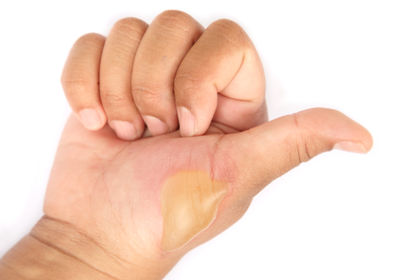
Burns refer to the wound on the skin arising from exposure to heat, chemicals and electricity. Burns can also be caused by radiation (from the sun or X-rays). Burns can involve just the outer layer of skin, or can penetrate the inner layers and, in severe cases, even reach the bones and the muscles. The Homeopathic medicines, which are made of natural substances, not only provide relief from swelling and pain caused by burns, but they also halt any signs of an infection or old burn wounds that could open up. The Homeopathic remedies for burns are absolutely safe, with no side effects.
Homeopathic medicines help in reducing burning sensation, pain and swelling. The natural homeopathic treatment for burns also helps in preventing blister formation. The cases of burns that are slow to heal or old burns that suddenly start to pain or reopen can be well managed with homeopathic treatment. Burns cases that show signs of infection or are susceptible to becoming gangrene can benefit from homeopathic medicines.
Homeopathic remedies for burns are obtained from natural substances, and thus, they are completely toxin-free with no side effects.
The top 10 homeopathic medicines for burns are Cantharis Vesicotoria, Urtica Urens, Causticum, Apis Mellifica, Calendula Officinalis, Carbolicum Acidum, Belladonna, Arsenic Album, Phosphorus and Arnica Montana.
1. Cantharis Vesicotoria – Top-Grade Medicine For Burns

Homeopathic Remedies for skin burns
Cantharis is a top homeopathic medicine for first and second-degree burns, especially in the initial stage when there is intense burning sensation. It is administered if there is severe burning sensation and smarting pain as if the affected part is on fire, with marked redness, swelling, and inflammation of the skin. The affected area may feel raw and extremely sensitive to touch. The pain is often relieved by cold applications. Large fluid-filled blisters may form rapidly, but Cantharis remains useful even after blister formation, particularly when burning pain continues to be the most prominent symptom. It is helpful in burns caused by dry heat, hot liquids, steam, or exposure to the sun, which helps reduce the inflammation and healing is quicker.
When to use Cantharis Vesicatoria?
Cantharis is well administered when burns cause intense burning and smarting pain with marked redness and inflammation.
How to use Cantharis Vesicatoria?
It can be prescribed in lower potency 30C, once a day. Higher potencies such as 200C, 1M can be started only under the guidance of a qualified homoeopath.
2. Urtica Urens – For First Degree Burns
Urtica Urens is a well-administered homeopathic remedy for first-degree burns and scalds confined to the superficial layers of the skin. It is especially useful if there is intense burning, stinging, and itching in the affected area, with marked redness and slight swelling. The skin may show raised red blotches or small vesicles, resembling nettle rash. The burning sensation can be sharp and persistent. Urtica Urens provides quick relief from burning/stinging sensations and initiates rapid healing in minor cases of burns, including sunburn, where the discomfort is mainly limited to the skin surface.
When to use Urtica Urens?
Urtica Urens works wonders in first-degree burns, confined to the skin with intense burning, stinging, and itching.
How to use Urtica Urens?
One can take it in 30C potency once a day.
3. Causticum — For Burns That Heal Slowly
Causticum is the ideal homeopathic remedy for burns that are very slow to heal. It is of great help in hastening the healing process in such cases. Persons who can benefit from Causticum have a major complaint of rawness, excessive soreness and pain in the burnt area. Causticum also helps to speed up recovery of burns and helps soothe the soreness and pain in the affected area. Another scenario for using Causticum is when the burns that had surfaced long ago reopen.
When to use Causticum?
Causticum works well in cases of burns that are slow to heal with rawness, soreness, and formation of blisters.
How to use Causticum?
It can be initiated in 30C potency once a day.
4. Apis Mellifica – For Burns With Stinging and Burning Sensation
Apis Mellifica is administered for cases of burns where there is marked redness, swelling, and edematous puffiness (due to fluid accumulation) of the skin. The sensation is characteristically stinging and burning in nature, with extreme tenderness and sensitivity to touch. The affected area appears rosy red, hot, and swollen, and may be accompanied by itching and smarting pain. The skin may feel tight and stretched due to fluid accumulation or blister formation. Stinging pains are relieved by cold applications and aggravated by heat.
When to use Apis Mellifica?
It is useful in cases of burns if the skin is red, swollen, and puffy with a stinging, burning sensation. The pain is relieved by cold applications and it aggravates from heat or touch.
How to use Apis Mellifica?
It can be administered in 30C potency once or on alternate days.
5. Calendula Officinalis – For Promoting Healthy Granulation in Burns
Calendula Officinalis is useful in superficial burns and scalds when the skin becomes raw, sore, and very tender to touch. The pain is mostly smarting in nature. It helps in promoting healthy granulation, preventing infection, and accelerating healing, particularly after the acute inflammatory stage of the burn.
When to use Calendula Officinalis?
It is indicated in superficial burns and helps in healing and preventing infection after the acute burning sensation.
How to use Calendula Officinalis?
It can be started in 30C or 200C potency once a day.
6. Carbolicum Acidum – For Septic and Ulcerating Burns
Carbolicum Acidum is indicated in burns if there is intense burning sensation with itching, vesicles, and pustular eruptions on the skin. The blisters may contain bloody fluid, and the affected surface tends to ulcerate if not managed well. The tissues appear unhealthy and prone to septic. There may be erysipelatous inflammation (red, inflamed and sharply demarcated) around the burns. It is especially useful when the burn becomes infected, forms pus, or shows destructive changes in the skin.
When to use Carboliccum Acidum?
It works well in burns with intense burning pain, itching vesicles, or pustules filled with bloody fluid. It is especially indicated when the burn tends to ulcerate.
How to use Carbolicum Acidum?
It can be initiated in lower potency 30C on alternate days only under the guidance of a qualified homoeopath.
7. Belladonna – For Acute, Bright Red and Hot Burns
Belladonna is administered for burn cases when the skin is intensely red, dry, hot, and swollen, with marked sensitivity to touch. The affected area appears bright scarlet, smooth, and shining, resembling erythema. There may be throbbing pain and a tendency to form pustules or suppuration if inflammation progresses. The surrounding glands can become swollen, tender, and red. It is especially useful in the early, acute inflammatory stage of burns, when there is sudden heat, congestion, and active vascular reaction.
When to use Belladonna?
Belladonna works wonders in the early stage of burns when the skin is bright red, hot, dry, and markedly swollen with throbbing pain.
How to use Belladonna?
It can be taken in 30C Potency once or twice a day.
8. Arsenicum Album – For Burning relieved by Warm Applications
Arsenicum Album is prescribed for burns when there is intense burning sensation, marked restlessness, and a lot of anxiety. The skin may appear dry, rough, and scaly, with itching and swelling, sometimes progressing to vesicles, pustules, or even ulceration with offensive discharge. It is particularly useful when the burning is severe yet temporarily relieved by warm applications, and the patient feels exhausted but extremely restless.
When to use Arsenicum Album?
Arsenicum Album is the leading medicine in burns with intense burning pain, a lot of restlessness, and anxiety, especially when warmth relieves the burning sensation.
How to use Arsenicum Album?
It can be started in a lower potency — 30C — once a day.
9. Phosphorous — For Deep burns with Tissue Involvement
Phosphorus is considered if burns are deeper and there is marked tissue destruction, rawness, and a tendency to bleed. The skin may appear fragile, sensitive, and slow to heal. The patient often feels weak, anxious, and may crave cold drinks. It is particularly useful when there is extensive involvement and a risk of collapse or exhaustion following severe burns.
When to use Phosphorous?
Phosphorus is indicated in cases of burns that are deep and there is marked tissue destruction.
How to use Phosphorus?
It can be initiated in a lower potency — 30C — once a day; higher potencies should be used only after consulting with a qualified homeopath.
10. Arnica Montana — For Burns Associated with Trauma or Shock
Arnica Montana is administered in burns associated with trauma, shock, or injury from accidents, including electrical burns. The patient may feel sore, bruised, and exhausted. It helps in managing the after-effects of trauma and supports recovery in the early stages following burn injury.
When to use Arnica Montana?
Arnica Montana can be administered in cases of electrical burns and is helpful to manage the after-effects of trauma and recovery.
How to use Arnica Montana?
It can be used in 30 C potency twice a day.
Other Homoeopathic Medicines Indicated for Burns
Homoeopathic Medicines for Pus Formation in Burns:
1. Calcarea Sulphurica
Calcarea Sulphurica is indicated when burns have suppurated with yellowish pus discharge. Helps in controlling persistent yellowish discharge from the burnt skin. It promotes healthy healing, especially when there is already visible pus formation.
2. Hepar Sulphuris Calcareum
This medicine is used when there is a smelly pus discharge with marked sensitivity to touch. Burning, stinging, and pricking pain accompany the discharge. There is a fever accompanied by chills and one feels the need to be covered warmly.
Indications That Burns May Turn Into Gangrene
1. Anthracinum
Blue or black blisters on the skin with intense burning sensation. Ulceration and sloughing of skin can be seen. It is especially useful when burns show signs of gangrenous destruction.
2. Secale Cornutum
Skin appears shrivelled with a bluish discoloration. Burning pain is present but gets relieved by cold applications.
Types of Burns
Depending upon the Cause
1. Thermal burns– Caused by fire, hot liquids (scalds), steam, or hot objects.
2. Chemical burns– Due to contact with acids, alkali, detergents or industrial chemicals.
3. Electrical burns– From exposed wires, faulty appliances, high-voltage currents, or lightning.
4. Radiation burns – Excessive sun exposure (sunburn), radiotherapy, or other radiation sources.
5. Friction burns– Skin rubbing against rough surfaces (road injuries, rope burns).
6. Cold burns (Frostbite)– Prolonged exposure to extreme cold or frozen objects.
7. Explosion or blast injuries– Firecrackers, gas cylinder blasts, industrial explosions.
8. Inhalation burns – Breathing hot smoke, steam, or toxic fumes during fires.
1. Depending upon the degree
First-degree burns: When only the outer or superficial skin is burnt, it is called a first-degree burn. Here, the skin gets red with pain and swelling.
2. Second Degree Burns: In second and third degree burns, the injury involves the deeper layers of skin partially or in whole thickness, respectively. In second degree burns, blisters (fluid-filled eruptions) appear along with redness and swelling of the skin.
3. Third Degree Burns:In third-degree burns, the skin appears white or brown.
4. Fourth Degree Burns: In the fourth degree burns, the skin appears black and charred, exposing the bones and muscles. The third and fourth-degree burns are painless. Third and fourth-degree burns need urgent intensive care in a hospital. The Homeopathic mode of treatment, however, is of great help for minor superficial burns up to second degree.
Symptoms of Burns
1. The skin becomes red and inflamed after a mild burn.
2. There is a burning sensation on the affected part.
3. The person experiences pain that may range from mild to severe, depending on the depth of the burn.
4. Blisters may develop, especially in second-degree burns.
5. The affected area may become swollen.
6. The skin may start peeling as it begins to heal.
7. In deeper burns, the skin may appear white, charred, or leathery.
8. Severe burns may cause blackened or dead tissue.
9. There may be numbness if nerve endings are damaged.
10. The wound may ooze fluid or discharge.
11. Fever can develop if the burn gets infected.
12. In extensive burns, the person may feel weak, dizzy, or show signs of shock.
Frequently Asked Questions
1. Can burns get infected?
Yes, burns damage the protective skin layer, making infection common if not properly treated.
2. What complications can occur due to severe burns?
Untreated severe burns can lead to dehydration, infection, shock, gangrene, contractures (tightening of skin) and permanent scarring.
3. Can I useice on burns?
No, ice is not recommended for burns. Ice can further damage tissues and reduce blood flow, worsening the injury.
4. Can burns leave scars?
Yes. Deeper burns (second and third degree) may leave scars or cause skin tightening (contractures). Early and proper treatment reduces scarring.
5. Is it safe to pop burn blisters?
No. Do not break blisters, as they protect against infection.
6. What is a scald burn?
A scald burn is caused by hot liquids or steam. It is common among children and often results in second-degree burns with blisters.
7. Why do some severe burns not cause pain?
In third-degree burns, nerve endings may be destroyed, making the area painless despite severe tissue damage.
8. Should butter, oil, or toothpaste be applied to burns?
No. These substances trap heat, increase infection risk, and delay proper healing.
9. What is hyper trophic scarring?
It is raised, thick scar tissue that forms after deep burns due to excessive collagen production.
10. Can Homeopathy help with burns?
Yes, homeopathy can help reduce pain, prevent blister formation (in early stages), and promote faster healing and minimizes the scar formation.