
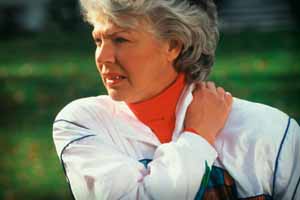

Joint pains are a common complaint, ranging from mild to severe that can incapacitate a person from doing daily chores. The joint pain can be accompanied by other signs and symptoms such as swelling, redness, stiffness, heat, and reduced movement of the joints.
Homeopathy offers a great and side-effect-free treatment for such cases. Since there can be various causes for joint pains — rheumatoid arthritis, osteoarthritis, gout, etc, homeopathy offers relief by treating the root cause. Homeopathic medicines help relieve the joint pains along with managing other signs and symptoms like stiffness, redness, swelling, and heat in the joints. These medicines aim to halt further inflammation of joints as well as prevent any further joint damage. Homeopathic medicines not only provide relief in joint pains but also cure the condition in the long run. In conventional treatment, painkillers, NSAIDs (nonsteroidal anti-inflammatory drugs), DMARDs (disease-modifying anti-rheumatic drugs), and steroids are used depending on the case. These medicines may have side effects from long-term use and may make one dependent.
Homeopathy is effective for acute/chronic joint pain
Be it acute or chronic, homeopathy gives equally good results in both. It provides prompt relief from it and from the associated symptoms. In chronic cases, it reduces the frequency and the intensity of joint pain. With timely use, the deformities and other complications related to the joint pains and inflammation can also be prevented in most of the cases.
Symptomatic Homeopathic Prescription
Homeopathic remedies for joint pains are administered on symptomatic basis depending on each individual case. A thorough in-depth study of symptoms is done followed by proper evaluation to decide the prescription. Such individualized medication carries a huge scope to treat joint pains. In mild to moderate cases of joint pains, there are high chances of bringing about timely cure. However, in severe cases with deformities and other complications, relief in the joint pains can be brought about but the damage that has already been done to the joints cannot be reversed.
Homeopathic remedies are safe and natural
Homeopathy uses natural medicines mostly obtained from plants to treat joint pains, hence are very safe to use. These do not cause any adverse effects as they lack any type of chemicals or toxins in it. One can use these without any fear of side effects.
Homeopathy is suitable for persons of all age groups
Homeopathy suits all age groups like children, adults, and the elderly. The set of homeopathic medicines for joint pains is similar for all the age groups only the potency and the dose may differ from person to person.
Top 10 Homeopathic Medicines for Joint Pains
The top ten medicines for treating joint pains are Rhus Toxicodendron, Bryonia Alba, Arnica Montana, Actaea Spicata, Colchicum Autumnale, Pulsatilla Nigricans, Ledum Palustre, Causticum, Ruta Graveolens and Stellaria Media.
1. Rhus Toxicodendron – For Joint Pain That Gets Worse At Rest and Better On Movement
Rhus Tox is the first choice of prescription in cases of joint pains. It is prescribed when the joint pains are at its severest during rest and also on initial movement. However, they get better after continuous movement. Although there are a number of other medicines that treat this symptom, no other medicine does it better than Rhus Tox.
Those who need Rhus Tox, complain of heat, swelling and stiffness in joints along with pain. Rhus Tox is also highly suitable to treat joint pains which are a result of overstraining, sprain and injuries.
When to use Rhus Toxicodendron?
This medicine is the best choice when joint pains aggravate from rest and get better from movement.
How to use Rhus Toxicodendron?
Though it can be used in both low and high potencies, initially 30C potency is good to go. Rhus Tox 30C can be administered thrice to four times a day as per the severity of the symptoms. Keep away from using its higher potencies without consulting a qualified homeopath.
2. Bryonia Alba – For Joint Pain Worse By Movement and Better At Rest
Bryonia Alba is just as effective as Rhus Tox, but the symptoms a person shows are different. Bryonia Alba is mainly recommended when the pain increases by even the slightest movement and is relieved by complete rest. The joint pain may be stitching (local, sharp, sudden pain) or tearing (intense) in nature. Along with pain, joints are red and hot, swollen, and extremely sore to touch or pressure. Painful stiffness of limbs is an accompanying factor.
When to use Bryonia Alba?
It is administered for cases of painful, red, swollen joints. The joint pains aggravate from movement, and rest brings about relief.
How to use Bryonia Alba?
Though it can be used in low or high power, it is mostly used in 30C power. Bryonia 30C can be administered twice or thrice daily.
3. Arnica Montana – For Post-Traumatic Joint pain.
Sourced from the plant ‘leopard’s bane’, it is the most prescribed medicine to manage joint pain from injury or over-strained joints.There is a bruised, sore sensation, as if one has been beaten, making every surface seem hard. There is fear of touching the affected joints because of intense soreness. A lot of heaviness is felt in all the limbs. Accompanying symptoms are rheumatism from excessive muscular strain or exposure to cold.
When to use Arnica Montana
Arnica is very well indicated medicine for the cases of joint pain with sore bruised pains following an injury.
How to use Arnica Montana?
It can be used in 30C potency three or four times a day to begin with. One can gradually decrease the dose once relief sets in.
4. Actaea Spicata – For Pain In Small Joints, Especially Wrist
This natural remedy sourced from the root of the plant ‘baneberry’ is highly effective for pain in the small joints, especially the wrist. The wrist becomes swollen and red with pain. Even slight exertion may cause swelling and aggravation of pain. It is also beneficial for relieving pain in other small joints as well, including fingers, ankles, and toes.
When to use Actaea Spicata?
It is the best-administered medicine for pain in the small joints including the wrist, toes, fingers, and ankles. Pains get worse from touch and due to motion.
How to use Actaea Spicata?
One may use this medicine in 30C potency, once or twice daily for best possible results.
5. Colchicum Autumnale – For severe joint pain in Gouty Arthritis.
It is one of the best remedies for treating joint pain due to gout (joint inflammation from high uric acid levels). It can be administered to treat pain in any joint, but mostly it helps if there is pain in the big toe due to high uric acid. Great toe is inflamed, red, swollen and extremely sensitive. Even a small touch makes it sore; the pain aggravates in the evenings. Tearing, stitching or sharp pain in the limbs is felt. Accompanying symptoms are tingling and numbness in the hands and the finger.
When to use Colchicum Autumnale?
This medicine may be prescribed for joint pains that happen due to increased uric acid levels (gout).
How to use Colchicum Autumnale?
It may be used in 30 C potency once or twice a day.
6. Pulsatilla Nigricans – For Shifting Type Of Joint Pains
Pulsatilla is a highly suitable medicine for managing shifting types of joint pains. For those who need this medicine, the pain keeps moving from one joint to another rapidly. It feels as if one has suffered beating on the joints and they get red and swollen. There is worsening of pain from movement and also at night time.
When to use Pulsatilla Nigricans?
Its use is highly suggested to manage shifting type of joint pains when pain keeps shifting from one joint to another quickly.
How to use Pulsatilla Nigricans?
This medicine can be used in 30C potency once a day. Avoid using its high potencies without the doctor’s recommendation.
7. Ledum Palustre- For Ascending Gouty Arthritis of the joints.
Ledum Palustre is especially administered in joint pains that has its onset in the feet and ascend upward, commonly affecting the ankles, knees, and the wrists. The joints are often cold to touch yet they feel better from cold applications, which is a key guiding feature. Pain usually worsens at night or due to warmth of bed, and it gets better in cool air. The affected joints may appear swollen but are pale rather than red. The pain is typically stinging, tearing, or rheumatic in nature. Ledum Pal is frequently useful in gouty arthritis, gouty nodosities, especially when there is a history of uric acid diathesis, and in joint complaints following puncture wounds or insect bites.
When to use Ledum Palustre?
It works well in cases of joint pains that are caused by Gout. Joint pains may ascend upwards.
How to use Ledum Palustre?
This medicine can be administered in 30C potency once a day. Avoid using its high potencies without the doctor’s recommendation.
8. Causticum– For Joint Pains in Chronic Rheumatic Arthritis
Causticum works wonders in joint pains associated with progressive stiffness, weakness and deformity, particularly in chronic rheumatic and arthritic conditions. The pain is often worse in dry, cold weather and from long-continued motion, but improves with warmth and damp weather. Joints may feel stiff when one begins to move, with a sense of tendon shortening or contracted tendons, especially around the knees, wrists, and fingers. Causticum is strongly indicated when joint pain is accompanied by numbness, muscle weakness, trembling, or paralysis-like sensations, and when complaints aggravate due to emotional stress or grief.
When to use Causticum?
Causticum works very well in cases of joint pains accompanied by numbness, tendon shortening, weakness, and trembling.
How to use Causticum?
It may be used in 30 C potency once or twice a day.
9. Ruta Graveolens – For Joint Pain from Chronic Overstrain
Ruta Graveolens is especially indicated for joint pain with marked stiffness, soreness, and a bruised sensation, particularly involving the wrists, hands, hips, knees, ankles, and feet. The joints feel fragile, strained, and painful, often with the involvement of a tendon. The pain in the joints mostly aggravate from rest or when one rises, and they get better with continued gentle motion, making Ruta useful in cases of chronic overstrain and rheumatic joint conditions.
When to use Ruta Graveolens?
Ruta Graveolens is best indicated in joint pains with marked stiffness, soreness, and a feeling of bruise-like sensation, especially where tendons and ligaments are involved. Symptoms aggravate after rest or overuse and improve with gentle, and continued motion.
How to use Ruta Graveolens?
It can be initiated with 30C potency, once a day. Higher potencies such as 200C, 1M can be used but only after consulting a qualified homoeopath.
10. Stellaria Media – For Bruised, Wandering Rheumatic Joint Pains
Stellaria Media is administered in cases of rheumatoid and rheumatic joint pains affecting multiple joints, with a characteristic bruise-like feeling, which is also sore, and aching. The pains are often wandering and involve the shoulders, arms, lower back, gluteal region, thighs, and calves, and may be associated with synovitis and stiffness. Symptoms typically worsen due to cold, damp weather and also due to rest. They are relieved by gentle motion and warmth, making it useful in chronic, diffuse joint complaints.
When to use Stellaria Media?
Stellaria Media works well in rheumatoid and rheumatic joint pains with a bruise-like, sore and aching sensation, often involving multiple joints.
How to use Stellaria Media?
It can be initiated in 30C potency, once a day.
Note: You may take any of these medicines for 3 to 4 weeks. To use it beyond that or to use it in potencies higher than above-recommended potencies, consult a qualified homeopath.
What Causes Joint Pains?
Joint pains can occur due to various reasons as mentioned below:
1. Rheumatoid arthritis
It is an auto-immune disorder that causes pain, stiffness, swelling and decreased movement of the joint. An auto-immune disorder means damage to the body’s own healthy tissues by the immune cells out of a misdirected response. In rheumatoid arthritis, the lining of the joints is affected which can slowly lead to bone erosion and deformity. This disease tends to involve small joints (fingers in the majority of the cases) on both sides initially. Large joints may get affected with time, and in later stages joint deformity may set in. It manly affects joints but later on can also affect other organs like eyes, lungs, heart, and skin. The most important symptom is stiffness in the joints on waking up in the morning lasting for an hour after which it gradually eases. Other symptoms are pain, swelling, warmth, and tenderness in the joints.
2. Osteoarthritis
It causes degeneration of the joints that occurs from wear and tear of the protective cartilage present at the end of the bones. Cartilage covers the surface of the bones where they meet to form a joint. The cartilage in the joints allows smooth gliding movement of the bones – as joint straightens or bends. Osteoarthritis mainly affects the knees, hips, hands, and the spine. The symptoms of osteoarthritis include pain in the joints, stiffness, swelling and tenderness at the joints. There may be a feeling of grating sensation when the affected joint moves. The movement of the affected joint may reduce. Bone spurs (extra tiny outgrowth of bones at the end of the bones) may form around affected joints.
3. Gout
It refers to the inflammation of the joints that arises due to the accumulation of urate crystals in the affected area when the uric acid levels in the blood rise. It results in swelling, pain, redness and tenderness of the joints, especially the big toe.
4. Injury
It is also a common cause of the joint pain. It can result from overuse of the affected joint, over strained joint, sprains (caused by overstretching or tearing of ligaments that connect two bones in a joint), or fracture.
5. Ankylosing Spondylitis
It is a type of arthritis (joint inflammation) affecting the joints of the spine. The most common joint involved in it is the sacroiliac joint (joint between the base of spine and pelvis). The main symptoms are pain and stiffness in the lower back and hips. The pain aggravates in the early morning and after periods of inactivity.
6. Juvenile idiopathic arthritis
It is a type of arthritis that affects the children under the age of 16 years. It causes joint pain, stiffness and swelling, and in some cases fever and rash on the trunk (any part of the body excluding limbs, neck, face, and head)
7. Bursitis
It refers to inflammation of the bursa (small fluid-filled sacs that cushion bones, muscles, and tendons near joints). It mostly affects the shoulders, hips, elbows and knees. It causes pain in the joint (it worsens from pressure or movement), stiffness of joint and swelling, and redness over the joint is also present.
8. Tendinitis
It means inflammation of tendons (bands that connect bones and muscles). It mainly happens from overuse and mostly affects heels, elbows and shoulders.
9. Avascular necrosis (AVN)
It refers to the dead bone tissue resulting from a lack of blood supply. Though anyone can be affected by it, excessive use of steroids in high doses over a long time and excessive alcohol intake puts a person at risk. Though, it can affect any bone, the head of the femur (a bone in the thigh) is the most commonly involved bone. In the early stage of AVN (Avascular necrosis), no symptoms may appear. As AVN progresses to higher stages, pain in the affected joint begins usually on putting weight on it, later the pain may be felt even on lying down.
What Are The Symptoms?
Along with pain, stiffness, and swelling in the joint is present. A grating sensation (harsh sound) on the movement of the joint may be felt at times. The affected joint may be sore from the inside and tender to touch from the outside which restricts the movement of the joint. This can lead to chronic joint deformities. If any kind of joint pain becomes severe, day-to-day activities get hindered. Due to joint pains, like rheumatoid arthritis, other organs like eyes, kidneys, and heart can also get affected and lead to complications.
Who is at risk?
Though joint pains can affect anyone, some factors increase the risk:
1. A person with a family history of joint pains is at high risk
2. Injury to any joint
3. Overuse of joints
4. Obesity
How to diagnose the cause of joint pains?
To diagnose the cause behind the joint pains a detailed medical history, and physical examination followed by investigations are a must. The investigations suggested include blood tests and imaging techniques varying from case to case as per the suspected cause. Among these initially, some blood tests are recommended. These include ESR (erythrocyte sedimentation rate) and CRP (C-reactive protein) both of which check for the intensity of inflammation, some tests to rule autoimmune disorders that might cause joint pain like rheumatoid factor, Anti CCp (anti-citrullinated protein antibody), ANA (antinuclear antibodies) test and also uric acid test (to check for gout). Imaging techniques like X-ray of joint, MRI, and CT scan might be recommended afterward as per the case needs.
Frequently Asked Questions
1.Is joint pain always related to arthritis?
No. Joint pain can also be due to muscle strain, ligament or tendon problems, trauma, or nutritional deficiencies.
2.How is joint pain diagnosed?
Diagnosis is based on clinical examination, medical history, and when needed, blood tests or imaging such as X-rays.
3.Can homoeopathy help in joint pain?
Yes. Homoeopathy can help by addressing the individual symptoms, pattern of pain, and associated stiffness or swelling that aims to reduce discomfort and improve joint function.
4.What lifestyle changes can I make to reduce the joint pain?
Weight management, regular exercise, proper posture, balanced diet, and adequate rest can help reduce joint stress and pain.
5.Can joint pain occur without injury?
Yes. Joint pain can develop without trauma, due to inflammation, autoimmune conditions, or metabolic issues.
6.Can joint pain cause fatigue?
Yes. Chronic joint pain, especially inflammatory conditions, may be associated with general tiredness and weakness.
7. Can joint pain lead to deformity?
If left untreated, chronic inflammatory joint diseases may lead to joint deformities and restricted mobility.
8. Can joint pain occur without visible swelling?
Yes. Joint pain may present itself with stiffness, aching, or discomfort even without obvious swelling.
9. Can joint pain recur after improvement?
Yes. Joint pain may be recurrent, especially in chronic or inflammatory joint disorders.
10. What are alarming signs in cases of joint pain that need urgent medical attention?
Joint pain needs prompt evaluation if there is sudden severe pain, marked swelling, redness, warmth, or fever, as this may indicate infection or acute inflammation.