
Ultra-processed foods have become a popular topic of conversation and a growing public health problem. These foods are associated with poorer nutritional quality and a long and growing list of adverse health effects. But what is classified as ultra-processed food?
It is estimated that nearly 75% of the US food supply is ultra-processed.
Food label education is important, but the new dietary guidelines for Americans are shifting toward practical, behavior-based counseling strategies. Most people assume that “ultra-processed” means all packaged foods, which can cause confusion or guilt. Using the simple language definition based on the NOVA food classification system: These foods typically contain ingredients not used in home cooking (e.g. maltodextrin, hydrogenated oils and flavor enhancers); are examples of industrial formulations rather than traditional foods; and are specially crafted for better taste and convenience. A simple rule: if it looks nothing like the original food and has a long ingredient list, it’s ultra-processed.
Screening questions consumers can ask themselves while shopping:
- Would my grandmother recognize this as food?
- Can I prepare something similar at home?
- Are most of the ingredients food or chemicals?
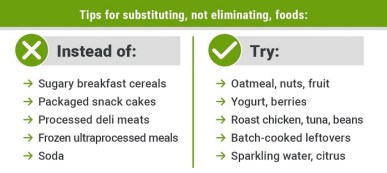
Most of us tend to achieve better results when advice such as “add more whole foods” rather than “stay away from processed foods” is given. We should promote exchange strategies, not restrictions. The emphasis is on substitutions, not eliminating foods.
Ultra-processed foods also reduce satiety because industrial processing changes their structure, making them softer and easier to eat and digest. This leads to a faster rate of consumption, which can suppress natural fullness signals and cause people to overeat. Additionally, ultra-processed foods often contain additives and less fiber, leading to less sustained fullness.
Not all ultra-processed foods are of equal health concern.
Many ultra-processed foods are junk food, but many others are products that we use all the time to feed our families, and we include them in the meals we cook every day.
Prepackaged whole-grain breads, lots of yogurt, instant oatmeal and jarred pasta sauces are all ultra-processed foods, but are lower in saturated fats and added sugars while still providing an abundance of nutrients that help reduce disease risk. Baked beans, which contain protein, fiber and minerals like iron and potassium, are ultra-processed, but bean consumption has been shown to support heart health by lowering cholesterol, improving digestion through fiber and helping stabilize blood sugar levels. Dairy alternatives such as soy milk and/or meat alternatives: These are ultra-processed and can be beneficial. It’s a balancing act. It is important to identify foods that are of most health concern.
One criticism of the ultra-processed food debate is that we focus too much on processing and not enough on nutritional value, undermining efforts to improve global nutrition through fortified, shelf-stable products, especially in low-income regions. You don’t want to throw the baby out with the bathwater. Highly processed foods have helped us feed many more people and reach populations that would otherwise not get much food. We need to learn what it is about the ultra-processed foods that are damaging our health and address these issues.
The post Ultra-Processed Food – In the News appeared first on Alternative Medicine Magazine.