
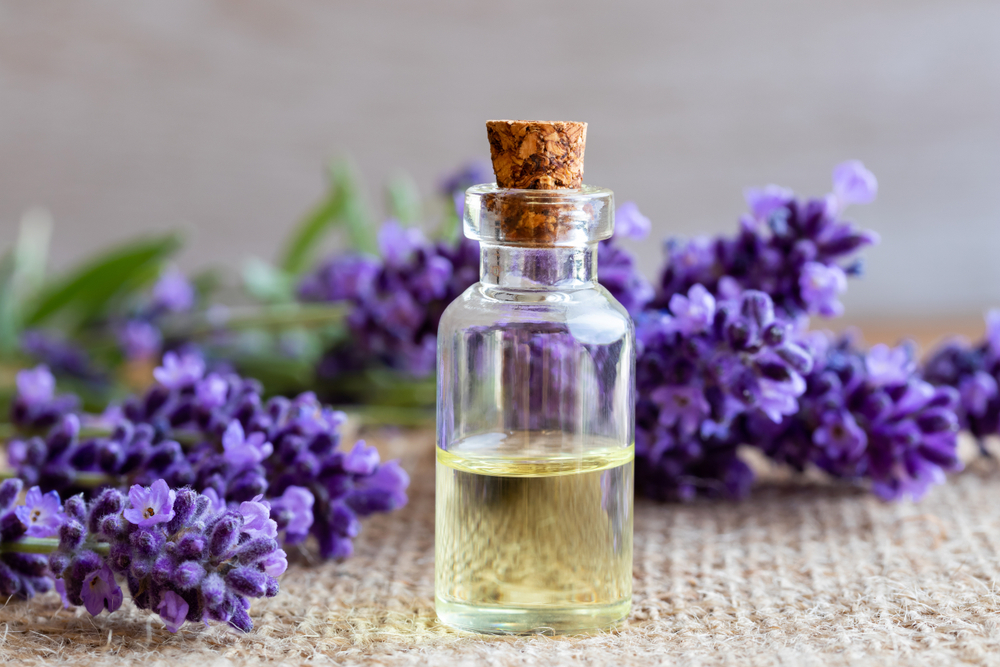
What is lavender essential oil?
Lavender is a flower from the sage family known for its fragrant scent, vibrant purple color and variety of health benefits. Lavender essential oil is a natural way to relieve anxiety, treat depression, treat pain and inflammation, and get better sleep quality.
How to make lavender essential oil
However, despite its original form being a plant, lavender comes in different forms. Of course it comes as a plant, but you can also find it as an essential oil, extract and tea. It is most commonly used as a diluted and topically applied essential oil or inhaled through aromatherapy. Essential oils are extremely concentrated, so if you plan to use lavender essential oil, it is necessary to dilute it with a carrier oil such as almond oil or jojoba oil. For general use, your essential oil should only make up about 0.5-2% of your diluted mixture, as a mixture that is too concentrated could do you more harm than good. So once you’ve diluted the oil, you can apply this mixture directly to your skin or in an aromatherapy diffuser to receive many of the health benefits below. Join us to learn and celebrate the many natural benefits of lavender essential oil.
Benefits of lavender essential oil
1. Relieves stress and anxiety
Lavender essential oil is known to help create a calming atmosphere, reduce stress and anxiety, and possibly treat depression. For hundreds of years, lavender has a documented calming effect on the brain. Studies have recently shown that this has a proven scientific basis, as inhaling lavender scent can have a calming effect on the olfactory nerve and the brain’s stress center (HPA axis). Smelling lavender can reduce the amount of cortisol released by your body and promotes the production of serotonin, making anxiety, stress and depression more manageable.
2. Lavender for a good night’s sleep
In addition to reducing stress, the magic of lavender can also improve your sleep quality and help you fall asleep faster. Related to lavender’s calming properties for anxiety and stress, these same calming effects can soothe restlessness and make it easier to fall asleep. Putting lavender essential oil in a diffuser, applying a diluted mixture to your skin, or spraying it on your pillow are all great ways to easily ingest lavender before bed and improve your sleep quality.
3. Promotes pain relief
It has been proven time and time again that lavender has anti-inflammatory properties that can aid pain relief. The flavonoids in lavender have the anti-inflammatory effects. One study found that using aromatherapy with lavender oil for just 15 minutes can reduce migraine pain. Many people also swear by rubbing diluted lavender oil directly on their joints to relieve joint pain, stiffness, and sore muscles. The topical application method helps reduce the body’s anti-inflammatory response, minimizing joint stiffness, redness and swelling. The same can be said for muscle pain, as its anti-inflammatory properties also positively influence muscle recovery.
4. Lavender oil for skin health
Lavender oil is a beloved favorite in the skin care community. Lavender oil can kill bacteria, soothe dry skin and eczema, make the skin smoother and more even and fight wrinkles. As a natural bacteria fighter, applying lavender oil to your face will help heal and prevent acne and unclog pores. Lavender’s antifungal and anti-inflammatory properties can help eczema and psoriasis. However, make sure to test it on a small patch of skin first as it can sometimes worsen certain skin conditions. Third, the reduction in inflammation can even out skin tone, reduce skin discoloration, and reduce blotchiness. Finally, wrinkles can be caused by free radicals and lavender’s antioxidants help fight these free radicals to prevent wrinkles. Diluted lavender oil can be applied directly to your face, or you can add it to one of your favorite skin care products.
5. Is lavender oil a disinfectant?
Lavender has a mixed history surrounding its antibacterial and antimicrobial properties. Some studies show that lavender has significant antibacterial effects, while others report that it has little to no effect. These results depend on the type of lavender and specific bacterial strains being examined, as certain types of lavender are more successful against certain bacterial strains and not others. More studies need to be done to definitively specify which lavender varieties work for which bacteria. But studies conclusively show that when you combine lavender with another antibacterial agent, antimicrobial effects can occur. So overall, lavender has antibacterial properties and is better than not treating a wound with an antibacterial agent, but it is not a solution for treating infections.
6. Soothes insect bites and repels insects
Lavender’s established anti-inflammatory properties, in addition to treating muscle and joint pain, make it useful for treating insect bites. This is because lavender can locally reduce skin inflammation associated with insect bites, reducing potential symptoms.
7. Benefits of lavender essential oil for hair
Lavender oil can strengthen your hair and promote its growth! Studies have shown that lavender oil can improve hair growth because it helps increase the number of hair follicles, grow the hair follicles deeper into the skin, and thicken the dermal layer of the skin/scalp. It is particularly recommended for people with pattern baldness and alopecia.
References:
Top 10 Benefits of Lavender Essential Oil – How to Use Lavender
Lavender essential oil for anxiety disorders: ready for prime time? – PMC
Lavender oil and its effectiveness for anxiety symptoms | Research, Society and Development
What happens to your sleep when you use lavender oil?
Does lavender help insect bites? – Biological insights
Hair growth promoting effects of lavender oil in C57BL/6 mice – PMC
What are the benefits for joint pain? – Island lavender
Lavender Oil for Skin: Uses and Benefits
The post 7 Uses for Lavender Essential Oil appeared first on Alternative Medicine Magazine.