
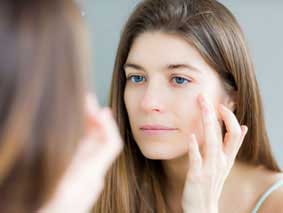

Acne, medically termed as acne vulgaris and commonly called pimples, is a skin problem that mainly affects the face and is common among teenagers. Acne is a result of the clogging of pores with dead skin cells and oil (sebum). Though acne usually impacts the face but may also affect the shoulders, upper chest, and back.
Homeopathy offers a safe, natural, outstanding treatment for acne cases. Homeopathic medicines provide huge relief by reducing the production of excessive oil by the overactive sebaceous glands. They also help treat any associated bacterial infection if present.
Action of Homeopathic Medicines in Acne
First, homeopathic medicines obstruct any further progression of acne, along with simultaneous healing. Second, these help relieve pain, itching, and burning sensations in acne. Next, any pus or bleeding from acne is also well controlled with these medicines. Further homeopathic medicines make sure to clear any scars/acne marks present along with the acne. With regular use of homeopathic medicines, the frequency and intensity of acne outbreaks are also cut down gradually.
Holistic Homeopathic Healing
Homeopathy does not work just on the surface of the skin; it goes deep inside to treat acne. For proper treatment, the root cause needs to be identified and addressed. Ointments are commonly prescribed in mainstream medicine that may temporarily reduce inflammation, pain and itching and suppress acne. There is a chance the acne may reappear with more intensity if one stops the medicines. But homeopathy, rather than suppressing the acne, focuses on the root cause and completely relieves the patient of the disease.
Individualized Homeopathic treatment
Homeopathy is the best mode of treatment for acne since it does not have any side effects and always heals in the most gentle and natural way. These medicines are prescribed taking into consideration the cause and type of acne and other associated symptoms after a thorough in-depth analysis of the case. The homeopathic prescription varies from individual to individual. So, it is advised to take homeopathic medicines for acne after consulting a qualified homeopath for the best possible results.
Top 8 Homeopathic Medicines for Acne
The top 6 homeopathic medicines to treat acne are Hepar Sulph, Belladonna, Silicea, Berberis Aquifolium, Kali Bromatum, Sulphur, Pulsatilla and Eugenia Jambosa.
1. Hepar Sulph – Best medicines For Pus-Filled Acne
It is the most frequently used remedy to treat pus-filled acne. Medically, these are called pustular acne. It is a highly reputed medicine with proven effectiveness time and again. Even if there is pricking pain in acne, this is the go-to medicine. Though it works well for people of any age group, it is most suitable for young people. This medicine also offers excellent results in cases of acne that bleeds.
When to use Hepar Sulph?
It is an ideal prescription for treating pimples filled with pus.
How to use Hepar Sulph?
In the beginning, it is best to use it in a 30C potency one or two times daily.
2. Belladonna – For Red, inflammed Acne
This naturally obtained medicine is most preferred when pimples are red. Along with the pimples, the face becomes red and shiny. There is increased sweating on the face. Though pimples may surface on any part of the face, they usually appear on the chin and the corners of the mouth, where Belladonna is required.
When to use Belladonna?
It is a highly preferred medicine for red-colored pimples with a red, flushed face.
How to use Belladonna?
This medicine can be administered in both low and high potencies. Initially, it is safe to take this in 30C potency two times a day. Potency can be raised after consulting a qualified homeopath.
3. Silicea – For Pus-Filled And Cystic Acne
This remedy is also highly effective for pus-filled pimples and cystic acne (painful, pus-filled bumps forming deep under the skin due to infection and inflammation from blocked pores in the skin). This medicine helps to dry the pus-filled acne, aiding prompt healing. It also works well on pimples that cause an itching and burning sensation that worsens in the daytime.
When to use Silicea?
This medicine is best for those with pus-filled pimples or cystic acne.
How to use Silicea?
This medicine is usually prescribed in 6X potency. Silicea 6X can be administered three to four times daily, depending on the severity of the problem.
4. Berberis Aquifolium – for Acne with Scarring and Pigmentation
Berberis Aquifolium is a well-administered homeopathic remedy for acne associated with pimply, rough, and scaly skin. It is especially useful when eruptions appear on the scalp, face, and neck. This remedy is indicated in cases of chronic acne with persistent redness, pustules, or inflammatory lesions, often accompanied by irritation and dryness. Berberis Aquifolium also supports the healing of acne marks and post-inflammatory pigmentation, promoting clearer and healthier skin.
When to use Berberis Aquifolium?
Berberis Aquifolium is indicated in chronic acne with pimples that are rough, scaly, or pustular, often appearing on the face, scalp, or neck.
How to use Berberis Aquifolium?
One can initiate with a 30C potency, once or twice a day.
5. Kali Bromatum – For large, painful, nodular acne
It is the key medicine to treat acne breakouts on the face, chest, and shoulders. It can be used for simple/hardened acne or when acne contains pus. This acne may look bluish red and can be itchy too. It is also an excellent medicine for acne that leaves scars.
When to use Kali Bromatum?
Its use is highly recommended for pimples all over the face, shoulders and the chest. The same goes for pimples that leave scars. In both cases, it is a perfect remedy.
How to use Kali Bromatum?
One may be prescribed this medicine one to two times a day as per the intensity of the complaint.
6. Sulphur – For Itchy Acne
This medicine is of unmatched value when it comes to treating pimples that turn itchy, particularly at night. Though acne may appear on any part of the face, if it is prominent on the forehead, sulphur is the best remedy. Such pimples may be inflamed and painful to touch. Lastly, it is suitable to treat comedones, commonly called blackheads (the blockage of pores with oil, dead skin cells present on the forehead and the chin).
When to use Sulphur?
This medicine can be mainly administered to treat itchy pimples.
How to use Sulphur?
Sulphur 30C can be administered once a day and no more. It is a strong medicine, it should be used with caution.
7. Pulsatilla – For Pimples In Young Girls
Pulsatilla is a natural medicine sourced from a plant called ‘wind flower’. It is the most suitable medicine to treat acne in adolescent girls. It is also a leading medicine used mostly to treat acne associated with any sort of menstrual irregularities.
When to use this Pulsatilla?
This medicine can be used to treat acne in adolescent girls at puberty. And in such cases, acne is linked with menstrual irregularities.
How to use this Pulsatilla?
This medicine can be administered in 30C potency once a day.
8. Eugenia Jambosa – For Indurated and Hormonal Acne
Eugenia Jambosa work wonders for simple as well as indurated acne, especially when pimples are painful, tender, and sore around the lesion. It is particularly useful in cases of hormonal acne, where breakouts worsen around the menstrual cycle and may be associated with menstrual irregularities. Eugenia is also indicated in acne rosacea with marked redness and vascular congestion. This remedy helps address deep-seated inflammation, reduces pain and induration, and supports regulation of underlying hormonal imbalance, especially in acne affecting the chin and jawline.
When to use Eugenia Jambosa?
It is administered for painful, tender, and deep-seated acne.
How to use Eugenia Jambosa?
It can be initiated with 30C potency one to two times daily.
Higher potencies such as 200C, 1M can be used only under the guidance of a qualified homeopath.
Note: You may use any of these medicines for about 2 to 3 weeks. To use them beyond this period, seek consultation from a qualified homeopath. It is also strictly advised not to take high potencies of any of these medicines without consulting a homeopath.
What causes Acne?
The primary cause of acne is the rise in the level of the hormone androgen in the body. Androgen levels rise around the age of adolescence. Androgen activates the sebaceous (oil) glands under the skin and makes them grow bigger and produce excess oil. The hair follicles get plugged with this oil and dead skin cells, giving the bacteria a chance to thrive and cause acne.
Trigger / Worsening Factors For Acne
Stress: Stress triggers acne. A stressful mind causes hormonal fluctuation that leads to increased production of oil by the sebaceous glands. The result is an acne break-out.
Dietary factors: The relationship between diet and acne is not yet clear, but some evidence supports that certain food products can worsen acne. These are high glycemic products (like white bread) and dairy. High glycemic products break down quickly and are rapidly absorbed, resulting in high blood sugar. The spike in blood sugar levels can lead to inflammation which can cause acne. Also, it can affect hormone levels which, in turn, affect the activity of oil glands in the skin and lead to acne.
Oil-based skin cosmetics: Skin cosmetics which are oil based are also one reason why acne is caused.
Lack of sleep: Inadequate sleep is linked to acne though it is not directly a cause. Sleep deprivation leads to stress that causes cortisol levels to rise, which in turn makes the skin produce more sebum, resulting in acne.
Hormonal changes, irregular menstrual cycles: In women acne may be a part of PCOS (polycystic ovarian syndrome) along with menstrual problems. So if acne and any menstrual problems occur at the same time, get proper consultation to rule out PCOS
Use of drugs: Cortisone and hormone replacement pills are a few of them which can cause acne.
Gastric issues such as constipation can trigger acne
Frequently Asked Questions
1. Can adults also get acne?
Acne begins around puberty and gets worse during adolescence. The 12 to 25 years age group is most vulnerable with 80-90 percent chance of getting the disease. Yet, acne before puberty is not unheard of. Also, there are those who continue to suffer this condition way past their teens and through their adult years. Hormonal imbalance is usually the culprit.
2. What makes women more likely to get pimples or acne?
The androgen hormone which mainly causes acne rises during adolescence. In women, however, several other hormonal changes take place during menses, pregnancy, and menopause, all of which have the potential to set off acne.
3. Can the same medicines be used to treat acne in men as for women?
Homeopathy works just as well in men who suffer from acne. What will work for women will work for men too. General medicines like Sulphur, Hepar Sulph and Kali Bromatum are used based on specific symptoms.
4. My mother had acne, does that mean I, too, will have it?
Yes, heredity does influence acne to an extent. A person having a positive family history of acne has an 80 percent chance of getting it. There is also, however, the 20 percent chance that one may not get it. Acne is caused by the enlargement of sebaceous glands under the influence of androgens, mainly during adolescence.
5. Is acne contagious?
Acne is not contagious. In other words, direct or indirect contact with a person with acne or pimples will not pass on the condition.
6. Does acne always cause itching?
Acne can be itchy, but not in every case. Mainly, cystic acne is known to cause itching
7. Can dandruff cause acne?
Dandruff is a condition characterized by flakes on the scalp. Dandruff may arise due to excessively dry or excessively oily scalp. When these flakes shed off and fall on the face, they can clog pores and cause pimples. However, such pimples are mostly found in the forehead region.
8. Will taking vitamin or mineral supplements help manage acne?
Yes, taking vitamins and minerals daily can help manage acne. But they are not substitutes for medicines. They can manage acne, not treat it. Vitamin A, vitamin E and zinc are helpful supplements. These can be taken along with natural medicines, but strictly in doses prescribed by a homeopathic doctor.
9. Will treating blackheads help my condition?
Yes, clearing out blackheads in time can prevent acne. For treating blackheads, homeopathy essentially falls back on medicines, such as Sulphur and Eugenia Jambosa.