



What Turmeric and Curcumin Actually Are
Turmeric is a bright yellow spice that comes from the root of a plant in the ginger family. It’s been used in cooking and traditional medicine for thousands of years. But here’s what most people get wrong: whether turmeric is worth it for joint pain relief depends on understanding that turmeric itself may not be the active ingredient you need.
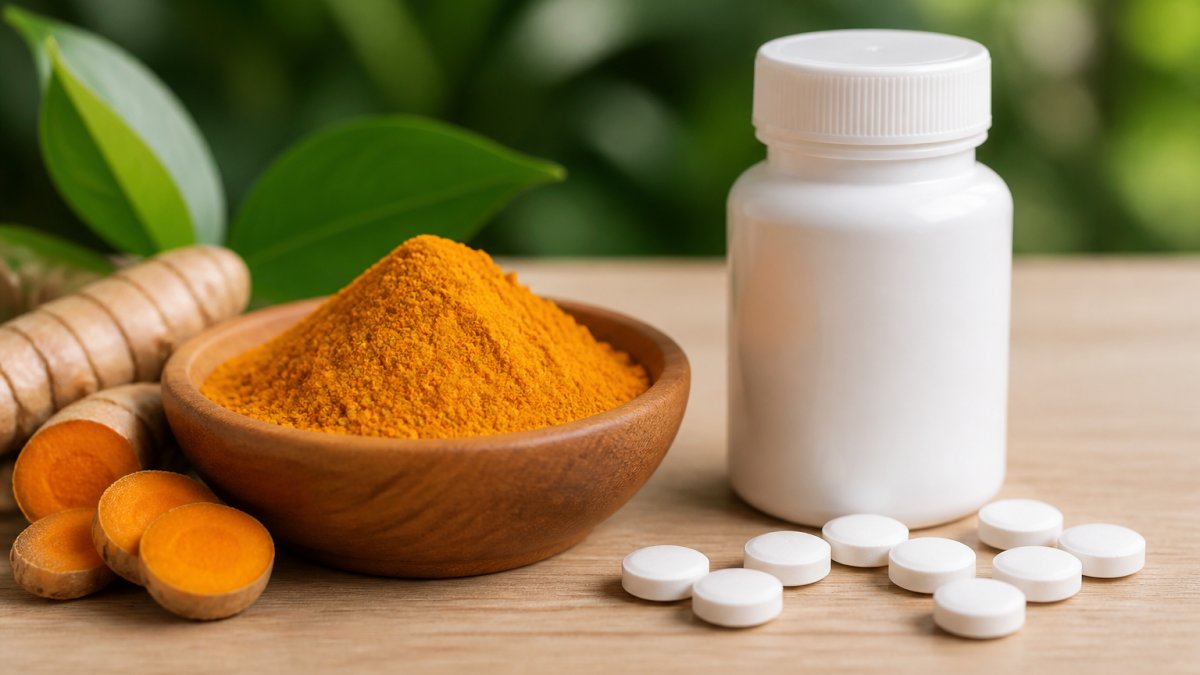
The key compound is curcumin. Turmeric contains only about 2-5% curcumin by weight. When you add turmeric to food, you’re getting a very small dose. This matters because research focuses on curcumin extract, not whole turmeric powder. The distinction changes everything about whether turmeric is worth your time.
Curcuminoids are the group of compounds that give turmeric its color and most of its effects. Curcumin is the most studied curcuminoid. Supplement makers extract and concentrate curcumin to deliver meaningful doses. This is why curcumin supplements perform differently in research than turmeric spice does.
Pro Tip
If you’re considering turmeric for joint pain, you need curcumin extract in supplement form, not just adding turmeric to your dinner. Food-level doses are too small to match what research studies test.
Turmeric for Joint Pain: What the Research Shows
The research on curcumin for joint pain is promising but specific. Not all studies show the same results, and the quality of evidence varies by condition.
Evidence for Osteoarthritis
A 2021 systematic review examined 10 studies on turmeric or curcumin extract for knee osteoarthritis (Paultre et al. systematic review on curcumin for osteoarthritis). All 10 reported improvement in pain and function from baseline. Three of those studies directly compared curcumin with NSAIDs like ibuprofen.
Here’s the important part: improvement from baseline doesn’t prove curcumin works better than placebo. A 2021 review of 15 randomized controlled trials found curcumin relieved osteoarthritis pain and stiffness as well as or better than NSAIDs, according to the Arthritis Foundation’s analysis of curcumin research.
In a 2021 study, both turmeric-extract treatments reduced knee-joint pain after three days and one week (Calderón-Pérez et al. on acute effects of turmeric extracts). The speed matters. People noticed relief quickly, not after months of waiting.
For osteoarthritis specifically, is turmeric worth it for joint pain relief? The evidence suggests curcumin is worth trying if NSAIDs bother your stomach or you want to explore natural options.
Evidence for Rheumatoid Arthritis
Rheumatoid arthritis is different from osteoarthritis. It’s an autoimmune condition where your body attacks your joints. The research here is thinner but still encouraging.
The Arthritis Foundation notes that research suggests low doses of curcumin may help restore balance between inflammation-associated Th17 cells and protective T cells. This mechanism could matter for rheumatoid arthritis, but human studies are limited. Most research focuses on osteoarthritis, not rheumatoid arthritis.
If you have rheumatoid arthritis, curcumin might help manage inflammation. But it shouldn’t replace your prescribed treatment. Talk to your rheumatologist before adding it.

How Long Does Turmeric Take to Work for Inflammation
Most people want a fast answer: how soon will I feel relief? The research gives you one.
In the 2021 study by Calderón-Pérez and colleagues, pain reduction appeared within three days. Some participants saw improvement in one week. This is faster than many people expect from a natural remedy.
However, three days to one week is a small window. You need consistency. Taking curcumin once won’t help. You need regular doses over days to see the effect.
For chronic inflammation, expect 4-8 weeks to notice meaningful improvement in joint function and stiffness. Pain relief often comes sooner, but lasting changes take time. Your body needs sustained curcumin levels to reduce inflammation markers.
Key Takeaway
Curcumin can reduce joint pain within days, but meaningful improvement in joint function takes 4-8 weeks of consistent use.
Turmeric vs NSAIDs: A Direct Comparison
This is the question that matters most: should you use curcumin instead of ibuprofen or naproxen?
The honest answer is nuanced. Three studies in the 2021 systematic review directly compared curcumin with NSAIDs. Curcumin performed as well as or better than NSAIDs for pain relief. But NSAIDs work faster for acute pain. Curcumin builds up over days.
NSAIDs have a major downside: long-term use increases risk of stomach ulcers, kidney damage, and heart problems. Curcumin doesn’t carry those risks at normal doses. This makes curcumin better for chronic, ongoing pain management.
The trade-off is absorption. Curcumin has low bioavailability. Your body doesn’t absorb it well without piperine (black pepper extract) or fat. Quality supplements add piperine to fix this problem.
| Factor | Curcumin | NSAIDs |
|---|---|---|
| Speed of pain relief | 3-7 days | Hours to 1 day |
| Long-term safety | Very safe | Stomach/kidney risk |
| Best for | Chronic pain | Acute pain |
| Absorption issue | Low without piperine | None |
| Cost | Moderate | Low |
Turmeric Supplement Side Effects and Safety
Curcumin is safe for most people at standard doses (500-2000 mg daily). But side effects do happen, and product quality directly affects both safety and efficacy.
Common Side Effects
Common side effects include stomach upset, nausea, and diarrhea. These usually appear at higher doses or with sensitive stomachs. Taking curcumin with food reduces stomach irritation.
Some people report headaches or skin rashes. These are rare. Stop use and talk to your doctor if they occur.
A 2016 systematic review concluded that turmeric and curcumin could be used safely as a therapeutic agent for osteoarthritis (Daily et al. on efficacy and safety of turmeric extracts). This doesn’t mean zero risk, but it means the safety profile is solid for most adults.
Pregnant women should avoid curcumin supplements. It may affect pregnancy. People with gallstones or bile duct problems should skip curcumin. It can trigger gallbladder contractions.
Why Product Quality Matters for Safety and Results
Not all turmeric supplements are equal, and this directly affects whether turmeric is worth your money and time.
Curcuminoid Content: Turmeric contains only 2-5% curcumin by weight. Supplement labels should state the curcuminoid content (usually listed as “curcumin” or “curcuminoids”). A quality supplement delivers 400-500 mg of curcuminoids per serving.
Bioavailability Enhancers: Curcumin has poor absorption on its own. Your body may absorb only 5-10% of what you ingest.
Third-Party Testing:
Reputable manufacturers have their supplements tested by independent labs (NSF, USP, or ConsumerLab) to verify:
- Curcuminoid content matches the label
- No heavy metals (lead, cadmium, arsenic)
- No microbial contamination
- No undisclosed fillers or allergens
Look for a third-party testing seal on the bottle or the manufacturer’s website. This adds 20-30% to the cost but ensures you’re getting what you paid for.
Cost and Value Over a Trial Period: A quality curcumin supplement with piperine costs $0.30-$0.60 per day ($9-$18 monthly for a 30-day supply). A cheap turmeric powder costs $0.05-$0.10 per day but likely delivers insufficient curcuminoids to match research doses.
Pro Tip
Before buying, check the label for: (1) curcuminoid content (aim for 400-500 mg per serving), (2) piperine or enhanced bioavailability system, and (3) third-party testing seal. These three markers separate effective supplements from expensive turmeric powder.
Turmeric and Medication Interactions: What You Need to Know
Curcumin interacts with several medications. This is critical to check before starting.
Blood thinners like warfarin and aspirin may be affected. Curcumin has mild blood-thinning properties. Combined with prescription blood thinners, this could increase bleeding risk. If you take warfarin, check with your doctor first.
Diabetes medications may need adjustment. Curcumin can lower blood sugar. If you take metformin or insulin, monitor your levels closely. Your doctor may need to adjust your dose.
NSAIDs and curcumin together might increase stomach irritation risk. If you’re already taking ibuprofen regularly, adding curcumin requires caution.
Supplements that boost absorption (like piperine) can also increase absorption of other medications. This means your prescription dose might become too high. Your pharmacist should review your full supplement list.
Watch Out
Never start curcumin without telling your doctor if you take blood thinners, diabetes medications, or NSAIDs regularly. Interactions can be serious.
The Honest Verdict: Is Turmeric Worth Trying?
Whether turmeric is worth it depends on your condition, symptom severity, and what you’re willing to commit. Here’s a framework to decide.
By Condition and Evidence Strength
Osteoarthritis (Mild to Moderate): Worth Trying
The evidence is solid. Multiple randomized controlled trials show curcumin reduces pain and stiffness as effectively as NSAIDs.
Expectation: Pain relief within 3-7 days; meaningful improvement in joint function and stiffness within 4-8 weeks.
Osteoarthritis (Severe): Complementary, Not Primary
If you have severe osteoarthritis with significant functional loss, curcumin alone is unlikely to be sufficient. Use it alongside prescribed treatment (NSAIDs, physical therapy, or injections), not instead of it. The evidence supports curcumin for mild to moderate pain; severe pain typically requires stronger intervention.
Rheumatoid Arthritis: Talk to Your Rheumatologist First
Evidence is weaker and mostly limited to animal studies and small human trials. Curcumin may help manage inflammation, but it should never replace disease-modifying antirheumatic drugs (DMARDs). If you have rheumatoid arthritis, curcumin can be a complementary option, not a substitute for your prescribed treatment.
General Joint Stiffness or Prevention: Modest Support
If you have mild joint stiffness without diagnosed arthritis, curcumin may help, but evidence is limited. It’s a reasonable trial if you’re looking for a natural anti-inflammatory option, but don’t expect dramatic results.
The Realistic Commitment
You need to commit to a structured trial to know if turmeric works for you:
- Duration: 8 weeks of consistent daily use. One bottle won’t tell you anything. Your body needs sustained curcumin levels to reduce inflammation markers.
- Dose: 400-500 mg of curcuminoids daily (with piperine or enhanced bioavailability), taken with food.
- Cost: $36-$96 for an 8-week trial with a quality supplement. If you see no improvement after 8 weeks, it’s unlikely to work for you.
- Measurement: Track pain on a 0-10 scale, morning stiffness duration, and ability to perform daily activities (climbing stairs, walking, gripping). Write these down weekly. Subjective improvement is valid, but concrete measurements help you decide objectively.
When to Stop or Seek Care
Stop curcumin and contact your doctor if:
- Joint pain worsens despite 8 weeks of consistent use
- New symptoms appear (rash, severe stomach pain, bleeding)
- You develop signs of infection (fever, warmth, swelling in one joint)
- Stiffness or swelling spreads to new joints (possible sign of rheumatoid arthritis or other systemic condition)
Do not delay diagnosis by relying on curcumin alone if your symptoms suggest a condition requiring medical evaluation.
The Bottom Line
If you have mild to moderate osteoarthritis, want to reduce NSAID use, and are willing to commit to 8 weeks of consistent use with a quality supplement, curcumin is evidence-based and worth trying. Budget $36-$96 for the trial and track measurable changes. If you have rheumatoid arthritis or severe pain, use curcumin alongside, not instead of, prescribed treatment. If you have other joint conditions or unclear symptoms, talk to your doctor before starting.
Curcumin shows real promise, but it works best as part of a broader strategy that includes movement, weight management, and professional medical care, not as a standalone cure.
Frequently Asked Questions
What is turmeric good for joint pain?
Turmeric contains curcumin, an active compound with anti-inflammatory properties. Research shows curcumin may reduce joint pain and stiffness in osteoarthritis. A 2021 systematic review of 10 studies found all reported improvement in pain and function from baseline among participants receiving turmeric therapy. However, turmeric itself differs from curcumin extract, curcumin extracts show more promise than whole turmeric powder for joint pain relief.
How long does turmeric take to work for inflammation?
Studies suggest turmeric extracts can reduce knee-joint pain within three days to one week. However, full benefits may take longer to appear. Most research examines effects over weeks or months rather than days. Individual response varies based on dosage, extract quality, bioavailability, and whether piperine (which enhances absorption) is included. Consistent use over several weeks typically shows more noticeable results than short-term use.
Does turmeric interact with medications?
Yes, turmeric can interact with certain medications. It may increase bleeding risk when combined with blood thinners or antiplatelet drugs. Turmeric can also interact with diabetes medications, potentially lowering blood sugar further. Always inform your healthcare professional before adding turmeric supplements if you take prescription medications. This is especially important if you’re on anticoagulants, NSAIDs, or medications for blood sugar control.
What are the potential side effects of taking turmeric?
Most people tolerate turmeric well, but gastrointestinal symptoms are the most common side effects, including upset stomach, nausea, and diarrhea. High doses may cause liver concerns in susceptible individuals. Allergic reactions are rare but possible. If you have gallbladder disease, bile duct obstruction, or are pregnant, consult your healthcare professional before use. Side effects are typically mild and decrease with lower doses or when taken with food.