
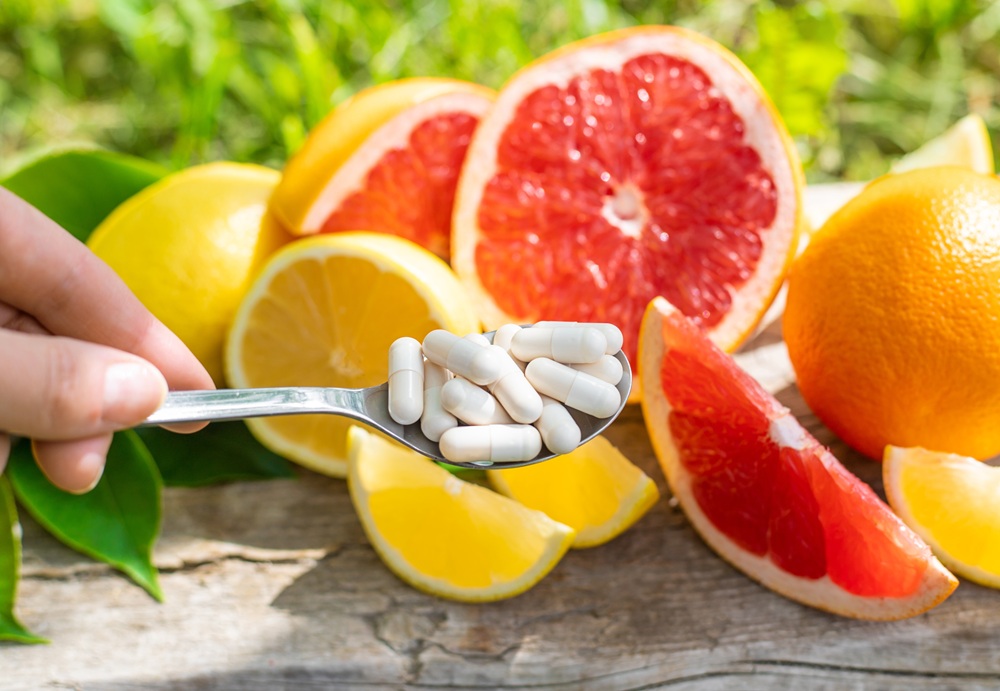
Vitamin C is one of the most recognized and widely known vitamins for a reason: it’s necessary for over 300 processes in the body. Many people reach for a bottle of vitamin C when their throat starts to feel scratchy or when someone in the family gets sick. Not getting enough vitamin C famously leads to scurvy. However, few people know how much more vitamin C does for them and how not getting enough of this vital antioxidant can have far reaching impacts. While there is debate on some of its uses, vitamin C’s critical role in the body is undisputed. Discover just what this vitamin does for you and the best way to get enough of it.
What Is Vitamin C?
Vitamin C is an antioxidant found in a wide range of fruits and vegetables necessary for functions throughout the body. You need vitamin C for your skin, your red blood cells, your bones, muscles, digestive tract, and eyes. Your immune system relies on vitamin C for both its immediate attack and its long-term functions. As an antioxidant, vitamin C protects the body from oxidative stress.
Best Foods with Vitamin C
Unlike many other mammals, humans cannot synthesize vitamin C and must include it in their diets. It is found naturally in a variety of foods, including the following:
- Citrus fruits: oranges, grapefruits, lemons, and limes
- Berries: strawberries, raspberries, blueberries, and cranberries
- Tropical fruits: kiwi, mango, papaya, pineapple
- Melons: cantaloupe and watermelon
- Tomatoes
- Cruciferous vegetables: broccoli, Brussels sprouts, and cauliflower
- Peppers: green and red bell peppers
- Root vegetables: sweet potatoes and white potatoes
- Winter squash
To get the most vitamin C out of your food, eat these fruits and vegetables raw. Because vitamin C is water-soluble, boiling these fruits and vegetables will lower their levels of vitamin C.
Similarly, these foods have the highest levels of vitamin C when fresh. The longer they sit on the shelf or in the sunlight, their vitamin C levels will go down.
Vitamin C and the Immune System
One of its many roles is supporting and strengthening the immune system. Vitamin C is necessary for the operation of our immune systems; for example, our white blood cells cannot function properly without an adequate supply. Famously, Linus Pauling, PhD, a Nobel Prize-winning chemist, published his Vitamin C and the Common Cold in 1970, which claimed that large doses of C, or “megadoses,” could cut the duration of the common cold in half.
Contemporary doctors such as Abram Hoffer, Robert Cathcart, Hugh Riordan, and others continue this research and use megadoses of vitamin C to treat everything from mild seasonal allergies to advanced cancers and as prevention of diseases from the beginning of life, such as sudden infant death syndrome, to the end of life, like Alzheimer’s.
Here’s what we know about how it strengthens the immune system.
- Vitamin C supports both the body’s immediate response to illness and its long-term, learned response to pathogens
- Vitamin C helps keep skin healthy as a first line of defense against pathogens
- Vitamin C promotes healthy function of the lymphatic system, crucial in filtering out pathogens and toxic cells
- Overall benefit on the immune system – Vitamin C helps both prevent and fight off infections
Research shows that taking a vitamin C supplement regularly can lower the chance of getting a cold and can make a cold less severe and last less time, especially if you are in a cold climate or exercise intensely.
Collagen and Vitamin C
Vitamin C plays an important role in the body’s production of collagen. As the protein constituent of our connective tissue, collagen literally holds us together. Collagen helps line and protect our organs and digestive system, making it essential to the well-being of our internal systems. As a critical part of the body’s cycle of replacing skin cells and maintaining your skin’s resiliency, collagen is crucial for your body’s first defense found in the skin. Your body also needs collagen to produce and transport red blood cells, a critical component of every part of your body. It maintains our muscles, joints, bones, and aids in the healing of wounds, as well.
Your body cannot absorb collagen in its whole form. However, eating foods rich in vitamin C or taking vitamin C supplements gives your body an essential component for producing collagen. Your body cannot build the triple helix in collagen without enough vitamin C. Zinc and manganese are also critical components of collagen’s production.
Does Vitamin C Help Iron Absorption?
The answer is not as simple as ‘yes’ or ‘no.’ Vitamin C does help your body absorb certain types of iron, the kind found in plant-based iron. This iron, called non-heme iron, is more difficult for the body to make use of than its animal counterpart, heme iron. Vitamin C helps the body take in and use plant-based iron, found in foods like spinach, lentils, beans, chickpeas, and tofu. This is especially critical information for vegetarians and vegans, who rely on plants for their iron. Many people are embracing a more plant-based diet both for its sustainability and health benefits. If you are making that change, be aware that iron deficiency is a risk of following a plant-based diet. To help reduce that risk, add foods rich in vitamin C to dishes high in plant-based iron. Or consider taking an iron supplement alongside of vitamin C.
Vitamin C and Antioxidants
Vitamin C is most widely known, however, as an antioxidant—preventing and repairing cellular damage caused by toxic metabolic byproducts that many scientists think are the major cause of many diseases and aging. Antioxidants help stabilize free radicals. This is especially important in our modern world full of toxins.
Not only is vitamin C an antioxidant, but it also supports and regenerates other antioxidants, including vitamin E. This makes it an extraordinarily effective antioxidant with the power to both balance free radicals and support other antioxidants in their work.
How Much Vitamin C Should I Take Daily?
It seems that everyone has a different opinion on how much vitamin C adults should take. At the most conservative end are the USRDA recommendations, which now advise 90 mg per day for healthy adult men and 75 mg for women, while urging smokers of both genders to add 35 mg to those amounts.
Other medical authorities contend that 90 mg only starts to meet our biological needs. Recent studies at the National Institutes of Health have found that a dose of 150 mg to 200 mg is optimal for raising the vitamin to full capacity in the bloodstream of healthy, nonsmoking adults.
The natural health community generally suggests much higher doses, in part because it recognizes that most of us aren’t as healthy as the 22-year-old men in the studies. At the high end of the spectrum is Owen Fonorow, who in 1995 co-founded the Vitamin C Foundation in Texas. Fonorow sticks by Pauling’s recommendation of 3 gm per day for healthy adults.
Fonorow says the federal recommendations are aimed at the wrong target. “Everybody agrees [the USRDA has] done a good job eliminating clinical scurvy,” he says. “Where it’s missed the boat is determining the optimal level of vitamin C for good health.”
Many alternative-thinking scientists now frequently recommend a range of 500 mg to 1,000 mg per day—preferably in two or three doses with meals.
When you feel that scratch at the back of your throat, you can start taking between 1,000mg and 8.000mg daily.
People do need to be aware that if they have been taking large doses of vitamin C to ward off a cold or to fight a serious illness, they should avoid going abruptly from, say, 8 grams a day down to one gram. This can cause what is called the “rebound effect,” leading to symptoms of scurvy. It is thus important for people to wean themselves off megadoses gradually by reducing the amount they’re taking over a period of a week or so.
Too Much Vitamin C
Vitamin C is a water-soluble vitamin and is not toxic even in large doses. When you take too much vitamin C too quickly, your body will get rid of it, usually through diarrhea. Too much vitamin C may also cause stomach cramps. This seems to be due to the acidity of ascorbic acid, or simple vitamin C. Like any acidic food, when we ingest ascorbic acid, the body neutralizes it by combining the acid with minerals. Ascorbic acid becomes a salt, which draws water into the colon, creating loose bowels to expel it from the body.
The amount of vitamin C it takes to reach the threshold varies tremendously from individual to individual, and even within the same individual, depending on his or her condition. Many studies indicate that the sicker a person is, the more vitamin C he or she will naturally tolerate, by an astounding factor of ten or more.
Forms of Vitamin C
A quick trip to a natural food store reveals that vitamin C is available in an overwhelming number of forms. There are capsules and powders, time-release pills, and chewable tablets. Pill potencies range from 100 mg to ten times that amount. Vitamin C can come as simple ascorbic acid, “buffered” forms of mineral ascorbates, or with other vitamins or naturally occurring cofactors such as bioflavonoids. And the range of prices for vitamin C products is as great as the number of forms they come in. What does all this mean?
Ascorbic acid
The most common form of vitamin C is simple ascorbic acid. This is a naturally occurring, water-soluble, acidic compound that comes in pills, powders, and as an ingredient in multivitamins. Most vitamin C is synthetic, which they body does not use as efficiently. Look for vitamin C that is produced through natural sources.
Experts have recommended that people with stomach ulcers or those who experience side effects with larger doses of vitamin C take buffered vitamin C or take lower doses of ascorbic acid with meals. Food likely helps increase vitamin C absorption by slowing the rate at which the vitamin leaves the stomach—giving it more time to pass into the bloodstream.
Buffered C
Several forms of vitamin C are mixed with buffering agents to make them gentler on the body than pure ascorbic acid. Buffered vitamin C can also help maintain healthy levels of minerals. Among those buffering agents are the following:
-calcium carbonate
– sodium carbonate
– magnesium oxide
When combined with ascorbic acid, those buffers create what are known as “mineral ascorbates.” (The suffix “-bic” in ascorbic means it’s an acid, while the “-bate” in ascorbate means it’s a salt.)
Mineral ascorbates are actually the form of vitamin C that our bodies attempt to change ascorbate acid into in the intestines by combining it with minerals.
Commercial vitamin C products that are already in the form of mineral ascorbates offer protection against excess acidity from the get-go, and save our bodies the trouble of having to draw on minerals to make the conversion. Many clinicians recommend taking vitamin C as a mixture of the various mineral ascorbates. Beyond that, Neil Riordan, CEO of the Aidan Clinic says, a mixed ascorbate offers the added benefit of other nutrients, such as calcium.
Calcium ascorbate is the most common of the mineral ascorbates on the market. Richard Passwater, PhD, author of Supernutrition, calls calcium ascorbate the “ideal” form of vitamin C for two reasons: It eases digestion and replenishes calcium.
It is critical that you monitor your mineral levels when taking high doses of vitamin C. As vitamin C (in large doses) binds with and flushes out metals like lead, mercury, and cadmium, it can also flush out essential minerals like calcium, magnesium, iron, copper, and zinc. Passwater notes the use of calcium ascorbate solves two problems at once, vitamin C deficiency and calcium deficiency.
Vitamin C with Cofactors
Several nutrients are thought to help vitamin C work more efficiently, making lower doses possible. Many health food stores and natural vitamin producers steer customers to supplements containing flavonoids, vitamin K, and B vitamins, niacin and biotin.
Also known as bioflavonoids, flavonoids are a class of water-soluble plant pigments that occur naturally in fruits and vegetables and act as antihistamines and anti-inflammatory and antiviral agents. Sometimes referred to as vitamin P, flavonoids have been used to treat a number of health conditions, including capillary fragility and bruising. Flavonoids, in general, are thought to prevent the destruction of vitamin C in the body by oxidation. Citrus flavonoids, specifically, are thought to help in vitamin C absorption.
To many people, it just makes sense to take supplements in forms as close as possible to how they occur in nature. Thus, many vitamin C manufacturers add not only bioflavonoids to their formulas, but vitamin C-rich whole-food concentrates, such as rose hips or acerola cherries.
There seems to be no definitive clinical data that this approach actually makes the products work better. Many nutrients do not work on their own but instead work best when combined with other nutrients. Even if we don’t fully understand how these interactions work, taking supplements that include helpful cofactors is a safe way to support overall nutrition.
References:
https://ods.od.nih.gov/factsheets/VitaminC-HealthProfessional/
https://lpi.oregonstate.edu/mic/vitamins/vitamin-C
https://www.sciencehistory.org/stories/magazine/linus-paulings-vitamin-c-crusade/
https://pmc.ncbi.nlm.nih.gov/articles/PMC5707683/ – Nutrients article
https://www.health.harvard.edu/nutrition/myths-and-truths-about-vitamin-c
https://www.prevention.com/health/a68023677/best-type-of-vitamin-c/
https://ods.od.nih.gov/factsheets/VitaminC-HealthProfessional/
https://my.clevelandclinic.org/health/articles/23089-collagen
https://health.clevelandclinic.org/iron-and-vitamin-c
https://my.clevelandclinic.org/health/body/23131-lymph-nodes
The post All About Vitamin C appeared first on Alternative Medicine Magazine.