
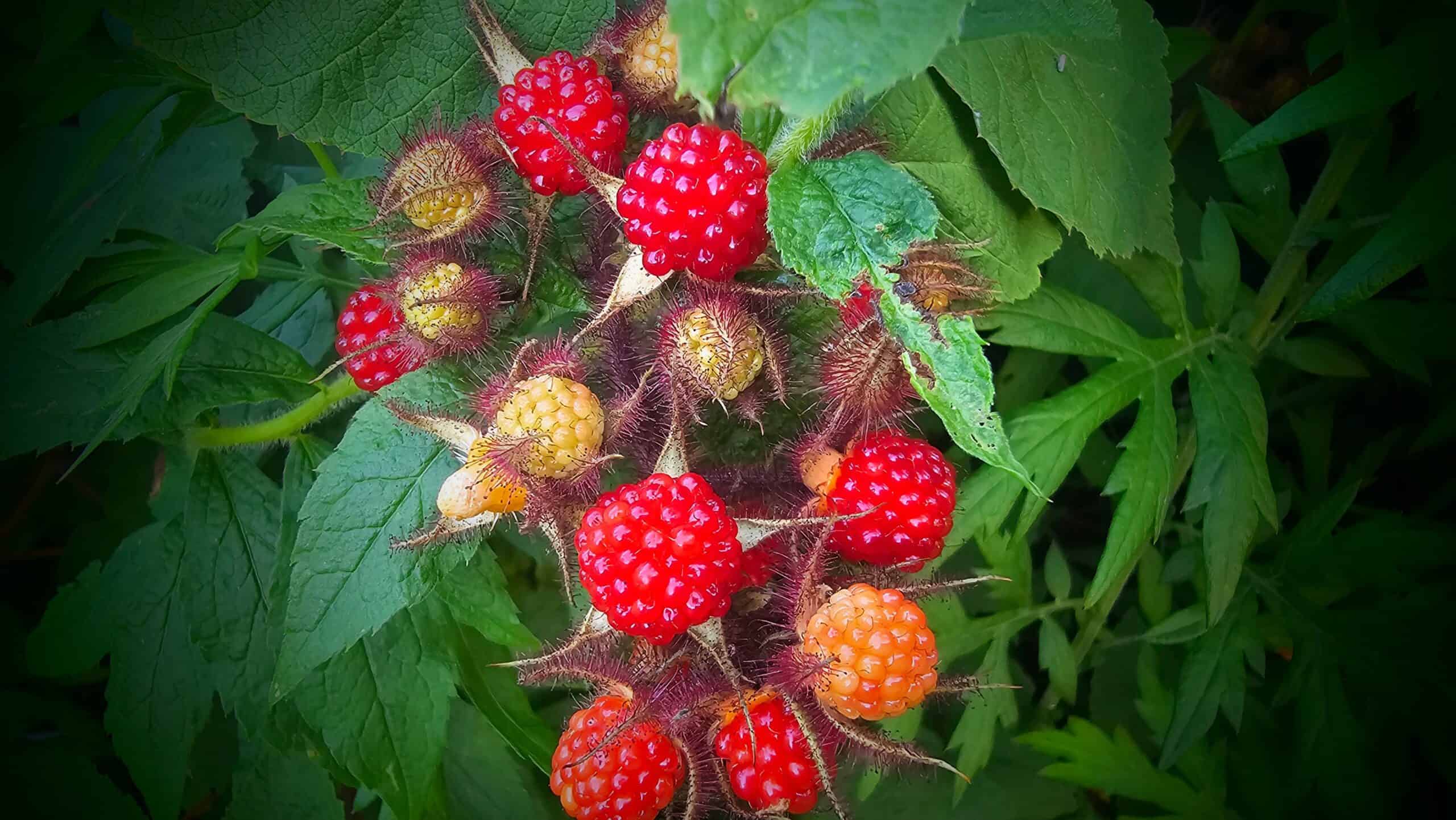
Management of invasive wineberries: Rubus phoenicolasius
Despite their charm, wineberries are considered invasive due to their aggressive properties growth habit and tendency to form dense thickets that outcompete native vegetation. On my land they are just one of many invaders I am trying to control, along with Japanese barberry and bittersweet. Restoring this forest to a healthier, more balanced ecosystem, rich in… original And native medicinal plants– is a slow, practical process that I have wholeheartedly embraced.
Here’s how I manage these invasive diseases in a way that aligns with my values:
1. Pull and cut by hand
For small patches, I pull young plants by hand when the soil is soft and moist, which makes it easier to remove the roots. In larger shrubs I cut the whole plant back inside early spring or late autumnbefore it flowers or fruits. With repeated mowing over several seasons I have noticed that the plants weaken considerably root buds lose energy.
2. Mow
In areas where I can, for example edges of the field And open areasI mow down dense colonies. This regular disturbance helps reduce regrowth and wilt original plant space to return.
3. Targeted replanting
After a few seasons of cutting and tidying up, I start reintroducing them native vegetation– especially species that are medicinally, culturally significant or beneficial to pollinators. Some of my favorites are spicebush, viburnum, goldenrod and elderberry. Filling these spaces with strong native allies will help displace invasive species and restore balance.
I don’t use herbicides, pesticidesor else chemical control methods on my land. It’s just not something I’m comfortable with. That said, I fully recognize that others may take a different approach – and that’s okay. Every piece of land, and every steward of it, is different. This is simply what works for me, and what aligns with my commitment to ecological healing through observation, perseverance, and respect for the rhythms of nature.