
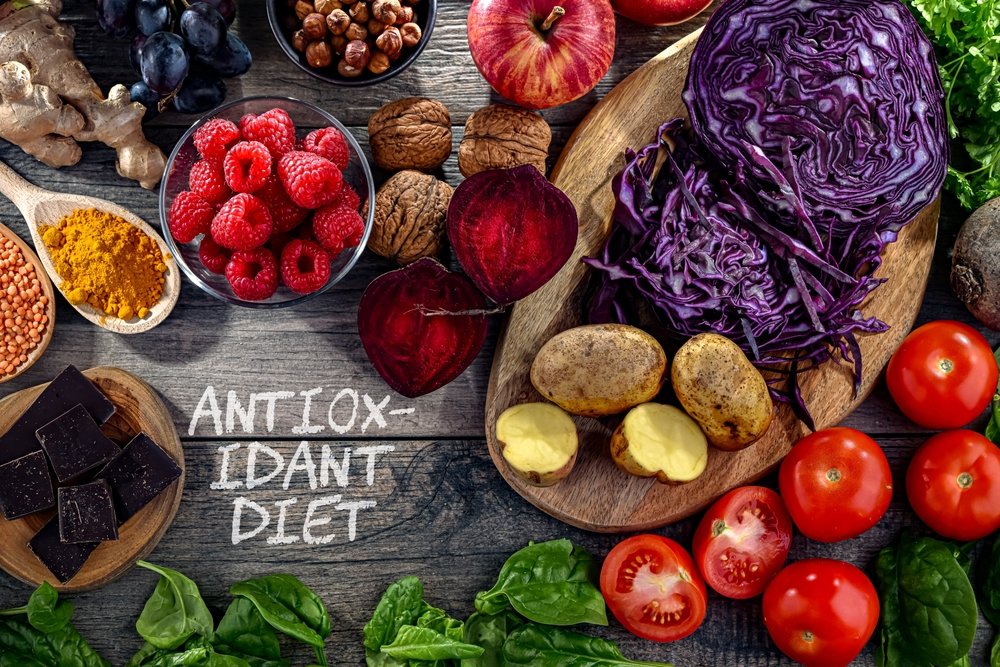


Q: I know how important antioxidants are to my health. I would prefer to get as much as possible from food sources rather than supplementation. Can you suggest an easy way to choose the most beneficial foods?
A: Nearly every biological function requires oxygen, which provides electrons to run the body’s machinery. An oxygen molecule that has released its electron becomes a free radical or reactive oxygen species (ROS). When a free radical forms, it becomes excitable and immediately tries to replace the missing electron. It will do this by stealing an electron from a local protein, fat or DNA molecule. The resulting damage from this free radical attack, or oxidative stress, contributes to a wide range of diseases, including heart disease, arthritis, Alzheimer’s disease and cancer. These are all related to antioxidant content.
Health Benefits of Antioxidants: What’s the Buzz?
Some factors that can lead to oxidative stress include:
- Tissue damage caused by injury and inflammation
- Diet – consumption of refined and processed foods, trans fats, artificial sweeteners, and certain colors and additives
- Environmental toxins and pollution
- Smoking
- Radiation
How do antioxidants help?
Antioxidants are molecules that voluntarily donate their electrons to free radicals. They can protect against the cell damage caused by free radicals, known as oxidative stress. According to one study, they act as a radical scavenger, hydrogen donor, electron donor, peroxide degrader, singlet oxygen quencher, enzyme inhibitor, synergist, and metal chelating agents.
The sources of antioxidants can be natural or artificial. Certain plant foods are believed to be rich in it. Plant-based antioxidants are a type of phytonutrients, or plant-based nutrients. The body also produces some, known as endogenous antioxidants. Those that come from outside the body are called exogenous.
Food Sources Vs. Supplements
Obtaining antioxidants through a nutritious diet rather than supplements is generally considered much safer and healthier. All foods contain certain antioxidants in varying amounts, so it is essential that you include a varied selection of foods in your diet. Much of the research on supplements suggests that they do not provide significant health benefits. There are several reasons for this:
- The positive health effects of a diet rich in fruits and vegetables – or other antioxidant food sources – may actually be caused by the combination of other compounds present in the same food.
- The effects of the large doses of antioxidants used in supplements can be harmful to your health.
- The chemical composition and dosage of antioxidants in foods differ from those in supplements, and this can affect both their action and outcome.
Obtain them through diet
Fruits and vegetables
have optimal levels of antioxidants, including vitamin E, vitamin C and beta-carotene. Some other powerful antioxidants in this food source include:
- Flavonoids – found in grapes, cherries, broccoli and tomatoes – whose antioxidant properties have been linked to reduced risks of heart disease and cancer.
- Polyphenols, found in berries Sulphides, found in onions, garlic and chives, have also been shown to scavenge valuable free radicals.
- Anthocyanins, responsible for the deep red, purple and blue colors of cherries, grapes and berries, are among nature’s most effective antioxidants.
Spices and herbs
are an important source of several phytochemicals, many of which possess potent antioxidant activity. The top ten for antioxidant levels are basil, cinnamon, ginger, curry, chili, cloves, turmeric, oregano, paprika and mustard seeds.
Tea and coffee – Although both coffee and tea are high in antioxidants, there are actually more antioxidants in coffee than in tea. Black tea, oolong tea and green tea are all rich in antioxidants, but contain ten times as many polyphenols (a type of antioxidant) as fruits and vegetables.
Nuts and seeds – Walnuts contain significant amounts of antioxidants, while pecans, chestnuts, peanuts, pistachios and sunflower seeds are also very rich in total antioxidants. Hazelnuts, almonds, Brazil nuts, macadamias, pine nuts, cashews, flax seeds, poppy seeds and sesame seeds are also great sources.
Whole grains – Corn, wheat, rice and oats all contain high antioxidant activities. Corn has the highest amount compared to the other three grains, followed by wheat and then oats, while rice has the lowest amount.
So while antioxidants come in the form of supplements, research has not shown that they are beneficial in preventing disease. The conclusion is: good food is better than good supplements.

References:
https://www.nccih.nih.gov/health/antioxidants-in-depth
Carlsen MH, Halvorsen BL, Holte K, Bøhn SK, Dragland S, Sampson L, Willey C, Senoo H, Umezono Y, Sanada C, Barikmo I, Berhe N, Willett WC, Phillips KM, Jacobs DR Jr, Blomhoff R. The total antioxidant content of more than 3100 foods, drinks, spices, herbs and supplements used worldwide. Nutr J. January 22, 2010; 9:3. doi:10.1186/1475-2891-9-3. PMID: 20096093; PMCID: PMC2841576.