
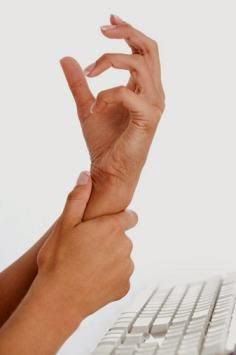

Writer’s Cramp is a medical condition characterized by an involuntary muscle contraction in the fingers or hands while writing that leads to uncontrollable movements (involuntary movements). Since the muscle coordination is lost, it becomes difficult to hold a pen. The key symptom is when tries to grip the pen tight, along with flexion (inward movement towards the body) of the wrist. In Writer’s Cramp, the brain sends false signals to the muscles leading to increased muscle contractions and abnormal hand posture while writing. In some cases there is a pain in the hands or shaking of the hand. The main reason is the overuse of hands.
Homeopathy offers a very effective treatment for the cases of Writer’s Cramp. The homeopathic remedies are obtained through natural and highly diluted substances and thus are totally safe to use. These medicines work on the root cause to help relax the muscles of the hands. Signs of improvement appear within the first few months of homeopathic treatment. Conventional mode of treatment mostly recommends anticholinergic drugs and botox injections for Writer’s Cramp. These medicines offer short-term relief and can result in many side effects as well. On the other hand homeopathic medicines have no side effects and the condition can be cured completely if the medicines are regularly administered in most cases having mild to moderate intensity.
Homeopathy relies on characteristic signs and symptoms present in each case of Writer’s Cramp before prescribing a remedy. The same medicine cannot be prescribed in every case and the most suitable medicine has to be decided from amongst the various options recorded in homeopathic therapeutics for treating this condition. The medicine selection is solely based on the individual’s unique symptoms. For this, a detailed case history is prepared followed by its evaluation to finalize the best possible homeopathic prescription.
Homeopathic treatment strengthens the muscles and nerves of the hands to prevent involuntary muscle contractions and uncontrollable movements. Initially, it manages the symptoms followed by long-term relief and cure. However, the results vary depending on the duration and the severity of the complaint and response of the sufferer to the medicine.
One of the key benefits of using homoeopathic medicines is that they are free of any toxins or chemicals. Therefore, there are no chances of side effects at all. One more advantage of using homeopathic medicines is that these are non-habit forming. These can be easily stopped when the desired results have been achieved.
Top 9 Natural Homeopathic Remedies for Writer’s Cramp
The top nine homeopathic remedies for treating Writer’s Cramp are Stannum Metallicum, Magnesium Phosphoricum, Cuprum Metallicum, Gelsemium Sempervirens, Kali Phosphoricum, Cyclamen Europaeum, Calcarea Fluorica, Ruta Graveolens and Causticum.
1. Stannum Metallicum – Top Grade Medicine for Writer’s Cramp
Stannum Metallicum is one of the best medicines for Writer’s Cramp. It is administered when one feels cramps in the fingers and hands while picking up the pen or while writing. Sudden tightness in the muscles of hands and fingers is felt which remains in the same position for a short time. Along with this, jerking movement of the writing hand is quite obvious. Stannum Metallicum is highly recommended when the complaint arises due to the overuse of the hands, as in the case of professional writers and typists. Along with the cramps, the hand and the arms also feel heavy while writing. Weakness in the hand of the paralytic type may be felt.
When to use Stannum Metallicum?
It is the best choice of medicine for treating Writer’s Cramp with sudden tightness in the hands and the finger muscles along with shaking of hands while writing. It is also highly recommended for this complaint arising from the overuse of hands like due to excessive typing work.
How to use Stannum Metallicum?
It is administered in 30C potency once a day.
2. Magnesium Phosphoricum – For Cramps in Hands with Pain
Magnesium Phosphoricum is a wonderful muscle relaxant (helps release contraction of muscle). It is an ideal natural medicine for Writer’s Cramp if pain is felt along with contracted muscles in the hand. The pain can be shooting, stitching, or cutting in nature. A peculiar characteristic feature is that one gets relief from warmth or by applying pressure on the hand. This medicine is equally effective in treating cramps in the hands that result from playing instruments with hands like piano, violin, etc. It is also beneficial for cramps in other body parts like legs, abdomen, and feet. Cramps that occur due to prolonged exertion are treated well by this medicine. This medicine is of great help to strengthen the muscles of the hands as well as it helps get relief from contractions and pain.
When to use Magnesium Phosphoricum?
This medicine is to be administered when cramps are felt in the hands along with marked pain that can be stitching, shooting, or cutting in nature. One feels relief from pain due to warmth and pressure application.
How to use Magnesium Phosphoricum?
This medicine is mostly used in biochemic form that is in 6X potency. Depending on the severity of the complaint, it can be administered three to four times daily.
3. Cuprum Metallicum – For Cramps in Fingers with Shaking Hands
Cuprum Metallicum is another wonderful medicine to treat Writer’s Cramp cases, especially in the fingers. It is also a great medicine to help relax muscles. Jerking of hand may accompany the other symptoms. There may occur an involuntary clenching of the thumb into the palm. Besides, it is administered to help cases of cramps of toes, feet, and calf muscles. There is twitching of muscles and weakness of upper extremities (limbs).
When to use Cuprum Metallicum?
This medicine can be administered for cramping that is felt in the fingers with symptoms of hand jerking and thumb involuntarily clenching into the palm.
How to use Cuprum Metallicum?
One can administer this medicine once a day in 30C potency.
4. Gelsemium Sempervirens – For Cramps with Marked Weakness of Hands
This natural medicine, sourced from plant “Yellow Jasmine”, is administered for Writer’s Cramp that is accompanied by a significant weakness of the hand. Gelsemium is the ideal medicine when cramps appear in the hand, fingers or forearm while writing. It seems as if the muscles cannot be controlled and they are working without the will of the person. There is a sudden spasmodic contraction of muscles of the fingers, hands and weakness in the hands. The person feels fatigued even after little exertion in writing. Jerking or trembling of hands may be noticed in such cases. Anxiety may aggravate the symptoms.
When to use Gelsemium?
This medicine is apt for cases of Writer’s Cramp if cramping in hands is accompanied by marked weakness in hands.
How to use Gelsemium?
Two to three doses a day of Gelsemium 30C can be administered as per the severity of the case.
5. Kali Phosphoricum – For Cramps Worsening from Exertion of Hand
Kali Phosphoricum can be used to improve the nerve power in hands. It also helps to remove muscle contractions due to overuse of hands. Kali Phosphoricum is the best natural remedy when even a slight exertion of the hand leads to cramping conditions and results in contraction of muscles. Numbness may also be felt by the person along with contracted muscles. Among the individuals who require this medicine, stress may aggravate the condition.
When to use Kali Phosphoricum?
Kali Phosphoricum is beneficial in cases of Writer’s Cramp when overuse or exertion of the hands aggravates the condition. Additionally, stress of any sort also intensifies the problem.
How to use Kali Phosphoricum?
This medicine is usually preferred in 6X potency and can be used three to four times daily.
6. Cyclamen Europaeum – For Contraction of Right Thumb and Index Finger
This medicine is especially helpful in cases when there is marked contraction of the right thumb and index finger. They remain in a contracted position and can be brought to the normal position with the application of force. A painful drawing sensation is also felt in the wrist in some cases.
When to use Cyclamen Europaeum?
Its use is suggested for Writer’s Cramp if there is contraction of the right thumb and index finger that can be accompanied with a drawing type of pain in the wrist.
How to use Cyclamen Europaeum?
This medicine can be administered in 30C potency one or two times daily for best possible results.
7. Calcarea Fluorica – For Cramps and Stiffness from Long-Continued Strain
Calcarea Fluorica is administered in the cases of writer’s cramp if the condition arises from prolonged overuse and repeated strain of the hand muscles. There is rigidity, stiffness, and cramping pain in the fingers and wrist while writing. The muscles feel hard and unyielding, and movements become difficult due to continuous work. It is especially useful in chronic cases, where the ligaments and tendons have lost elasticity and the complaint worsens with exertion.
When to use Calcarea Fluorica?
It is useful in cases of writer’s cramp that develop gradually due to long-continued and repeated use of the hand. The condition is usually chronic, with marked stiffness.
How to use Calcarea Fluorica?
It is administered in 6X potency initially. The potency can be raised to 30C & 200C after consulting a qualified homoeopath.
8. Ruta Graveolens– For Cramps in Hands from Overstraining of Tendons
Ruta Graveolens is one of the best remedies for writer’s cramp that is caused by overstraining of tendons and periosteum. There is aching, bruised pain, and marked weakness of the hands and wrists, making it difficult to continue writing. Fingers feel painful and stiff, and the hand tires quickly. Symptoms aggravate due to repeated use and get better from rest and warmth. It is especially administered to people engaged in fine manual work.
When to use Ruta Graveolens?
This medicine should be thought of in cases of writer’s cramp arising from overstraining of the tendons and ligaments of the hand and wrist.
How to use Ruta Graveolens?
The use of this medicine is recommended in both low and high potencies. Initially, one may use its 30C potency once or twice daily. For using high potencies, consultation with a homeopath is a must.
9. Causticum – For Progressive Paralytic Weakness of Hands
Causticum is especially administered where the condition is the result of progressive motor weakness with spasmodic action of muscles. It is indicated particularly in occupational neuromuscular disorders affecting the fingers and the hands. The patient experiences an inability to properly control the muscles while writing, with stiffness, trembling, and gradual loss of power in the hand from continued use. There is a tendency towards paralytic weakness, where the fingers may feel rigid, awkward, or partially powerless, making fine movements like writing difficult or impossible. In persons needing this medicine, symptoms typically aggravate from exertion and overuse and are often relieved by warmth.
When to use Causticum?
This is a very useful remedy in cases where there is loss of control over fine movements, making writing impossible or difficult. The condition arises from long-continued use and overexertion, showing paralytic tendencies.
How to use Causticum?
This medicine should be administered in 30C potency one to two times daily.
Signs And Symptoms of Writer’s Cramp
Initially, the first and foremost symptom is intermittent difficulty in writing. As the medical condition progresses, cramping is felt in shorter and faster intervals than before. The following signs and symptoms are noted in Writer’s Cramp:
1. Tight gripping of pen/pencil
2. Flexion (bending) of wrist and elevation of elbow
3. Extension of fingers at times result in falling of pen from hand while writing
4. Discomfort in fingers, wrist and forearms
5. Lack of muscle coordination of hand, hand and fingers are unable to obey commands
6. In some hand dystonia cases, sustained hand posture may occur like a clenched fist and bent wrist
7. Due to the above mentioned complaints, writing becomes untidy
Types of Writer’s Cramp
1. Simple Writer’s Cramp: When symptoms appear only while writing and only the ability to write is affected. The hand twists in strange postures while writing.
2. Dystonic Writer’s Cramp: In this type, the symptoms appear even while doing tasks with hands other than writing; for example, it may appear while doing other activities like eating, buttoning a shirt, applying makeup, etc.
Causes of Writer’s Cramp
It is a type of specific type of focal dystonia. Dystonia is involuntary and sustained muscle contraction, focal means affecting only one body part (here the hands and the fingers) and specific means it occurs specifically while writing. It is also known as ‘task specific dystonia’ or ‘focal hand dystonia’.
1. Its onset usually occurs between the ages of 30 and 50 years. Simple Writer’s Cramp is a more common type. It is linked with overuse of hands like excessive writing for years together. Other factors that play a role are holding pen inappropriately and keeping poor posture of hands while writing.
Stress and anxiety can aggravate the complaint.
2. It has been found in research that among those suffering from Writer’s Cramp, there is decreased brain tissue (gray matter) in those brain areas (cerebellum, thalamus and sensorimotor cortex) which control hand movement on the affected side. However it is still not understood well if these changes are the cause or the result of this condition. Besides, there is a theory that suggests that brain changes might be a part of adaptation due to sustained repetitive hand movement.
3. Dystonic writer’s cramp is the less common type and occurs usually as a part of generalized dystonia affecting multiple body parts.
4. Writer’s Cramp may have a genetic component. It is estimated that in about 20 per cent of the persons who suffer from writer’s cramp, there is a family member who has reported the complaint of dystonia. A gene DYT1 is linked with generalized dystonia.
5. In some cases, hand dystonia may be a result of some injury, lesions of spinal cord and peripheral nerve damage. In such cases, symptoms are experienced even when the hand is at rest, pain may be felt and symptoms may occur in body parts other than the hand.
Frequently Asked Questions
1. Why does my hand hurt only when I write?
The hand only hurts while writing because the hand muscles are overused and lose proper control during writing.
2. Is writer’s cramp dangerous?
No, it is not dangerous, but it can disturb daily work if ignored.
3. Who can get writer’s cramp?
Anyone who writes for long hours, such as students, teachers, or office workers can be prone to writer’s cramp.
4. Can stress affect the symptoms of writer’s cramp?
Yes, stress can aggravate the cramps due to increased muscle tension.
5. Will resting my hand help?
Yes, rest can help, but proper treatment is needed for complete relief and permanent cure.
6. Can writer’s cramp be cured?
Yes, many people improve with early and proper treatment. But severity and frequency of symptoms also contribute to the recovery process.
7. How can I prevent a writer’s cramp?
Writer’s cramp can be prevented by taking regular breaks while working, relaxing your hand, and avoiding tight pen grip.
8. Does homeopathy help in writer’s cramp?
Yes, homeopathy can help reduce cramps and improve hand control. It also works on the root cause.
9. Should I stop writing completely?
No, writing in short intervals and taking frequent breaks is better than stopping completely.
10. When should I see a doctor?
One should consult a doctor if pain or stiffness persists for long duration or affects daily work.
11. How is writer’s cramp diagnosed?
There is no single test to diagnose the condition, the diagnosis is based on medical history, clinical signs and symptoms, and observation of handwriting.
12. Is writer’s cramp and carpal tunnel syndrome the same?
No, both the conditions are different. Writer’s cramp is a neurological movement disorder while carpal tunnel syndrome is caused due to nerve compression. However, the symptoms may resemble.
13. Can changing the pen or grip help?
Yes, using larger pens with softer grips helps in reducing the strain and improving control.