
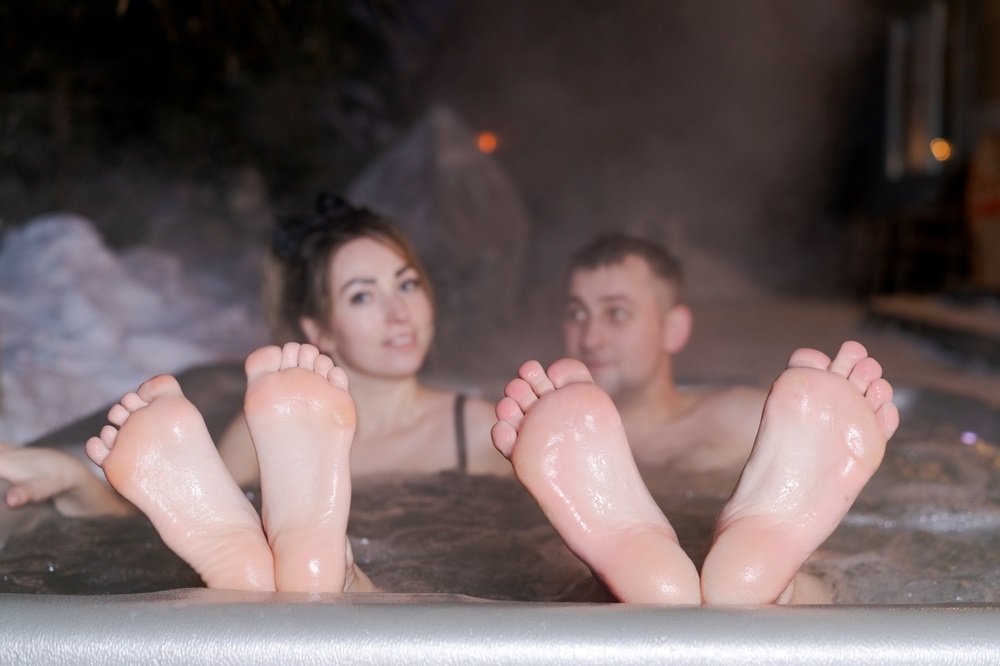


The body responds to heat, water pressure and silence in a way that links general relaxation to circulation and muscle comfort. Soaking in a hot tub can become a beneficial ritual rather than an occasional luxury.
Hot tubs go beyond general relaxation. The key is to understand what the body experiences during a dive.
Hot water activates circulation
Water transfers heat efficiently because it surrounds the body. While the air in a sauna leaves room for sweat to evaporate, hot water limits that cooling process. The body has to work hard to manage the high heat.
The University of Oregon conducted a study comparing the body’s physiological response to dry saunas, infrared saunas and hot tubs. The results showed that only immersion in hot water caused an inflammatory response. Because the body cannot easily dissipate heat, core temperature increases, which benefits overall vascular health.
Muscles settle in the heat
Warm water gives tired muscles the opportunity to gradually release tension. Heat stimulates blood flow to areas that feel tight after walking, gardening, lifting or daily exercise. The buoyancy also reduces pressure on the joints, so the body rests in a supported position.
The goal is not to use intense heat as a shortcut to physical recovery. Regular soaking gives the muscles time to soften while the nervous system releases tension. People dealing with stiffness may find this ritual especially helpful in relieving daily discomfort.
Evening baths support rest
Hot tubs are a great backyard feature that improves everyday well-being. During soaking, skin temperature increases as the body absorbs heat.
The National Sleep Foundation notes that after the soak ends, the body undergoes a cooling down period that supports the natural transition to sleep. Soaking in water for less than 20 minutes can reduce sleep disturbances and improve nighttime routines.
Clean water protects the ritual
In addition to considering how the water itself will soothe sore muscles and improve blood flow, it’s important to consider the quality of the water itself. Hot water can harbor germs if people skip maintenance.
Preparing the hot tub for the season Cleaning the filters, balancing the water chemistry and removing debris will prevent the water from becoming a source of skin irritation. People can rest easy knowing that their internal and external well-being is taken care of.
Pay attention to existing health problems
A spa fits into a healthy lifestyle, but regular use deserves personal health awareness. The heat changes the temperature and fluid balance of the body and affects everyone differently.
Blood pressure problems, heart disease, nerve problems, diabetes and heat sensitivity can change the way the body reacts during a bath. People who suffer from chronic conditions or experience dizziness after heat exposure should approach soaking with extra caution. To protect health, it is essential that you speak with a healthcare provider before making spa use a regular habit.
Hot tubs enhance wellness rituals
Soaking in a hot tub can be beneficial for the body. Warm water offers a grounded way to relax after physical or emotional stress. warm water as part of holistic living. From improving sleep quality to boosting vascular health, daily soaking in a hot tub can improve people’s well-being.
